Ski & Snowboard,
Gear Guides,
Destination Guides,
Kids
Dec 20, 2025
What to Wear Skiing & Snowboarding in Washington & Montana in 2025/26 – The Ultimate Wet-Cold Survival Guide
If you have ever taken a chair into a Crystal Mountain cloud where you cannot see your own tips, or skied Bridger Bowl when your eyelashes start freezing together, you already know this truth: “what to wear skiing Washington” and “what to wear skiing Big Sky” are not theoretical questions. They are survival questions.
On the Washington side, you get Cascade concrete, sideways wind, and chair rides where the snow somehow finds its way down your neck no matter how well you think you sealed things up. Think Crystal Mountain, Mt. Baker, Alpental, Stevens Pass, Mission Ridge, 49° North, and White Pass. On the Montana side, you get the “high of negative something” days at Big Sky, Bridger Bowl, Whitefish, and Red Lodge, where the snow is light and dry, the sky is blue, and your fingers still beg for heated mitts by 10 a.m.
Different states, same problem: if your layering is off, your day ends early.
Washington and Montana belong in one guide because the gear solutions overlap. Wet and 34 degrees or clear and negative 10 both punish bad fabric choices, cotton layers, and cheap gloves. The right system, on the other hand, lets you run the same basic kit everywhere: Crystal on a storm day, Baker in a white-out, Big Sky at –30 °F windchill, or a sunny groomer day at Whitefish.
Sturtevant’s has been keeping the PNW dry and warm since 1963, and now that same expertise extends into Montana through our Christy Sports shops in Big Sky. Whether you gear up in Bellevue, Seattle, or Tacoma, you get the same trusted guidance and the same gear built for wet storms or bitter cold days.
This guide will walk you through:
- How Washington and Montana conditions really differ
- A PNW + Montana 4-layer system that works in both wet and bitter-cold
- Real-world layering recipes for storm days, cold-smoke days, and weird warm inversions
- An 11-piece capsule that covers almost every day you will see this season
- The 2025/26 ski and snowboard gear we actually reach for in our own closets
By the end, you will have one bombproof kit that can handle everything from Washington storm days to Montana cold-smoke mornings without needing a second closet.
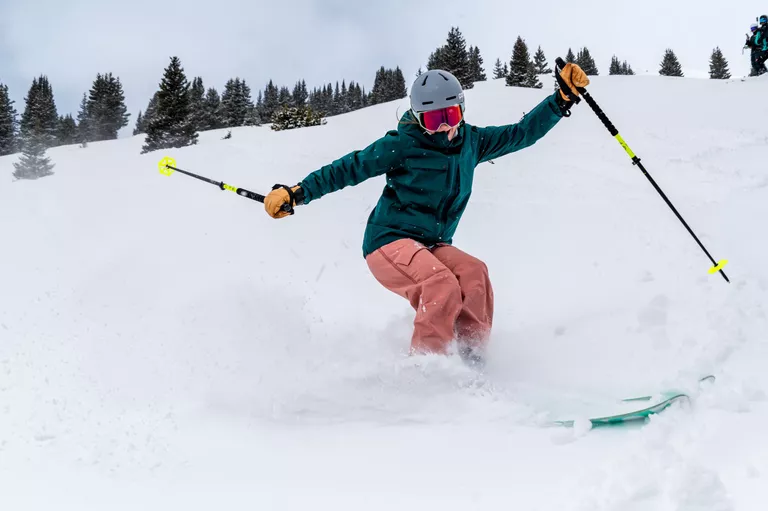
Washington vs. Montana: Quick-Compare Table
Washington (Crystal, Baker, Alpental, Stevens, etc.)
- Typical temps: 28–36 °F at the base, often hovering around freezing
- Snow type: Heavy, wet, “Cascade concrete,” mix of rain/snow
- Main problem: Getting soaked, then chilled by wind
- Visibility: Frequent fog, low ceiling, white-out in trees
- Gear priority: Waterproof shells, synthetic insulation, sealed seams, no down for storm days
- Risk of overkill: Overheating if you dress like it is Montana cold
- Layering focus: Synthetic base layers, breathable but bombproof shell, smart vents
Montana (Big Sky, Bridger, Whitefish, Red Lodge)
- Typical temps: –10 to 20 °F, colder with wind on exposed ridges
- Snow type: Cold-smoke powder, light and dry
- Main problem: Numb fingers and toes, face and lungs freezing
- Visibility: Often clear, but can be brutally bright and cold
- Gear priority: Maximum warmth, windproof layers, heated gloves and socks
- Risk of overkill: Sweating on the hike, then freezing on the lift
- Layering focus: Warm base, serious midlayer, insulated jacket, face/hand protection
The goal is not two separate wardrobes. It is one smart system that you tune up or down depending on whether you are chasing storm days at Baker or cold-smoke turns off the Tram at Big Sky.
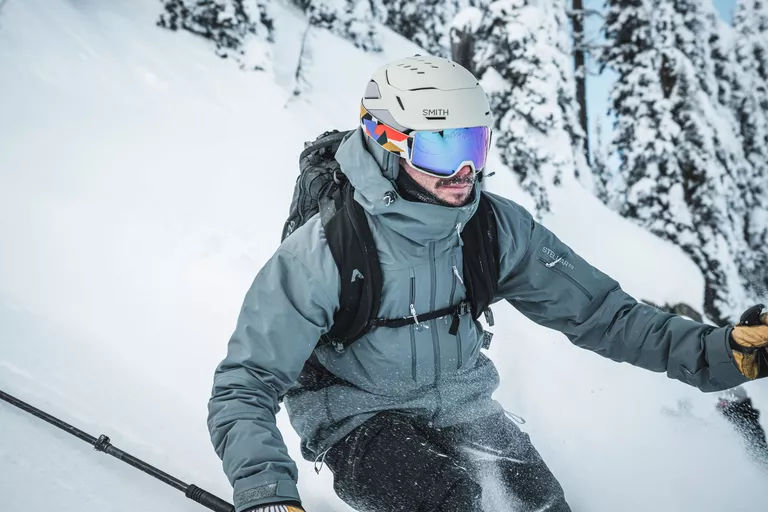
The PNW / Montana 4-Layer System
Think of this as “PNW ski layering 2025” in one picture. Four layers, tuned for wet or bitter cold, plus accessories that actually pull their weight.
1. Base Layer: Synthetic or Merino That Can Handle Wet
In Washington, cotton is a one-way ticket to shivering on the chair. You want synthetic or merino base layers that pull sweat off your skin and still work when the air is damp.
- For men and women who tend to run cold, a midweight or heavyweight merino like the Smartwool Merino 250 Base Layer Bottom and Smartwool Merino 250 Base Layer Long Sleeve offer reliable warmth and great moisture management.
- For a high-output, PNW-friendly combo, a synthetic blend like the Le Bent Heavyweight Grid Fleece Crew Base Layer paired with the Le Bent Heavyweight Grid Fleece 3/4 Base Layer Bottoms gives you warmth plus fast dry times.
In Washington, lean toward synthetic blends on truly wet days. In Montana, merino shines for those very cold, very dry mornings.
2. Midlayer: Active Insulation That Breathes
Your midlayer is where you fine-tune warmth. The trick for both regions is insulation that traps heat without turning you into a sweating mess on traverses.
- The Patagonia R1 Fleece Jacket is a staff favorite for damp Washington storms. It breathes incredibly well and still feels toasty when the wind kicks up.
- For colder Montana days, a synthetic puffy like the Patagonia Nano Puff Jacket (Men's) or Patagonia Nano Puff Jacket (Women’s) layers comfortably under a shell and keeps working even if some moisture sneaks in.
- If you prefer a classic, versatile fleece, the Spyder Bandit Half Zip Jacket is a great option. It adds reliable warmth, feels light and easy to move in, and fits cleanly under a shell without bulk, making it ideal for everything from early-season laps to bluebird spring days.
In Washington, choose midlayers that dry fast. In Montana, do not be afraid to size up the insulation if you run cold.
3. Shell or Insulated Jacket: Weather Shield For Wet Or Arctic
Washington demands a truly waterproof shell. Montana demands something that blocks wind and holds heat.
- In the PNW, a shell like the Norrona Lofoten GORE-TEX Pro Jacket is a top-shelf storm shield with excellent breathability and durable waterproofing.
- For women who want storm protection that still moves, the Helly Hansen Alphelia Ski Jacket blends insulation with a waterproof shell, perfect for Baker storm days or cold Montana mornings.
- For everyday resort use, the Helly Hansen Alpha LifaLoft Jacket offers a great mix of warmth and weather protection.
General rule: skip down for Washington storm days. Synthetic insulation handles moisture better and is easier to dry overnight.
4. Pants & Bibs: Keep the Slop Out and Heat In
The snow line in Washington changes constantly. Some days it rains at the base, but snows up top, which means your pants take the brunt of wet conditions. Montana brings a different challenge: bitter cold days around –10 °F that put your vents and insulation to the test.
- For women, the Seniq Slopestar Women’s Ski Bib delivers warm, waterproof coverage with a flattering fit, plenty of stretch, and fully sealed protection that keeps you comfortable from storm days to spring laps.
- The Helly Hansen Legendary Pants (Women’s) and Helly Hansen Legendary Pants (Men’s) deliver lightly insulated, waterproof performance that works from storm days at Crystal to cold mornings at Big Sky.
In Washington, prioritize waterproof bibs. In Montana, look for a balance of insulation and venting.
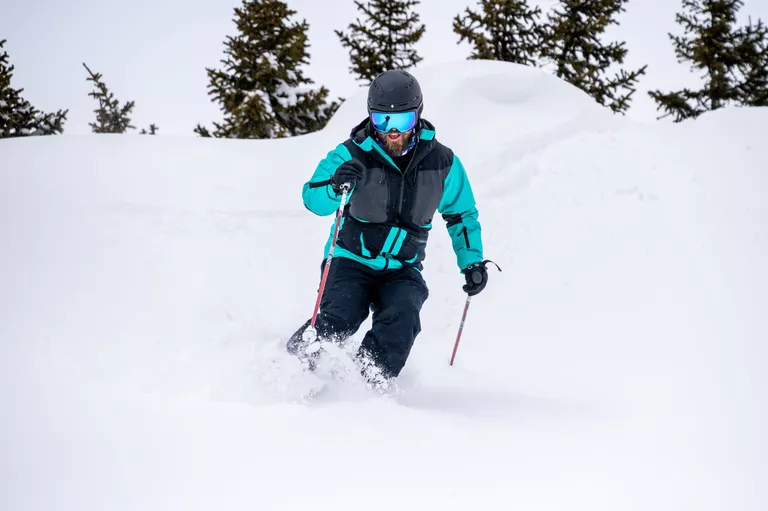
Five Mistakes That Will End Your Day Early in the PNW / Montana
- Wearing Cotton Anything: Cotton hoodies under shells are a PNW rite of passage. They are also a one-way ticket to getting soaked and freezing by 11 a.m.
- Using Old Down Jackets in Washington Storms: Down is great for dry, cold days. In wet snow, once it is soaked, it stops insulating. Stick to synthetic for Baker and Crystal storm days.
- Thick Socks in Tight Boots: Thick socks cut off circulation. Go thin with Smartwool Ski Zero Cushion OTC (Men’s) or Darn Tough Snowscape Socks (Women’s) and let your boots do the warming.
- No Face Protection on Montana Cold-Smoke Days: At –10 °F with wind, exposed skin gets miserable, fast. A Smartwool Merino 250 Balaclava or Le Bent Waffle Midweight Balaclava should live in your bag.
- One Pair of Goggles for All Light Conditions: Low-light and storm lenses matter, especially in Washington’s flat light. A quick-swap system like Smith 4D MAG Goggles + Sun Black ChromaPop™ Lens will save more ski days than you think.
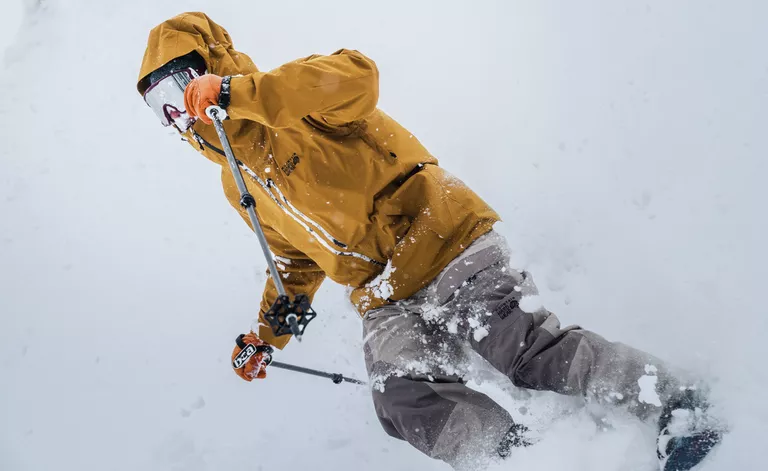
What to Wear on Three Very Different Days in Washington & Montana
Skiing the PNW and Montana means dressing for everything from sideways sleet at Baker to negative temps at Big Sky. These three day types cover almost every scenario you will see.
1. Typical Washington Storm Day (30–36 °F, Wet & Windy)
This is the classic “did it just rain on me halfway up the chair” day. Heavy moisture. Fog. Wind. Snow that flips between powder and slush. Your gear’s only job is to stay dry and breathe well enough to keep you from overheating.
What You Need
- Synthetic base layer (fast drying)
- Highly breathable fleece midlayer
- True waterproof shell (GORE-TEX or equivalent)
- High-coverage bibs or waterproof pants
- Waterproof gloves or mitts
- Thin merino or synthetic socks
- Balaclava or hood to seal out the storm
Pro tip: Avoid down insulation on Washington storm days. Once wet, it stops insulating. Synthetic layers save your entire day.
2. Classic Montana Cold-Smoke Day (–10 to +15 °F, Dry & Windy)
These are the magic days Montana is known for: cold mornings, light snow, blue skies, and wind on exposed ridgelines. Staying warm is everything.
What You Need
- Warm merino base layer
- Insulated synthetic midlayer or puffy
- Wind-blocking jacket (insulated or shell + puffy combo)
- Insulated pants or bibs
- Warm gloves or heated options
- Face protection for wind chill
- Thin socks plus heat on brutal days
3. Weird Warm Storm or Inversion Days (32–40 °F, Wet & Heavy)
These days feel strange. Snow is heavy. Visibility is low. You sweat easily, then get chilled as soon as you stop. The goal is to stay dry and cool, not warm.
What You Need
- Lightweight synthetic or merino base
- Thin fleece or lightly insulated midlayer
- Waterproof shell with wide vents
- Light or shell pants
- Moderate insulation gloves
- Neck gaiter you can pull on/off easily
Remember: On inversion days, overdressing is the fastest way to ruin your run. Vent early. Vent often.
FAQ: What to Wear Skiing in Washington & Montana
What should I wear skiing in Washington and Montana?
Think in layers: moisture-wicking base, breathable midlayer, and a waterproof or insulated outer layer, plus weatherproof pants or bibs, thin socks, and warm gloves or mitts. From there, you can add or subtract warmth for each day’s forecast.
How many layers do I actually need in the PNW and Montana?
Most people run well with three layers on warmer or wetter Washington days (base, breathable midlayer, shell) and four layers on cold Montana mornings (base, warm midlayer, insulation, shell). The trick is breathability, so you can shed heat on traverses in the PNW and stay warm on long chairlift rides in Montana.
Should I wear a puffy or a fleece as my midlayer?
It depends entirely on the conditions.
- In Washington, fleece shines because it dries fast and breathes in wet, heavy snow.
- In Montana, a synthetic puffy is great for long, cold chair rides or windy ridge laps.
Pick fleece if you run warm or expect moisture. Pick a synthetic puffy if you run cold or know it will be below zero.
Do I need GORE-TEX outerwear for Washington and Montana?
In Washington, a true waterproof shell (GORE-TEX or equivalent) is almost mandatory on storm days at Baker, Crystal, Alpental, or Stevens, where wet snow can overwhelm cheaper fabrics.
In Montana, waterproof shells are still great, but windproof insulation becomes just as important on subzero days off Lone Peak or at Bridger Bowl.
Are bibs better than pants for skiing?
Bibs offer better protection in deep snow and during wet PNW storms because they seal out slop and drafts. Pants feel lighter and cooler, which works well on Montana’s cold-dry days when you generate heat on the move. Both perform well on either side of the region; it comes down to personal preference and the day’s weather.
How thick should ski socks be?
Always choose thin or ultralight merino socks. Thick socks reduce circulation and make your feet colder. Boots provide the insulation. Socks manage moisture and fit, which is especially important in Washington’s damp air and Montana’s dry cold.
What’s an inversion?
An inversion happens when a layer of warm air sits on top of cold air, creating a strange mix of conditions as you move around the mountain. At the base, it can feel cold, foggy, and wet, while the upper mountain is warmer and sometimes even sunny. You ride through two different climates on a single lift ride, which means you can overheat on top and then get chilled again as you drop back into the cold layer. Washington and Montana see inversions often, and they are the reason lightweight, breathable layers and good venting matter just as much as insulation.
Do I need a different outfit for spring skiing?
Not at all. Use your normal base layer and shell, but lighten or skip the midlayer, open vents, and switch to breathable gloves. Washington spring storms can still be wet, while Montana spring days often feel warm and sunny. Your shell’s versatility matters more than changing your entire kit.
Should I bring a spare goggle lens?
Yes, absolutely. Washington’s flat light, fog, and fast-changing storms make a low-light lens essential. Montana’s clear, bright days demand a sun lens. Quick-swap goggles let you adapt as conditions shift and dramatically improve visibility and safety.
What temperature ranges should I expect in Washington and Montana?
- Washington: Expect 28–36 °F at the base, often hovering around freezing with wet snow and wind.
- Montana: Expect –10 °F to 20 °F mornings, bright sun, and cold-smoke powder. This wide spread is why a flexible layering system works better than any single heavy jacket.
What should kids wear skiing in Washington or Montana?
The same system as adults: synthetic or merino base layers, a breathable midlayer, a waterproof jacket and pants/bibs, thin socks, warm gloves or mitts, a neck gaiter or balaclava, and a helmet. Kids heat up and cool down quickly, so layers they can adjust are essential in both the PNW and Montana.
What items do most beginners forget to bring?
A neck gaiter, sunscreen, glove liners or mitts, thin socks, a spare goggle lens, and, especially in Montana, face protection for cold mornings. In Washington, waterproof mittens or gloves often save the day.
Should my layers be tight or loose? What actually performs best?
Follow one simple rule: fitted inside, relaxed outside.
- Base layers: Should fit snug to move moisture away from your skin. Loose base layers get soggy and cold in Washington’s wet snow.
- Midlayers: A comfortable, athletic fit works best. You want a little space for warm air to trap, especially on Montana ridge laps.
- Shells and jackets: Relaxed but not oversized. Enough room to layer without bunching, and flexible for reaching, twisting, and venting.
- Pants and bibs: Slightly roomy with good mobility. Too tight reduces insulation. Too loose lets snow creep in on storm days.
Quick test: If you can move easily, stay dry, and your layers sit flat without bunching, you’re dialed for both Washington storms and Montana cold.
The short version: it all comes back to the same thing: a dialed 4-layer system, the right accessories, and a few strategic upgrades for truly cold or truly wet days.
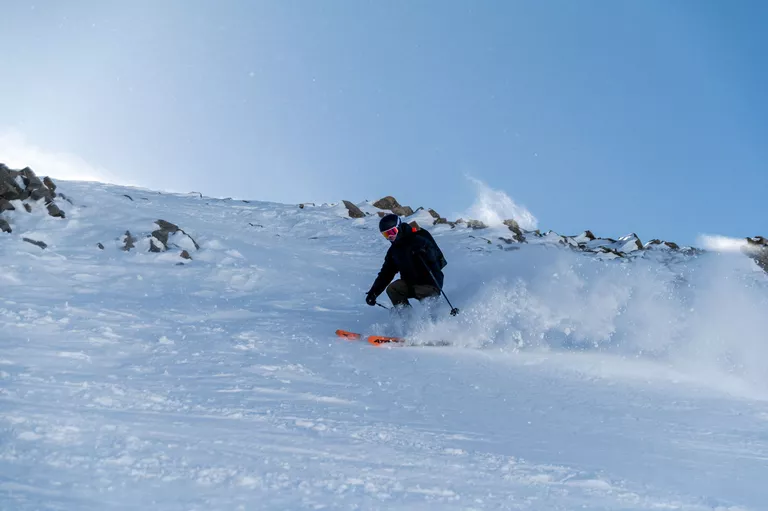
If there’s one thing Washington clouds and Montana cold agree on, it’s this: the mountain rewards the people who come prepared. When your layers can handle Baker’s sideways wind or Big Sky’s subzero mornings, your day stops being about survival and starts being about the turns. The right system lets you move through fog, cold-smoke powder, rain, wind, and ridge-top sun without missing a beat. You stop worrying about what the weather is doing, and get back to why you came.
And you don’t have to figure it out alone. Our team is here to help you find everything you need for a perfect day on the mountain.
Where to Gear Up for PNW Skiing and Snowboarding
📍Washington: Sturtevant’s shops in Bellevue, Seattle, and Tacoma are stocked for Baker storms, wet Crystal days, Alpental fog laps, and everything in between.
📍Montana: Christy Sports in Big Sky Mountain Village and Town Center has the insulation, heated gear, and face protection built for negative-ten mornings and long Tram laps.
Wherever you start your day, the goal is the same: keep you warm, dry, comfortable, and out there longer. Because OUTSIDE IS BETTER.
Last Updated: December 20, 2025
Ski & Snowboard,
Gear Guides,
Destination Guides,
Kids
Dec 20, 2025
What to Wear Skiing & Snowboarding in Washington & Montana in 2025/26 – The Ultimate Wet-Cold Survival Guide
If you have ever taken a chair into a Crystal Mountain cloud where you cannot see your own tips, or skied Bridger Bowl when your eyelashes start freezing together, you already know this truth: “what to wear skiing Washington” and “what to wear skiing Big Sky” are not theoretical questions. They are survival questions.
On the Washington side, you get Cascade concrete, sideways wind, and chair rides where the snow somehow finds its way down your neck no matter how well you think you sealed things up. Think Crystal Mountain, Mt. Baker, Alpental, Stevens Pass, Mission Ridge, 49° North, and White Pass. On the Montana side, you get the “high of negative something” days at Big Sky, Bridger Bowl, Whitefish, and Red Lodge, where the snow is light and dry, the sky is blue, and your fingers still beg for heated mitts by 10 a.m.
Different states, same problem: if your layering is off, your day ends early.
Washington and Montana belong in one guide because the gear solutions overlap. Wet and 34 degrees or clear and negative 10 both punish bad fabric choices, cotton layers, and cheap gloves. The right system, on the other hand, lets you run the same basic kit everywhere: Crystal on a storm day, Baker in a white-out, Big Sky at –30 °F windchill, or a sunny groomer day at Whitefish.
Sturtevant’s has been keeping the PNW dry and warm since 1963, and now that same expertise extends into Montana through our Christy Sports shops in Big Sky. Whether you gear up in Bellevue, Seattle, or Tacoma, you get the same trusted guidance and the same gear built for wet storms or bitter cold days.
This guide will walk you through:
- How Washington and Montana conditions really differ
- A PNW + Montana 4-layer system that works in both wet and bitter-cold
- Real-world layering recipes for storm days, cold-smoke days, and weird warm inversions
- An 11-piece capsule that covers almost every day you will see this season
- The 2025/26 ski and snowboard gear we actually reach for in our own closets
By the end, you will have one bombproof kit that can handle everything from Washington storm days to Montana cold-smoke mornings without needing a second closet.
Washington vs. Montana: Quick-Compare Table
Washington (Crystal, Baker, Alpental, Stevens, etc.)
- Typical temps: 28–36 °F at the base, often hovering around freezing
- Snow type: Heavy, wet, “Cascade concrete,” mix of rain/snow
- Main problem: Getting soaked, then chilled by wind
- Visibility: Frequent fog, low ceiling, white-out in trees
- Gear priority: Waterproof shells, synthetic insulation, sealed seams, no down for storm days
- Risk of overkill: Overheating if you dress like it is Montana cold
- Layering focus: Synthetic base layers, breathable but bombproof shell, smart vents
Montana (Big Sky, Bridger, Whitefish, Red Lodge)
- Typical temps: –10 to 20 °F, colder with wind on exposed ridges
- Snow type: Cold-smoke powder, light and dry
- Main problem: Numb fingers and toes, face and lungs freezing
- Visibility: Often clear, but can be brutally bright and cold
- Gear priority: Maximum warmth, windproof layers, heated gloves and socks
- Risk of overkill: Sweating on the hike, then freezing on the lift
- Layering focus: Warm base, serious midlayer, insulated jacket, face/hand protection
The goal is not two separate wardrobes. It is one smart system that you tune up or down depending on whether you are chasing storm days at Baker or cold-smoke turns off the Tram at Big Sky.
The PNW / Montana 4-Layer System
Think of this as “PNW ski layering 2025” in one picture. Four layers, tuned for wet or bitter cold, plus accessories that actually pull their weight.
1. Base Layer: Synthetic or Merino That Can Handle Wet
In Washington, cotton is a one-way ticket to shivering on the chair. You want synthetic or merino base layers that pull sweat off your skin and still work when the air is damp.
- For men and women who tend to run cold, a midweight or heavyweight merino like the Smartwool Merino 250 Base Layer Bottom and Smartwool Merino 250 Base Layer Long Sleeve offer reliable warmth and great moisture management.
- For a high-output, PNW-friendly combo, a synthetic blend like the Le Bent Heavyweight Grid Fleece Crew Base Layer paired with the Le Bent Heavyweight Grid Fleece 3/4 Base Layer Bottoms gives you warmth plus fast dry times.
In Washington, lean toward synthetic blends on truly wet days. In Montana, merino shines for those very cold, very dry mornings.
2. Midlayer: Active Insulation That Breathes
Your midlayer is where you fine-tune warmth. The trick for both regions is insulation that traps heat without turning you into a sweating mess on traverses.
- The Patagonia R1 Fleece Jacket is a staff favorite for damp Washington storms. It breathes incredibly well and still feels toasty when the wind kicks up.
- For colder Montana days, a synthetic puffy like the Patagonia Nano Puff Jacket (Men's) or Patagonia Nano Puff Jacket (Women’s) layers comfortably under a shell and keeps working even if some moisture sneaks in.
- If you prefer a classic, versatile fleece, the Spyder Bandit Half Zip Jacket is a great option. It adds reliable warmth, feels light and easy to move in, and fits cleanly under a shell without bulk, making it ideal for everything from early-season laps to bluebird spring days.
In Washington, choose midlayers that dry fast. In Montana, do not be afraid to size up the insulation if you run cold.
3. Shell or Insulated Jacket: Weather Shield For Wet Or Arctic
Washington demands a truly waterproof shell. Montana demands something that blocks wind and holds heat.
- In the PNW, a shell like the Norrona Lofoten GORE-TEX Pro Jacket is a top-shelf storm shield with excellent breathability and durable waterproofing.
- For women who want storm protection that still moves, the Helly Hansen Alphelia Ski Jacket blends insulation with a waterproof shell, perfect for Baker storm days or cold Montana mornings.
- For everyday resort use, the Helly Hansen Alpha LifaLoft Jacket offers a great mix of warmth and weather protection.
General rule: skip down for Washington storm days. Synthetic insulation handles moisture better and is easier to dry overnight.
4. Pants & Bibs: Keep the Slop Out and Heat In
The snow line in Washington changes constantly. Some days it rains at the base, but snows up top, which means your pants take the brunt of wet conditions. Montana brings a different challenge: bitter cold days around –10 °F that put your vents and insulation to the test.
- For women, the Seniq Slopestar Women’s Ski Bib delivers warm, waterproof coverage with a flattering fit, plenty of stretch, and fully sealed protection that keeps you comfortable from storm days to spring laps.
- The Helly Hansen Legendary Pants (Women’s) and Helly Hansen Legendary Pants (Men’s) deliver lightly insulated, waterproof performance that works from storm days at Crystal to cold mornings at Big Sky.
In Washington, prioritize waterproof bibs. In Montana, look for a balance of insulation and venting.
Five Mistakes That Will End Your Day Early in the PNW / Montana
- Wearing Cotton Anything: Cotton hoodies under shells are a PNW rite of passage. They are also a one-way ticket to getting soaked and freezing by 11 a.m.
- Using Old Down Jackets in Washington Storms: Down is great for dry, cold days. In wet snow, once it is soaked, it stops insulating. Stick to synthetic for Baker and Crystal storm days.
- Thick Socks in Tight Boots: Thick socks cut off circulation. Go thin with Smartwool Ski Zero Cushion OTC (Men’s) or Darn Tough Snowscape Socks (Women’s) and let your boots do the warming.
- No Face Protection on Montana Cold-Smoke Days: At –10 °F with wind, exposed skin gets miserable, fast. A Smartwool Merino 250 Balaclava or Le Bent Waffle Midweight Balaclava should live in your bag.
- One Pair of Goggles for All Light Conditions: Low-light and storm lenses matter, especially in Washington’s flat light. A quick-swap system like Smith 4D MAG Goggles + Sun Black ChromaPop™ Lens will save more ski days than you think.
What to Wear on Three Very Different Days in Washington & Montana
Skiing the PNW and Montana means dressing for everything from sideways sleet at Baker to negative temps at Big Sky. These three day types cover almost every scenario you will see.
1. Typical Washington Storm Day (30–36 °F, Wet & Windy)
This is the classic “did it just rain on me halfway up the chair” day. Heavy moisture. Fog. Wind. Snow that flips between powder and slush. Your gear’s only job is to stay dry and breathe well enough to keep you from overheating.
What You Need
- Synthetic base layer (fast drying)
- Highly breathable fleece midlayer
- True waterproof shell (GORE-TEX or equivalent)
- High-coverage bibs or waterproof pants
- Waterproof gloves or mitts
- Thin merino or synthetic socks
- Balaclava or hood to seal out the storm
Pro tip: Avoid down insulation on Washington storm days. Once wet, it stops insulating. Synthetic layers save your entire day.
2. Classic Montana Cold-Smoke Day (–10 to +15 °F, Dry & Windy)
These are the magic days Montana is known for: cold mornings, light snow, blue skies, and wind on exposed ridgelines. Staying warm is everything.
What You Need
- Warm merino base layer
- Insulated synthetic midlayer or puffy
- Wind-blocking jacket (insulated or shell + puffy combo)
- Insulated pants or bibs
- Warm gloves or heated options
- Face protection for wind chill
- Thin socks plus heat on brutal days
3. Weird Warm Storm or Inversion Days (32–40 °F, Wet & Heavy)
These days feel strange. Snow is heavy. Visibility is low. You sweat easily, then get chilled as soon as you stop. The goal is to stay dry and cool, not warm.
What You Need
- Lightweight synthetic or merino base
- Thin fleece or lightly insulated midlayer
- Waterproof shell with wide vents
- Light or shell pants
- Moderate insulation gloves
- Neck gaiter you can pull on/off easily
Remember: On inversion days, overdressing is the fastest way to ruin your run. Vent early. Vent often.
FAQ: What to Wear Skiing in Washington & Montana
What should I wear skiing in Washington and Montana?
Think in layers: moisture-wicking base, breathable midlayer, and a waterproof or insulated outer layer, plus weatherproof pants or bibs, thin socks, and warm gloves or mitts. From there, you can add or subtract warmth for each day’s forecast.
How many layers do I actually need in the PNW and Montana?
Most people run well with three layers on warmer or wetter Washington days (base, breathable midlayer, shell) and four layers on cold Montana mornings (base, warm midlayer, insulation, shell). The trick is breathability, so you can shed heat on traverses in the PNW and stay warm on long chairlift rides in Montana.
Should I wear a puffy or a fleece as my midlayer?
It depends entirely on the conditions.
- In Washington, fleece shines because it dries fast and breathes in wet, heavy snow.
- In Montana, a synthetic puffy is great for long, cold chair rides or windy ridge laps.
Pick fleece if you run warm or expect moisture. Pick a synthetic puffy if you run cold or know it will be below zero.
Do I need GORE-TEX outerwear for Washington and Montana?
In Washington, a true waterproof shell (GORE-TEX or equivalent) is almost mandatory on storm days at Baker, Crystal, Alpental, or Stevens, where wet snow can overwhelm cheaper fabrics.
In Montana, waterproof shells are still great, but windproof insulation becomes just as important on subzero days off Lone Peak or at Bridger Bowl.
Are bibs better than pants for skiing?
Bibs offer better protection in deep snow and during wet PNW storms because they seal out slop and drafts. Pants feel lighter and cooler, which works well on Montana’s cold-dry days when you generate heat on the move. Both perform well on either side of the region; it comes down to personal preference and the day’s weather.
How thick should ski socks be?
Always choose thin or ultralight merino socks. Thick socks reduce circulation and make your feet colder. Boots provide the insulation. Socks manage moisture and fit, which is especially important in Washington’s damp air and Montana’s dry cold.
What’s an inversion?
An inversion happens when a layer of warm air sits on top of cold air, creating a strange mix of conditions as you move around the mountain. At the base, it can feel cold, foggy, and wet, while the upper mountain is warmer and sometimes even sunny. You ride through two different climates on a single lift ride, which means you can overheat on top and then get chilled again as you drop back into the cold layer. Washington and Montana see inversions often, and they are the reason lightweight, breathable layers and good venting matter just as much as insulation.
Do I need a different outfit for spring skiing?
Not at all. Use your normal base layer and shell, but lighten or skip the midlayer, open vents, and switch to breathable gloves. Washington spring storms can still be wet, while Montana spring days often feel warm and sunny. Your shell’s versatility matters more than changing your entire kit.
Should I bring a spare goggle lens?
Yes, absolutely. Washington’s flat light, fog, and fast-changing storms make a low-light lens essential. Montana’s clear, bright days demand a sun lens. Quick-swap goggles let you adapt as conditions shift and dramatically improve visibility and safety.
What temperature ranges should I expect in Washington and Montana?
- Washington: Expect 28–36 °F at the base, often hovering around freezing with wet snow and wind.
- Montana: Expect –10 °F to 20 °F mornings, bright sun, and cold-smoke powder. This wide spread is why a flexible layering system works better than any single heavy jacket.
What should kids wear skiing in Washington or Montana?
The same system as adults: synthetic or merino base layers, a breathable midlayer, a waterproof jacket and pants/bibs, thin socks, warm gloves or mitts, a neck gaiter or balaclava, and a helmet. Kids heat up and cool down quickly, so layers they can adjust are essential in both the PNW and Montana.
What items do most beginners forget to bring?
A neck gaiter, sunscreen, glove liners or mitts, thin socks, a spare goggle lens, and, especially in Montana, face protection for cold mornings. In Washington, waterproof mittens or gloves often save the day.
Should my layers be tight or loose? What actually performs best?
Follow one simple rule: fitted inside, relaxed outside.
- Base layers: Should fit snug to move moisture away from your skin. Loose base layers get soggy and cold in Washington’s wet snow.
- Midlayers: A comfortable, athletic fit works best. You want a little space for warm air to trap, especially on Montana ridge laps.
- Shells and jackets: Relaxed but not oversized. Enough room to layer without bunching, and flexible for reaching, twisting, and venting.
- Pants and bibs: Slightly roomy with good mobility. Too tight reduces insulation. Too loose lets snow creep in on storm days.
Quick test: If you can move easily, stay dry, and your layers sit flat without bunching, you’re dialed for both Washington storms and Montana cold.
The short version: it all comes back to the same thing: a dialed 4-layer system, the right accessories, and a few strategic upgrades for truly cold or truly wet days.
If there’s one thing Washington clouds and Montana cold agree on, it’s this: the mountain rewards the people who come prepared. When your layers can handle Baker’s sideways wind or Big Sky’s subzero mornings, your day stops being about survival and starts being about the turns. The right system lets you move through fog, cold-smoke powder, rain, wind, and ridge-top sun without missing a beat. You stop worrying about what the weather is doing, and get back to why you came.
And you don’t have to figure it out alone. Our team is here to help you find everything you need for a perfect day on the mountain.
Where to Gear Up for PNW Skiing and Snowboarding
📍Washington: Sturtevant’s shops in Bellevue, Seattle, and Tacoma are stocked for Baker storms, wet Crystal days, Alpental fog laps, and everything in between.
📍Montana: Christy Sports in Big Sky Mountain Village and Town Center has the insulation, heated gear, and face protection built for negative-ten mornings and long Tram laps.
Wherever you start your day, the goal is the same: keep you warm, dry, comfortable, and out there longer. Because OUTSIDE IS BETTER.
Last Updated: December 20, 2025