Ski & Snowboard,
Gear Guides,
Kids
Dec 24, 2025
When to Replace Your Ski Helmet (2025–2026 Guide)
Your ski helmet does a lot of quiet work. It sits there run after run, storm after storm, ready to absorb impact when things do not go as planned. According to the National Ski Areas Association, wearing a helmet can reduce the risk of head injury by 30 to 50 percent. What matters just as much as wearing one is knowing when it is no longer doing its job.
Many skiers and riders assume a helmet is good as long as it looks fine. In reality, the most important parts of a helmet are hidden inside. Foam liners compress, materials break down, and protection can fade long before there are visible cracks or dents.
If you ski regularly in Colorado, Utah, Montana, or Washington, or if your helmet lives in a hot garage or car trunk between trips, it may be aging faster than you expect.
This guide breaks down exactly when to replace your ski or snowboard helmet, how long helmets really last, the signs your helmet is ready to retire, and which 2026 helmets are worth considering if you are due for an upgrade. It is practical, expert-backed guidance designed to help you stay safe and confident on the mountain.
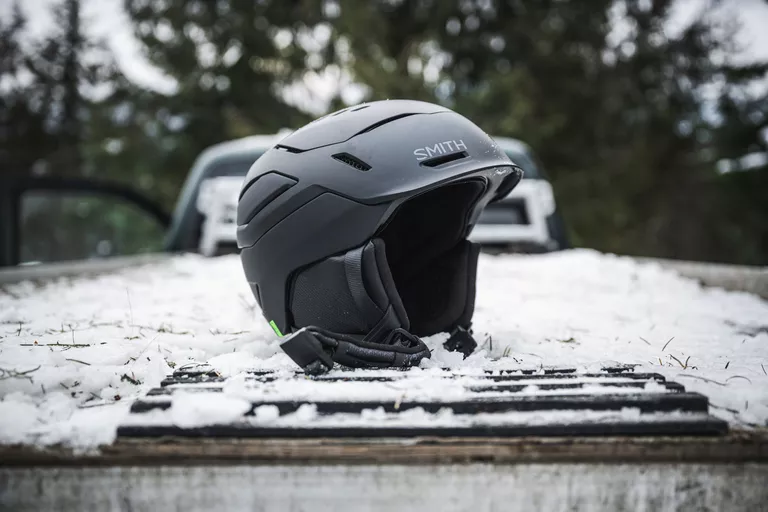
Quick Answer: When Should You Replace a Ski Helmet?
You should replace a ski or snowboard helmet after any significant crash or every 3 to 5 years, whichever comes first. Impacts crush the foam liner permanently, and materials naturally degrade over time due to UV exposure, sweat, heat, cold and regular use.
Why Ski Helmets Wear Out
A helmet’s job is to take the hit so your head does not. The foam liner inside is designed to crush on impact. Once it compresses even slightly, it cannot bounce back to its original protective shape.
Beyond impacts, normal use slowly weakens materials. Sunlight, sweat, hot cars, freezing garages, and repeated micro-impacts from daily skiing all work together to break down foam and adhesives over time.
This is why nearly all major brands, including Smith, Giro, Salomon, POC and Sweet Protection, recommend replacing helmets on a schedule, not just after crashes. Even careful skiers cannot stop materials from aging.
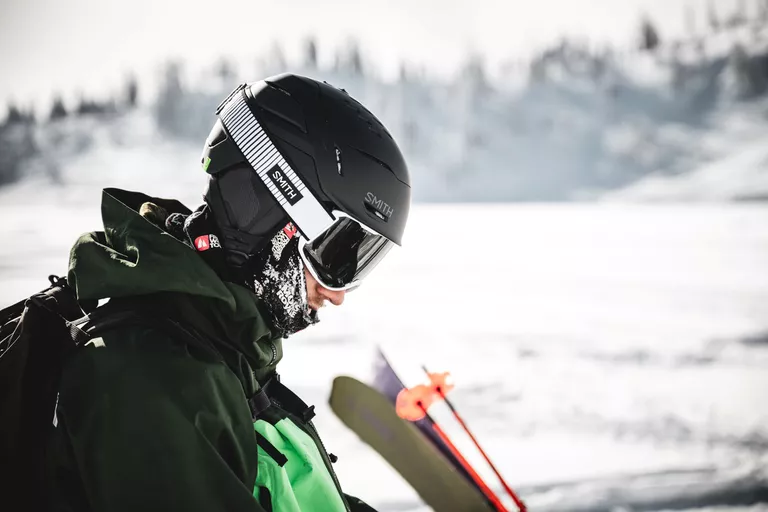
Replace Your Helmet After Any Significant Crash
Inside most helmets is EPS foam: the lightweight, slightly crunchy material that absorbs impact. It is a single-impact material, which means it is built to compress once.
Smith explains it well:
“Even if there are no visible signs of damage, the foam liner could be compromised after a crash.”
What Counts as a Significant Impact?
Any fall or collision that sends noticeable force through your head or helmet. Examples include:
- A fast, sliding fall on a groomer
- Catching an edge and hitting hardpack
- An unexpected hit with a tree or lift tower
- A backward fall onto icy snow
- A drop from a chairlift onto concrete or packed snow
If you think your helmet “took the hit” for you, it probably did. And once it does that job, it cannot do it again.
How to Check for Hidden Helmet Damage
Not all damage is visible. Look and feel for:
- Soft or uneven spots inside the liner
- Wrinkles or gaps where the foam meets the shell
- Padding that used to sit securely but now shifts
- A fit system that no longer tightens evenly
If anything feels different than when the helmet was new, it is time to replace it.
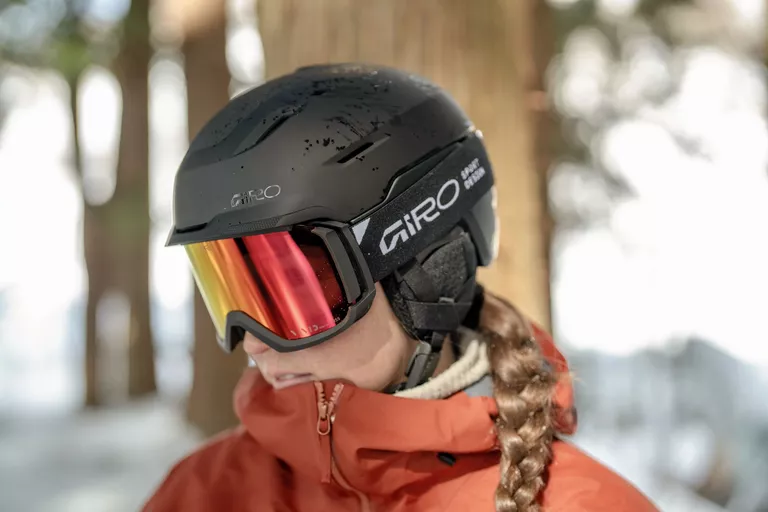
How Long Do Ski Helmets Last? Understanding the 3–5 Year Rule
Even with zero crashes, helmets need to be replaced. The industry guideline is every 3 to 5 years.
Why This Rule Exists
Over time, materials naturally weaken:
- UV exposure slowly degrades the shell
- Heat and cold cause adhesives to break down
- Sweat and salt reduce the lifespan of padding and foam
- Micro-compressions from everyday skiing add up
Even if you ski gently, materials age. Ski areas, gear manufacturers and safety organizations agree that beyond 5 years, protection drops significantly.
Which timeline fits you?
30+ day per season skier
- Recommended helmet lifespan: replace every 3 years
- Why: More wear, more sun, more compressions
10-20 day per season skier
- Recommended helmet lifespan: replace every 4 years
- Why: Moderate use causes gradual breakdown
Occasional/vacation skier
- Recommended helmet lifespan: replace every 5 years
- Why: Less exposure, slower material aging
After a crash
- Replace immediately: Foam has already absorbed a hit
Is a 10-Year-Old Helmet Safe?
No. After a decade, foam density, adhesive strength and strap elasticity all decline. Older helmets also lack modern rotational-impact systems like MIPS Spherical, Koroyd, Atomic AMID, or Sweet Protection 2Vi.
If your helmet is older than your ski pass photo, it may be time for a new one.
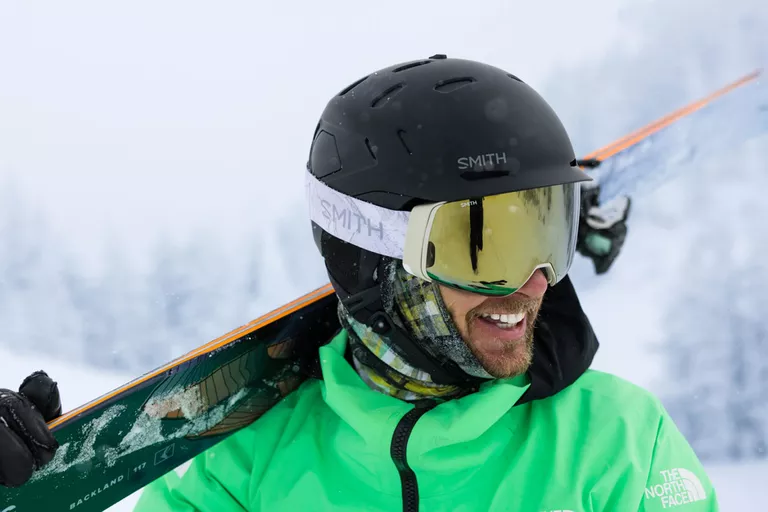
How to Know When Your Helmet Needs to Be Replaced
Even without tracking seasons, these signs mean your helmet is ready to retire:
- Cracks, dents or deep scratches in the shell
- Interior foam that feels soft, smooth or permanently compressed
- Straps that are stretched, cracked or fraying
- Padding that smells, shifts or has lost its thickness
- A fit system that no longer tightens securely
- Missing or faded certification labels
- Color fading from sun exposure
- A strong odor that never fully washes out
A helmet with compromised structure cannot provide adequate protection. If you notice any of the above, treat it like a worn-out tire: it has served you well, and now it is time for something safer. If you are unsure about helmet fit or condition, our Christy Sports teams near major resort areas like Breckenridge, Vail, Keystone, Park City, Big Sky, and Steamboat are always happy to take a look and answer questions before you head out for the day.
📍Ski & Snowboard Stores - Christy Sports Locations
2025 Swiss Study: Why a Fresh Helmet Matters More Than Ever
A 2025 Swiss study* from RTS and HEPIA tested helmets at 50 km/h (about 31 mph), which is a realistic skiing speed for many intermediate and advanced skiers. At that speed, none of the helmets were able to keep forces below levels associated with severe brain injury.
This does not mean helmets are ineffective. It means:
- Real skiing speeds often exceed lab testing speeds
- Protection declines sharply when materials age or compress
- Newer helmets with improved rotational management offer better protection
Modern technologies such as MIPS Spherical, WaveCel, Koroyd, AMID, and Sweet Protection 2Vi help manage real-world impacts more effectively than older helmets.
Bottom line: A fresh, undamaged helmet gives you the best odds during unexpected moments.
How to Extend the Life of Your Ski Helmet
Even though helmets have a limited lifespan, small care habits can help them last within that window.
- Store in a cool, dry place
- Avoid leaving it in a hot vehicle
- Keep it out of direct sunlight
- Clean with mild soap and water only
- Allow padding to dry completely
- Use a helmet bag when traveling
Think of your helmet like your boots: good care makes a noticeable difference throughout the season.
What to Do With an Old or Retired Helmet
Helmets cannot go into regular curbside recycling, but specialty programs exist. One of the best is the Snow Sports Equipment Recycling Program, which accepts helmets and other used gear.
If drop-off locations are not available, consider:
- Removing straps and padding for textile recycling
- Donating the shell (for non-protective use)
- Marking clearly “Not for Use” before repurposing
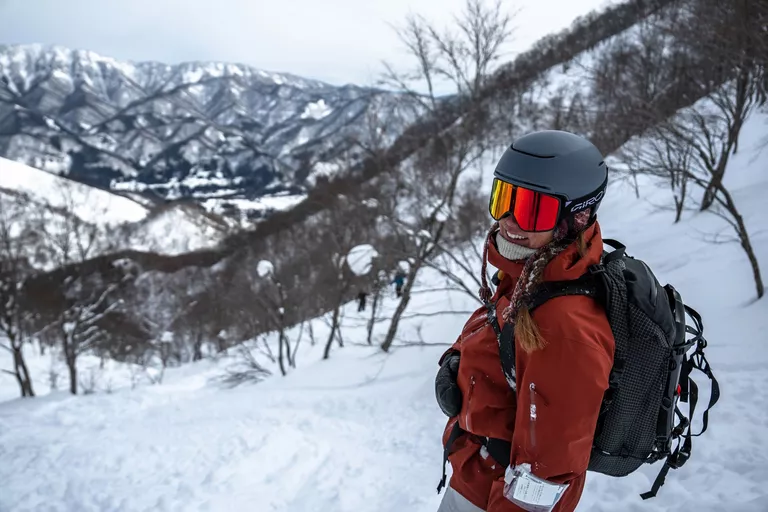
Top Helmet Picks for the 2025–26 Season
If your helmet is due for an upgrade, these staff-trusted models offer modern protection, better fit systems and improved comfort.
Atomic Four AMID Pro Helmet
The Atomic Four Amid Pro Helmet (Men’s) is a strong upgrade choice for skiers replacing an older helmet. It features AMID (Atomic Multi-directional Impact Deflector) technology, designed to absorb both direct and angled impacts, paired with a durable ABS hardshell and a clean, low-profile fit.
Live Fit padding adapts to your head for immediate comfort, while the adjustable 360-degree fit system helps dial in security without pressure points. Active venting makes it easy to manage temperature on storm days or spring laps, and the shape integrates cleanly with Atomic goggles.
The Atomic Revent Q HD Goggles are designed to pair seamlessly with the Atomic Four Amid Pro Helmet (Women’s), creating a clean, gap-free fit and a wide, unobstructed field of view. Atomic engineers design their helmets and goggles as a system, which shows up immediately in how the two work together on snow.
Giro Jackson MIPS Helmet
The Giro Jackson MIPS is a solid upgrade for skiers replacing an older helmet with something more modern and comfortable. It features MIPS technology to help reduce rotational forces during angled impacts, paired with a durable hard-shell construction and a clean, all-mountain look.
Giro’s In Form Fit System makes it easy to fine-tune fit, even with gloves on, while Passive Aggressive Venting helps regulate temperature throughout the day. The Jackson integrates smoothly with Giro goggles and many other brands, making it a dependable everyday option for resort skiing.
For a seamless setup, pair it with the Giro Article II Goggles, which feature Giro’s VIVID lens technology to enhance contrast and clarity in a wide range of conditions. Together, they create a comfortable, gap-free fit that helps you see terrain more clearly and ski with confidence.
Giro Tor Spherical Helmet
The Giro Tor Spherical is a premium option for skiers upgrading from an aging helmet and looking for top-tier protection without added bulk. It features MIPS Spherical, which allows the helmet to rotate independently during angled impacts, helping reduce rotational forces more effectively than standard MIPS systems.
Built with Giro’s In-Mold construction, the Tor keeps weight low while maintaining strong protection. The In Form 2 Fit System offers precise, glove-friendly adjustments, and venting lets you fine-tune airflow as conditions change throughout the day. The result is a helmet that feels light, balanced, and comfortable for long days on the mountain.
For a clean, performance-driven setup, pair it with the Giro Comp Goggles. Designed for aggressive skiing and racing-inspired performance, the Comp features VIVID lens technology to enhance contrast and definition in variable light. The low-profile frame integrates seamlessly with the Tor helmet, minimizing goggle gap and maximizing field of view. Together, the Giro Tor Spherical helmet and Comp goggles create a streamlined, high-performance system built for skiers who want modern protection, precise fit, and clear vision at speed.
More Men’s Helmet Picks
- Smith Descend MIPS Helmet: Lightweight with excellent ventilation and MIPS protection.
- Sweet Protection Switcher MIPS Helmet: Pro-level protection built for freeride performance.
- Salomon Driver Prime Sigma Plus MIPS Helmet: Includes a built-in visor with high-contrast optics.
More Women’s Helmet Picks
- Smith Liberty Helmet: A warm, lightweight option for all-mountain days.
- Giro Envi Spherical MIPS Helmet: Premium protection with Giro’s top-of-the-line fit system.
- Giro Ledge MIPS Helmet: Simple, durable and great for park, pipe or all-around use.
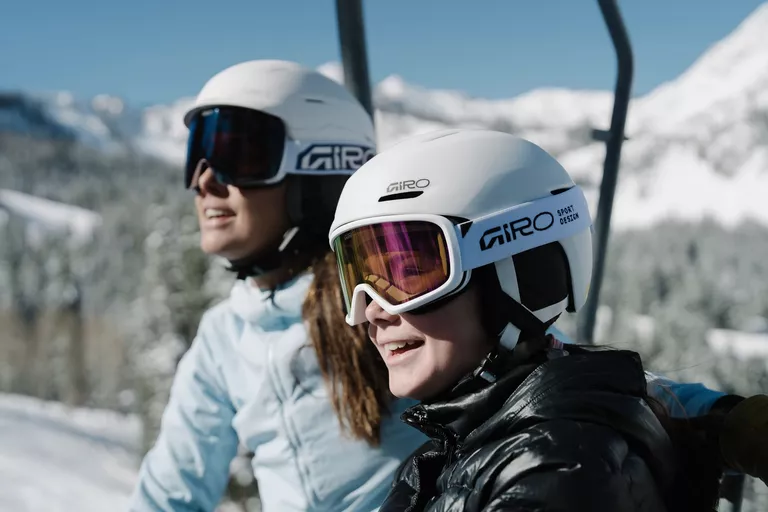
Kids’ Ski & Snowboard Helmets: What Parents Should Know
When it comes to kids’ helmets, the replacement rules matter even more. Kids grow quickly, ski hard, and tend to take more frequent falls than adults. A helmet that fit well last season may no longer fit correctly this year.
Key rules for kids’ helmets:
- Replace after any significant crash
- Replace sooner if the fit feels tight, loose, or uneven
- Expect to replace more often due to growth and everyday wear
- Make sure the helmet sits level, covers the forehead, and stays secure with the chin strap fastened
The good news is that today’s kids’ helmets offer the same proven safety technologies found in adult models, including MIPS and advanced rotational impact protection.
Top Kids’ Helmet Picks for the 2025–26 Season
These staff-trusted helmets balance protection, comfort, and adjustability to keep young skiers and riders safe and confident all season.
- Giro Neo MIPS Helmet (Kids’): Lightweight and easy to adjust, with dependable MIPS protection for all-mountain skiing.
- Giro Crüe MIPS Helmet (Kids’): A durable, skate-style helmet that works well for park laps and everyday resort days.
- Smith Descend Jr MIPS Helmet: Built specifically for younger skiers, offering a comfortable fit and modern rotational protection.
- Smith Rodeo MIPS Helmet (Juniors): A clean, classic design with reliable protection for progressing skiers and riders.
- Bern Nina DVRT Helmet (Kids’): A versatile option featuring Bern’s DVRT protection system, designed for all-day comfort.
A Note on Fit and Value for Families
Fit matters more than brand or color. A kids’ helmet should feel snug without pressure points, sit low on the forehead, and stay in place when your child shakes their head. If you are unsure, our in-store teams are always happy to help dial in the right size and make adjustments.
If your kids are still growing, pairing a properly fitted helmet with daily ski or snowboard rentals can be a flexible and cost-effective option. Christy Sports’ Kids Rent Free program lets kids 12 and under rent skis or a snowboard for free when an adult rents a ski or snowboard package for four or more days.
It is an easy way to make sure kids are in gear that fits well for the trip without committing to long-term rentals. Kids’ helmets and damage waivers are not included but can be added to any reservation for an additional fee.
Learn more about Kids Rent Free and daily ski and snowboard rental options.
Frequently Asked Questions About Ski Helmet Replacement
How long do ski helmets last?
Most helmets last 3 to 5 years, depending on how often you ski and how they are stored.
Do I need to replace my helmet after a fall?
Yes, if the fall involves real impact. Even if the shell looks fine, the foam may be compromised.
Is a 10-year-old helmet safe?
No. Materials degrade significantly, and older helmets lack modern safety technology.
Does dropping my helmet mean I should replace it?
If it hits soft snow, usually no. If it hits a hard surface and develops dents or rattling, replace it.
Can a helmet be used after a crash?
No. Helmets are built for single-impact protection.
Do MIPS or other systems extend helmet lifespan?
No. They improve safety but do not change replacement timelines.

Time to Replace Your Ski or Snowboard Helmet?
Staying current with your helmet is one of the simplest ways to protect yourself and enjoy every day on the mountain with confidence. If you are not sure whether your helmet is still doing its job, stop by a Christy Sports location in Colorado, Utah, Montana, or at Sturtevant’s in Washington. Our teams are always happy to take a look, answer questions, and help you find a helmet that fits comfortably and performs the way it should.
Outside is Better when your gear is ready for the season.
📍Find a Christy Sports near you
*Source: SnowBrains summary of the 2025 Swiss Study
Last Updated: December 24, 2025
Ski & Snowboard,
Gear Guides,
Kids
Dec 24, 2025
When to Replace Your Ski Helmet (2025–2026 Guide)
Your ski helmet does a lot of quiet work. It sits there run after run, storm after storm, ready to absorb impact when things do not go as planned. According to the National Ski Areas Association, wearing a helmet can reduce the risk of head injury by 30 to 50 percent. What matters just as much as wearing one is knowing when it is no longer doing its job.
Many skiers and riders assume a helmet is good as long as it looks fine. In reality, the most important parts of a helmet are hidden inside. Foam liners compress, materials break down, and protection can fade long before there are visible cracks or dents.
If you ski regularly in Colorado, Utah, Montana, or Washington, or if your helmet lives in a hot garage or car trunk between trips, it may be aging faster than you expect.
This guide breaks down exactly when to replace your ski or snowboard helmet, how long helmets really last, the signs your helmet is ready to retire, and which 2026 helmets are worth considering if you are due for an upgrade. It is practical, expert-backed guidance designed to help you stay safe and confident on the mountain.
Quick Answer: When Should You Replace a Ski Helmet?
You should replace a ski or snowboard helmet after any significant crash or every 3 to 5 years, whichever comes first. Impacts crush the foam liner permanently, and materials naturally degrade over time due to UV exposure, sweat, heat, cold and regular use.
Why Ski Helmets Wear Out
A helmet’s job is to take the hit so your head does not. The foam liner inside is designed to crush on impact. Once it compresses even slightly, it cannot bounce back to its original protective shape.
Beyond impacts, normal use slowly weakens materials. Sunlight, sweat, hot cars, freezing garages, and repeated micro-impacts from daily skiing all work together to break down foam and adhesives over time.
This is why nearly all major brands, including Smith, Giro, Salomon, POC and Sweet Protection, recommend replacing helmets on a schedule, not just after crashes. Even careful skiers cannot stop materials from aging.
Replace Your Helmet After Any Significant Crash
Inside most helmets is EPS foam: the lightweight, slightly crunchy material that absorbs impact. It is a single-impact material, which means it is built to compress once.
Smith explains it well:
“Even if there are no visible signs of damage, the foam liner could be compromised after a crash.”
What Counts as a Significant Impact?
Any fall or collision that sends noticeable force through your head or helmet. Examples include:
- A fast, sliding fall on a groomer
- Catching an edge and hitting hardpack
- An unexpected hit with a tree or lift tower
- A backward fall onto icy snow
- A drop from a chairlift onto concrete or packed snow
If you think your helmet “took the hit” for you, it probably did. And once it does that job, it cannot do it again.
How to Check for Hidden Helmet Damage
Not all damage is visible. Look and feel for:
- Soft or uneven spots inside the liner
- Wrinkles or gaps where the foam meets the shell
- Padding that used to sit securely but now shifts
- A fit system that no longer tightens evenly
If anything feels different than when the helmet was new, it is time to replace it.
How Long Do Ski Helmets Last? Understanding the 3–5 Year Rule
Even with zero crashes, helmets need to be replaced. The industry guideline is every 3 to 5 years.
Why This Rule Exists
Over time, materials naturally weaken:
- UV exposure slowly degrades the shell
- Heat and cold cause adhesives to break down
- Sweat and salt reduce the lifespan of padding and foam
- Micro-compressions from everyday skiing add up
Even if you ski gently, materials age. Ski areas, gear manufacturers and safety organizations agree that beyond 5 years, protection drops significantly.
Which timeline fits you?
30+ day per season skier
- Recommended helmet lifespan: replace every 3 years
- Why: More wear, more sun, more compressions
10-20 day per season skier
- Recommended helmet lifespan: replace every 4 years
- Why: Moderate use causes gradual breakdown
Occasional/vacation skier
- Recommended helmet lifespan: replace every 5 years
- Why: Less exposure, slower material aging
After a crash
- Replace immediately: Foam has already absorbed a hit
Is a 10-Year-Old Helmet Safe?
No. After a decade, foam density, adhesive strength and strap elasticity all decline. Older helmets also lack modern rotational-impact systems like MIPS Spherical, Koroyd, Atomic AMID, or Sweet Protection 2Vi.
If your helmet is older than your ski pass photo, it may be time for a new one.
How to Know When Your Helmet Needs to Be Replaced
Even without tracking seasons, these signs mean your helmet is ready to retire:
- Cracks, dents or deep scratches in the shell
- Interior foam that feels soft, smooth or permanently compressed
- Straps that are stretched, cracked or fraying
- Padding that smells, shifts or has lost its thickness
- A fit system that no longer tightens securely
- Missing or faded certification labels
- Color fading from sun exposure
- A strong odor that never fully washes out
A helmet with compromised structure cannot provide adequate protection. If you notice any of the above, treat it like a worn-out tire: it has served you well, and now it is time for something safer. If you are unsure about helmet fit or condition, our Christy Sports teams near major resort areas like Breckenridge, Vail, Keystone, Park City, Big Sky, and Steamboat are always happy to take a look and answer questions before you head out for the day.
📍Ski & Snowboard Stores - Christy Sports Locations
2025 Swiss Study: Why a Fresh Helmet Matters More Than Ever
A 2025 Swiss study* from RTS and HEPIA tested helmets at 50 km/h (about 31 mph), which is a realistic skiing speed for many intermediate and advanced skiers. At that speed, none of the helmets were able to keep forces below levels associated with severe brain injury.
This does not mean helmets are ineffective. It means:
- Real skiing speeds often exceed lab testing speeds
- Protection declines sharply when materials age or compress
- Newer helmets with improved rotational management offer better protection
Modern technologies such as MIPS Spherical, WaveCel, Koroyd, AMID, and Sweet Protection 2Vi help manage real-world impacts more effectively than older helmets.
Bottom line: A fresh, undamaged helmet gives you the best odds during unexpected moments.
How to Extend the Life of Your Ski Helmet
Even though helmets have a limited lifespan, small care habits can help them last within that window.
- Store in a cool, dry place
- Avoid leaving it in a hot vehicle
- Keep it out of direct sunlight
- Clean with mild soap and water only
- Allow padding to dry completely
- Use a helmet bag when traveling
Think of your helmet like your boots: good care makes a noticeable difference throughout the season.
What to Do With an Old or Retired Helmet
Helmets cannot go into regular curbside recycling, but specialty programs exist. One of the best is the Snow Sports Equipment Recycling Program, which accepts helmets and other used gear.
If drop-off locations are not available, consider:
- Removing straps and padding for textile recycling
- Donating the shell (for non-protective use)
- Marking clearly “Not for Use” before repurposing
Top Helmet Picks for the 2025–26 Season
If your helmet is due for an upgrade, these staff-trusted models offer modern protection, better fit systems and improved comfort.
Atomic Four AMID Pro Helmet
The Atomic Four Amid Pro Helmet (Men’s) is a strong upgrade choice for skiers replacing an older helmet. It features AMID (Atomic Multi-directional Impact Deflector) technology, designed to absorb both direct and angled impacts, paired with a durable ABS hardshell and a clean, low-profile fit.
Live Fit padding adapts to your head for immediate comfort, while the adjustable 360-degree fit system helps dial in security without pressure points. Active venting makes it easy to manage temperature on storm days or spring laps, and the shape integrates cleanly with Atomic goggles.
The Atomic Revent Q HD Goggles are designed to pair seamlessly with the Atomic Four Amid Pro Helmet (Women’s), creating a clean, gap-free fit and a wide, unobstructed field of view. Atomic engineers design their helmets and goggles as a system, which shows up immediately in how the two work together on snow.
Giro Jackson MIPS Helmet
The Giro Jackson MIPS is a solid upgrade for skiers replacing an older helmet with something more modern and comfortable. It features MIPS technology to help reduce rotational forces during angled impacts, paired with a durable hard-shell construction and a clean, all-mountain look.
Giro’s In Form Fit System makes it easy to fine-tune fit, even with gloves on, while Passive Aggressive Venting helps regulate temperature throughout the day. The Jackson integrates smoothly with Giro goggles and many other brands, making it a dependable everyday option for resort skiing.
For a seamless setup, pair it with the Giro Article II Goggles, which feature Giro’s VIVID lens technology to enhance contrast and clarity in a wide range of conditions. Together, they create a comfortable, gap-free fit that helps you see terrain more clearly and ski with confidence.
Giro Tor Spherical Helmet
The Giro Tor Spherical is a premium option for skiers upgrading from an aging helmet and looking for top-tier protection without added bulk. It features MIPS Spherical, which allows the helmet to rotate independently during angled impacts, helping reduce rotational forces more effectively than standard MIPS systems.
Built with Giro’s In-Mold construction, the Tor keeps weight low while maintaining strong protection. The In Form 2 Fit System offers precise, glove-friendly adjustments, and venting lets you fine-tune airflow as conditions change throughout the day. The result is a helmet that feels light, balanced, and comfortable for long days on the mountain.
For a clean, performance-driven setup, pair it with the Giro Comp Goggles. Designed for aggressive skiing and racing-inspired performance, the Comp features VIVID lens technology to enhance contrast and definition in variable light. The low-profile frame integrates seamlessly with the Tor helmet, minimizing goggle gap and maximizing field of view. Together, the Giro Tor Spherical helmet and Comp goggles create a streamlined, high-performance system built for skiers who want modern protection, precise fit, and clear vision at speed.
More Men’s Helmet Picks
- Smith Descend MIPS Helmet: Lightweight with excellent ventilation and MIPS protection.
- Sweet Protection Switcher MIPS Helmet: Pro-level protection built for freeride performance.
- Salomon Driver Prime Sigma Plus MIPS Helmet: Includes a built-in visor with high-contrast optics.
More Women’s Helmet Picks
- Smith Liberty Helmet: A warm, lightweight option for all-mountain days.
- Giro Envi Spherical MIPS Helmet: Premium protection with Giro’s top-of-the-line fit system.
- Giro Ledge MIPS Helmet: Simple, durable and great for park, pipe or all-around use.
Kids’ Ski & Snowboard Helmets: What Parents Should Know
When it comes to kids’ helmets, the replacement rules matter even more. Kids grow quickly, ski hard, and tend to take more frequent falls than adults. A helmet that fit well last season may no longer fit correctly this year.
Key rules for kids’ helmets:
- Replace after any significant crash
- Replace sooner if the fit feels tight, loose, or uneven
- Expect to replace more often due to growth and everyday wear
- Make sure the helmet sits level, covers the forehead, and stays secure with the chin strap fastened
The good news is that today’s kids’ helmets offer the same proven safety technologies found in adult models, including MIPS and advanced rotational impact protection.
Top Kids’ Helmet Picks for the 2025–26 Season
These staff-trusted helmets balance protection, comfort, and adjustability to keep young skiers and riders safe and confident all season.
- Giro Neo MIPS Helmet (Kids’): Lightweight and easy to adjust, with dependable MIPS protection for all-mountain skiing.
- Giro Crüe MIPS Helmet (Kids’): A durable, skate-style helmet that works well for park laps and everyday resort days.
- Smith Descend Jr MIPS Helmet: Built specifically for younger skiers, offering a comfortable fit and modern rotational protection.
- Smith Rodeo MIPS Helmet (Juniors): A clean, classic design with reliable protection for progressing skiers and riders.
- Bern Nina DVRT Helmet (Kids’): A versatile option featuring Bern’s DVRT protection system, designed for all-day comfort.
A Note on Fit and Value for Families
Fit matters more than brand or color. A kids’ helmet should feel snug without pressure points, sit low on the forehead, and stay in place when your child shakes their head. If you are unsure, our in-store teams are always happy to help dial in the right size and make adjustments.
If your kids are still growing, pairing a properly fitted helmet with daily ski or snowboard rentals can be a flexible and cost-effective option. Christy Sports’ Kids Rent Free program lets kids 12 and under rent skis or a snowboard for free when an adult rents a ski or snowboard package for four or more days.
It is an easy way to make sure kids are in gear that fits well for the trip without committing to long-term rentals. Kids’ helmets and damage waivers are not included but can be added to any reservation for an additional fee.
Learn more about Kids Rent Free and daily ski and snowboard rental options.
Frequently Asked Questions About Ski Helmet Replacement
How long do ski helmets last?
Most helmets last 3 to 5 years, depending on how often you ski and how they are stored.
Do I need to replace my helmet after a fall?
Yes, if the fall involves real impact. Even if the shell looks fine, the foam may be compromised.
Is a 10-year-old helmet safe?
No. Materials degrade significantly, and older helmets lack modern safety technology.
Does dropping my helmet mean I should replace it?
If it hits soft snow, usually no. If it hits a hard surface and develops dents or rattling, replace it.
Can a helmet be used after a crash?
No. Helmets are built for single-impact protection.
Do MIPS or other systems extend helmet lifespan?
No. They improve safety but do not change replacement timelines.
Time to Replace Your Ski or Snowboard Helmet?
Staying current with your helmet is one of the simplest ways to protect yourself and enjoy every day on the mountain with confidence. If you are not sure whether your helmet is still doing its job, stop by a Christy Sports location in Colorado, Utah, Montana, or at Sturtevant’s in Washington. Our teams are always happy to take a look, answer questions, and help you find a helmet that fits comfortably and performs the way it should.
Outside is Better when your gear is ready for the season.
📍Find a Christy Sports near you
*Source: SnowBrains summary of the 2025 Swiss Study
Last Updated: December 24, 2025