Ski & Snowboard,
Gear Guides
Dec 12, 2025
Salomon and the Never-Ending Quest for the Perfect Fit
If you skied in the 90s, you probably remember the moment when your entire day hinged on whether your feet could make it one more run. Rental boots felt like cold plastic buckets. Your buddy’s hand-me-down rear-entry boots smelled like something that should not have survived the move from his parents’ garage. The buckles were either cemented shut or swinging loose. Skiing was joyful. Ski boots were not.
But every once in a while, someone would show up with something different. A Salomon SX90. Maybe an early S-Series. You would slip your foot inside expecting the usual pressure over the instep and the pinky toe sacrifice. Instead, it felt unexpectedly comfortable. Snug without squeezing. Supportive without punishment. Even as a teenager, you could sense that whoever built this thing actually cared about how your foot felt inside a boot.
Most of us did not know it then, but that was the start of Salomon’s quiet revolution in fit.

Where the Fit Philosophy Began: Annecy, 1947
Long before BOA dials and heat molding became part of the ski shop vocabulary, the Salomon family was tinkering with ideas inside a small workshop in Annecy, France. It was 1947. Skiing was shifting from a military tool toward recreation and a lifestyle. Most equipment at the time focused on durability and basic function. Comfort was almost accidental.
Salomon’s philosophy was already forming even if they were not saying it directly. A piece of gear should wrap the human body. It should work with the way you move. It should not require you to endure pain just to participate in the sport.
By the 1990s, that belief was no longer a fringe idea. Skiers were demanding more. They were skiing harder, skiing longer, skiing differently. That little obsession from Annecy suddenly felt like the solution to a problem the whole industry finally admitted existed.
The SX90 and Skiing’s First Real Fit Breakthrough
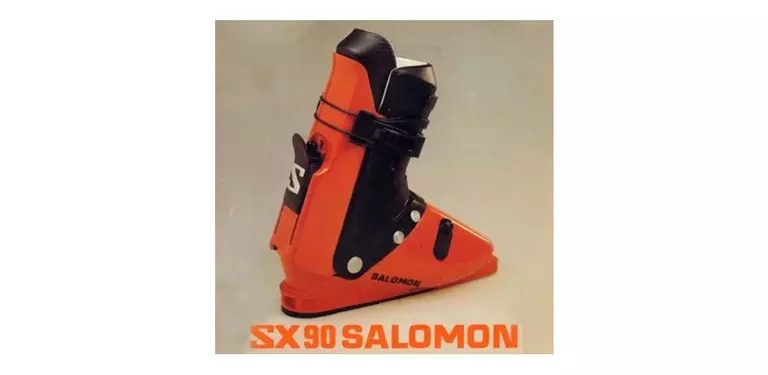
The SX90 is one of those boots that still gets a nostalgic smile in the lift line, not just because it felt better but because it looked different from anything else on the mountain. In 1979 Salomon hired industrial designer Roger Tallon, the same mind behind France’s high speed TGV trains, to rethink the ski boot from the ground up. Tallon treated the boot like a piece of performance equipment rather than a stiff shell with buckles. Salomon backed the idea with new manufacturing techniques, including plastic multi injection and the use of composite materials rarely seen in ski gear at the time. The result was the now legendary orange rear entry boot that spread across the world in the early 80s. It wrapped the foot instead of trapping it and it held the heel in place in a way skiers had never felt before. For many people this was the first time a ski boot felt like something designed for a human foot rather than something you endured for the sake of skiing.
How SensiFit and Custom Fit Rewrote the Rules of Boot Comfort
Somewhere in the mid to late 1990s, someone at Salomon wondered what would happen if the boot hugged the foot in a smarter way. That thought led to SensiFit. It also led to one of the biggest turning points in modern ski boots. The liner itself could change shape.
When Custom Fit liners arrived, heat molding felt futuristic. You would step into a shop, let a bootfitter warm the liner, slide your foot in and wait as the boot literally learned your shape. It felt like magic even if it was really just good engineering.
Bootfitters often describe this era as a turning point, similar to a musician finding a new chord that changes how they hear everything else. It suddenly became possible to help skiers who had always struggled with fit. The transformation was immediate. People stepped out of the shop with boots that finally matched their anatomy.
This was not hype. It was a transformation. And Salomon was only getting started.
While the ski world was still catching its breath from Custom Fit, Salomon did something no one saw coming. They took the exact same obsession downhill and pointed it at dirt.
🎿 Note: If you haven’t experienced professional boot fitting yet, it can take your comfort, performance, and even safety, to the next level.
From Ski Boots to Trail Shoes: The Same Fit Obsession
The early 2000s brought an unexpected twist when Salomon stepped fully into trail running. They could have started with a blank slate. Instead, they used the exact same fit philosophy they had been refining for ski boots.
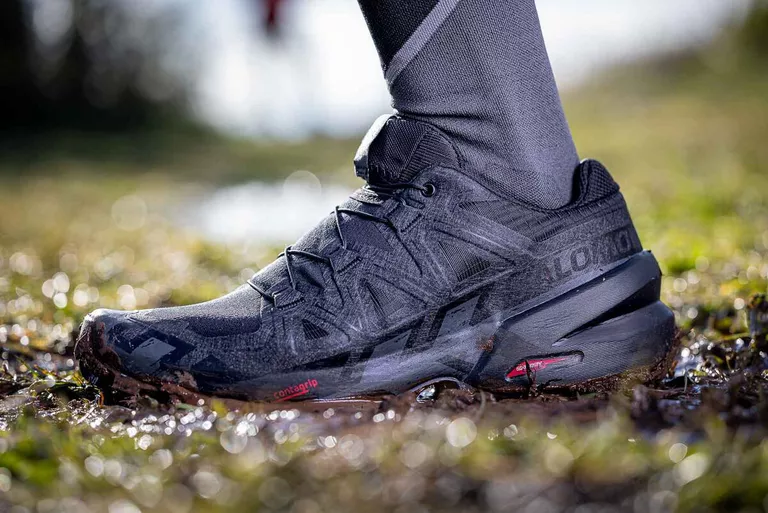
The first Speedcross felt shockingly different. Soft landings. A precise midfoot wrap. Enough toe room to avoid the classic downhill smash. The XA Pro built on the same approach and suddenly the off-road running world changed.
Then came athlete partnerships. Kilian Jornet, among others, pushed Salomon to refine the idea of a shoe that disappears on your foot. Lab experiments moved to mountain ridges. Those ideas eventually became everyday footwear for millions. Salomon shoes appeared on city streets everywhere. Yet at the center of all of it was the same belief they carried from the slopes.
Fit comes first.
The Supra Series and the Next Step in Fit
As the industry moved through decades of experimentation with plastics, liners and closures, Salomon continued asking the same question that started with the SX90. How can this feel better for real skiers? That question eventually led to one of the biggest modern shifts in boot design. The decision to build a shell around a BOA system instead of adding it later.
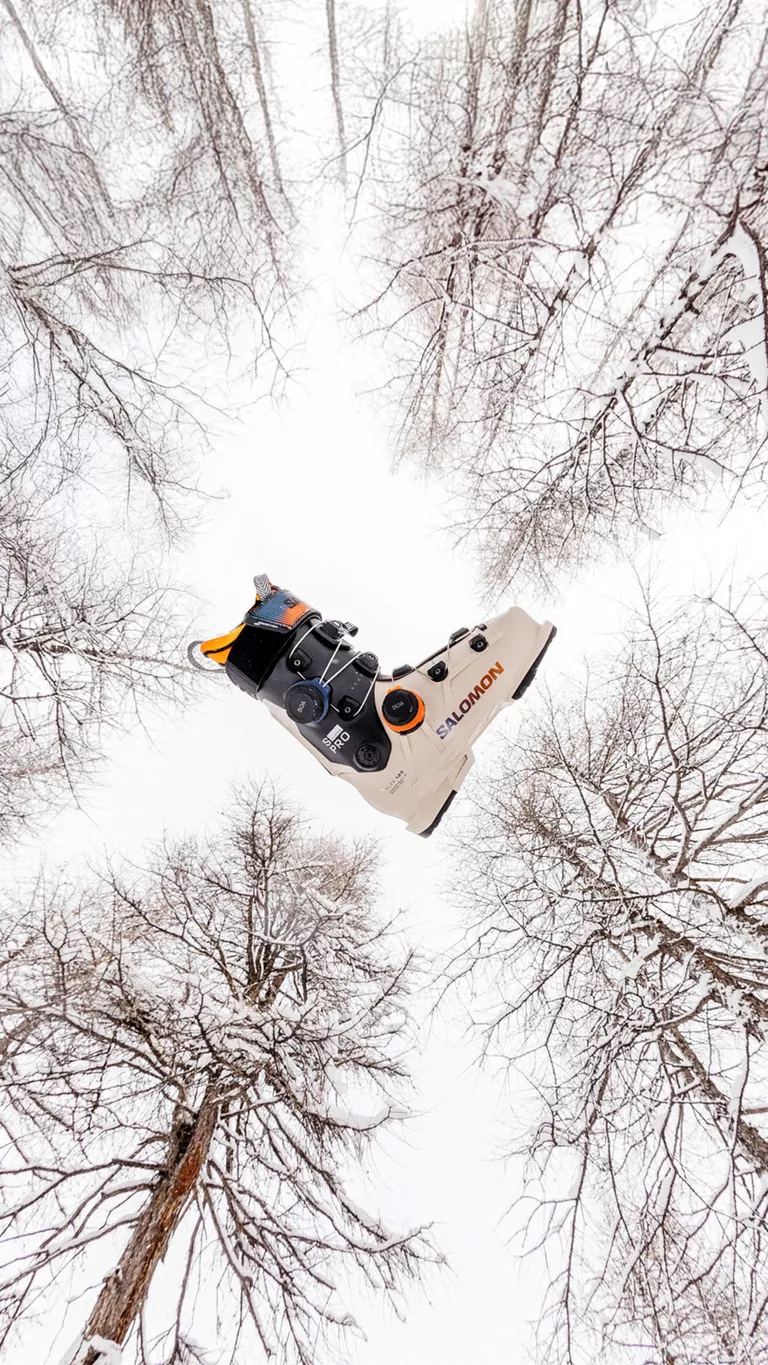
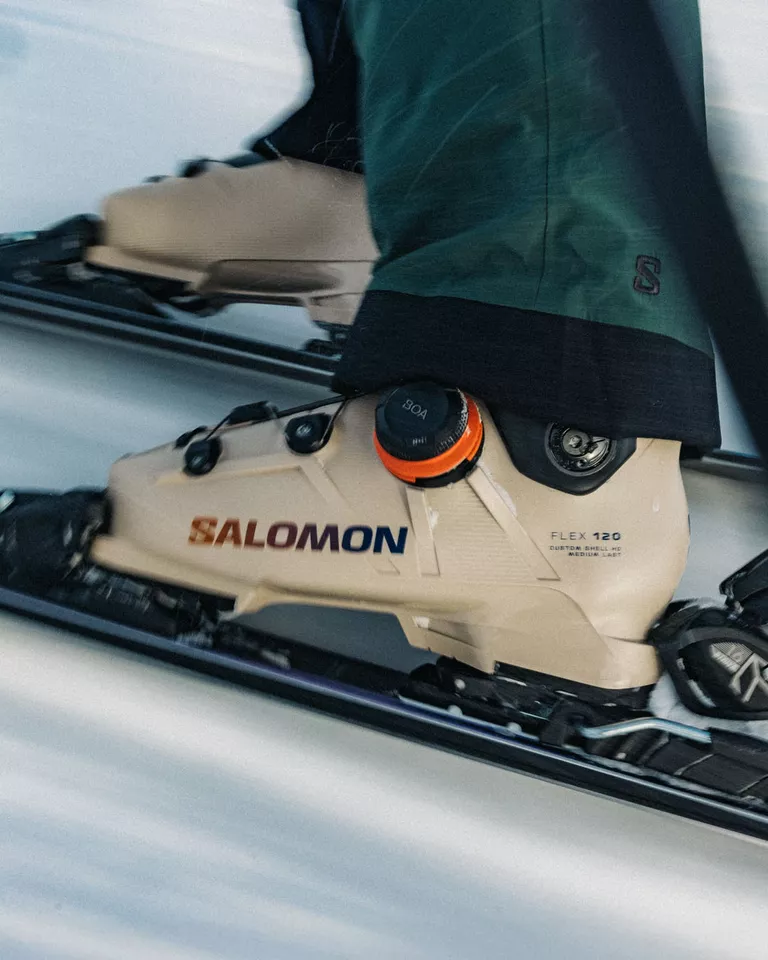
This winter, the S/Pro Supra Dual BOA series represents the latest expression of that idea. The men’s S/Pro Supra Dual BOA 120 is a good example of how far Salomon has pushed the concept. The closure system tightens the shell evenly so the boot wraps the foot instead of clamping it. The fit feels more predictable on snow because pressure is spread through the entire lower shell. Skiers feel connected to their skis in a way that is smooth and controlled rather than rigid.
Bootfitters appreciate the design because it gives them a level of micro adjustment that traditional buckles cannot match. Skiers appreciate it because the boot feels powerful without the familiar hot spots or numbness that sometimes show up in higher flex shells. It is the kind of design evolution that feels obvious once you try it. Of course this is where Salomon ended up after years of chasing a more natural fit.
The same philosophy appears in the women’s S/Pro Supra Dual BOA 105 W. This boot takes the even wrap of the BOA system and adapts it to common fit challenges for women. The cuff is shaped to avoid calf bite. The lower shell closes in a way that protects the instep from pinch points. When both BOA zones are set, the foot feels held in place without being squeezed. The stance feels balanced and the boot feels ready to respond on steeps, groomers or soft snow.
The 105 flex is a practical choice for advanced women who want enough support for higher speeds and variable terrain but do not want the punishing stiffness that can show up in elite level boots. The Power Spine gives the boot a consistent, progressive feel through the turn and adds stability in chopped up conditions.
Salomon also brings over the Custom Shell HD process, which lets a bootfitter shape both the lower shell and cuff in just a few minutes. For skiers who want more room in specific areas or a closer feel for performance, this small adjustment makes a large difference. Inside, the Exowrap 4D liner holds the heel securely while allowing the forefoot to relax. Latex foams adapt quickly and hold their shape well over time.
These details are not flashy, and that is exactly the point. They show how Salomon continues to refine ideas that began decades ago. The goal has never been to create the most complex boot. The goal has been to allow more skiers to stand naturally, move naturally and stay comfortable all day.
The Supra series is the modern version of that philosophy. It closes evenly. It stands balanced. It disappears under you so your skiing can take center stage.
🎿 Curious how today’s boots stack up? Browse our Winter Gear Guide 2025/26: Skis, Boots, Snowboards & Apparel
Salomon’s history is full of clever ideas and technical leaps, but the heart of it is much simpler. The brand has always paid attention to the human side of skiing. How feet swell in the afternoon. How calves shape differently from one skier to the next. How one small pressure point can ruin a day that should have been incredible.
Each new design solved a little more of that puzzle. Each new boot made it easier for more people to trust their footing, stay warm, and enjoy the mountains they came to explore. The modern Supra boots are not a break from the past. They are the continuation of a conversation Salomon started nearly eighty years ago.
A boot should help you move, not make you wince. A ski day should be spent looking at peaks, not adjusting buckles. When a brand keeps those priorities in sight, the rest falls into place.
At Christy Sports, that is the kind of evolution we love to see. Gear that invites you outside and makes the mountain feel a little more welcoming every time you step into it.
If you are wondering whether the Supra Series is right for you, a bootfitting session can make all the difference.
📍 Find a Christy Sports or Sturtevant’s bootfitting location near you
Last updated: December 12, 2025
Ski & Snowboard,
Gear Guides
Dec 12, 2025
Salomon and the Never-Ending Quest for the Perfect Fit
If you skied in the 90s, you probably remember the moment when your entire day hinged on whether your feet could make it one more run. Rental boots felt like cold plastic buckets. Your buddy’s hand-me-down rear-entry boots smelled like something that should not have survived the move from his parents’ garage. The buckles were either cemented shut or swinging loose. Skiing was joyful. Ski boots were not.
But every once in a while, someone would show up with something different. A Salomon SX90. Maybe an early S-Series. You would slip your foot inside expecting the usual pressure over the instep and the pinky toe sacrifice. Instead, it felt unexpectedly comfortable. Snug without squeezing. Supportive without punishment. Even as a teenager, you could sense that whoever built this thing actually cared about how your foot felt inside a boot.
Most of us did not know it then, but that was the start of Salomon’s quiet revolution in fit.
Where the Fit Philosophy Began: Annecy, 1947
Long before BOA dials and heat molding became part of the ski shop vocabulary, the Salomon family was tinkering with ideas inside a small workshop in Annecy, France. It was 1947. Skiing was shifting from a military tool toward recreation and a lifestyle. Most equipment at the time focused on durability and basic function. Comfort was almost accidental.
Salomon’s philosophy was already forming even if they were not saying it directly. A piece of gear should wrap the human body. It should work with the way you move. It should not require you to endure pain just to participate in the sport.
By the 1990s, that belief was no longer a fringe idea. Skiers were demanding more. They were skiing harder, skiing longer, skiing differently. That little obsession from Annecy suddenly felt like the solution to a problem the whole industry finally admitted existed.
The SX90 and Skiing’s First Real Fit Breakthrough
The SX90 is one of those boots that still gets a nostalgic smile in the lift line, not just because it felt better but because it looked different from anything else on the mountain. In 1979 Salomon hired industrial designer Roger Tallon, the same mind behind France’s high speed TGV trains, to rethink the ski boot from the ground up. Tallon treated the boot like a piece of performance equipment rather than a stiff shell with buckles. Salomon backed the idea with new manufacturing techniques, including plastic multi injection and the use of composite materials rarely seen in ski gear at the time. The result was the now legendary orange rear entry boot that spread across the world in the early 80s. It wrapped the foot instead of trapping it and it held the heel in place in a way skiers had never felt before. For many people this was the first time a ski boot felt like something designed for a human foot rather than something you endured for the sake of skiing.
How SensiFit and Custom Fit Rewrote the Rules of Boot Comfort
Somewhere in the mid to late 1990s, someone at Salomon wondered what would happen if the boot hugged the foot in a smarter way. That thought led to SensiFit. It also led to one of the biggest turning points in modern ski boots. The liner itself could change shape.
When Custom Fit liners arrived, heat molding felt futuristic. You would step into a shop, let a bootfitter warm the liner, slide your foot in and wait as the boot literally learned your shape. It felt like magic even if it was really just good engineering.
Bootfitters often describe this era as a turning point, similar to a musician finding a new chord that changes how they hear everything else. It suddenly became possible to help skiers who had always struggled with fit. The transformation was immediate. People stepped out of the shop with boots that finally matched their anatomy.
This was not hype. It was a transformation. And Salomon was only getting started.
While the ski world was still catching its breath from Custom Fit, Salomon did something no one saw coming. They took the exact same obsession downhill and pointed it at dirt.
🎿 Note: If you haven’t experienced professional boot fitting yet, it can take your comfort, performance, and even safety, to the next level.
From Ski Boots to Trail Shoes: The Same Fit Obsession
The early 2000s brought an unexpected twist when Salomon stepped fully into trail running. They could have started with a blank slate. Instead, they used the exact same fit philosophy they had been refining for ski boots.
The first Speedcross felt shockingly different. Soft landings. A precise midfoot wrap. Enough toe room to avoid the classic downhill smash. The XA Pro built on the same approach and suddenly the off-road running world changed.
Then came athlete partnerships. Kilian Jornet, among others, pushed Salomon to refine the idea of a shoe that disappears on your foot. Lab experiments moved to mountain ridges. Those ideas eventually became everyday footwear for millions. Salomon shoes appeared on city streets everywhere. Yet at the center of all of it was the same belief they carried from the slopes.
Fit comes first.
The Supra Series and the Next Step in Fit
As the industry moved through decades of experimentation with plastics, liners and closures, Salomon continued asking the same question that started with the SX90. How can this feel better for real skiers? That question eventually led to one of the biggest modern shifts in boot design. The decision to build a shell around a BOA system instead of adding it later.
This winter, the S/Pro Supra Dual BOA series represents the latest expression of that idea. The men’s S/Pro Supra Dual BOA 120 is a good example of how far Salomon has pushed the concept. The closure system tightens the shell evenly so the boot wraps the foot instead of clamping it. The fit feels more predictable on snow because pressure is spread through the entire lower shell. Skiers feel connected to their skis in a way that is smooth and controlled rather than rigid.
Bootfitters appreciate the design because it gives them a level of micro adjustment that traditional buckles cannot match. Skiers appreciate it because the boot feels powerful without the familiar hot spots or numbness that sometimes show up in higher flex shells. It is the kind of design evolution that feels obvious once you try it. Of course this is where Salomon ended up after years of chasing a more natural fit.
The same philosophy appears in the women’s S/Pro Supra Dual BOA 105 W. This boot takes the even wrap of the BOA system and adapts it to common fit challenges for women. The cuff is shaped to avoid calf bite. The lower shell closes in a way that protects the instep from pinch points. When both BOA zones are set, the foot feels held in place without being squeezed. The stance feels balanced and the boot feels ready to respond on steeps, groomers or soft snow.
The 105 flex is a practical choice for advanced women who want enough support for higher speeds and variable terrain but do not want the punishing stiffness that can show up in elite level boots. The Power Spine gives the boot a consistent, progressive feel through the turn and adds stability in chopped up conditions.
Salomon also brings over the Custom Shell HD process, which lets a bootfitter shape both the lower shell and cuff in just a few minutes. For skiers who want more room in specific areas or a closer feel for performance, this small adjustment makes a large difference. Inside, the Exowrap 4D liner holds the heel securely while allowing the forefoot to relax. Latex foams adapt quickly and hold their shape well over time.
These details are not flashy, and that is exactly the point. They show how Salomon continues to refine ideas that began decades ago. The goal has never been to create the most complex boot. The goal has been to allow more skiers to stand naturally, move naturally and stay comfortable all day.
The Supra series is the modern version of that philosophy. It closes evenly. It stands balanced. It disappears under you so your skiing can take center stage.
🎿 Curious how today’s boots stack up? Browse our Winter Gear Guide 2025/26: Skis, Boots, Snowboards & Apparel
Salomon’s history is full of clever ideas and technical leaps, but the heart of it is much simpler. The brand has always paid attention to the human side of skiing. How feet swell in the afternoon. How calves shape differently from one skier to the next. How one small pressure point can ruin a day that should have been incredible.
Each new design solved a little more of that puzzle. Each new boot made it easier for more people to trust their footing, stay warm, and enjoy the mountains they came to explore. The modern Supra boots are not a break from the past. They are the continuation of a conversation Salomon started nearly eighty years ago.
A boot should help you move, not make you wince. A ski day should be spent looking at peaks, not adjusting buckles. When a brand keeps those priorities in sight, the rest falls into place.
At Christy Sports, that is the kind of evolution we love to see. Gear that invites you outside and makes the mountain feel a little more welcoming every time you step into it.
If you are wondering whether the Supra Series is right for you, a bootfitting session can make all the difference.
📍 Find a Christy Sports or Sturtevant’s bootfitting location near you
Last updated: December 12, 2025