Patio
Aug 28, 2026
Cleaning Outdoor Furniture: A Colorado and Utah Care Guide
Last Updated: August 2026
Quick answer: Almost every patio material cleans with mild dish soap, warm water, a soft brush, and a full rinse. The differences are in what you must not do. Never pressure wash wood or wicker. Never close a damp umbrella or store a wet cushion. And never assume two hardwoods take the same finish: Kingsley Bate says keep oil off its teak, while Jensen Outdoor names an oil finish for its ipe.
Late summer is a good time to clean outdoor furniture. Pollen, sunscreen, food spills, and summer storms have had months to build up. Cleaning now makes winter storage, or year-round outdoor use, easier.
Colorado and Utah patios face conditions that sea-level cleaning guides ignore: stronger UV, wide daily temperature swings, snow, dry air, and high wind. Our guide to patio furniture for high-altitude homes covers those conditions in full. This guide covers what they mean for cleaning.
Whether you bought your set from our outdoor and patio furniture assortment or inherited something that needs reviving, the right routine buys you more seasons.
In this guide
- The basic wash
- How to clean POLYWOOD furniture
- How to clean teak outdoor furniture
- How to clean wicker and rattan furniture
- How to clean metal patio furniture
- How to clean ipe outdoor furniture
- How to clean bird droppings from outdoor furniture
- How to clean outdoor cushions and fabric
- How to clean glass patio tabletops
- How to clean patio umbrellas
- What mountain climate does to patio furniture
- When cleaning isn't enough: knowing when to replace
- Frequently asked questions
- More guides for your mountain patio
The basic wash
Most patio furniture cleans the same way. Learn the method once, then read your material's section for the exceptions.
- Brush off loose dirt and debris.
- Mix mild dish soap into warm water.
- Wash the surface with a soft cloth or a soft-bristle brush.
- Rinse with a garden hose until the water runs clear.
- Let the piece dry completely before you cover or store it.
Two rules apply to nearly everything below. Do not use a pressure washer on wood or wicker. Do not leave any material wet.
Start mild and escalate only if you must. You can always get more aggressive. You cannot undo a damaged finish.
How to clean POLYWOOD furniture
Use the basic wash. POLYWOOD needs nothing more for routine care. The material is non-porous HDPE, so dirt, pollen, and spills stay on the surface and nothing soaks in. Let it air dry. Skip the towel.
For heavier buildup and for sanitizing, POLYWOOD's published care guidance specifies one part bleach to two parts water. Apply the solution, let it work, then rinse thoroughly.
POLYWOOD also permits pressure washing, within limits. Stay at or below 1,500 psi. Use a 40-degree fan tip. Hold the nozzle about 8 inches from the surface and move in slow, even sweeps. The color runs through the lumber at the molecular level rather than sitting in a surface coating. Neither cleaning products nor pressure at these settings can fade, chip, or peel it.
What POLYWOOD never needs
- Oils or sealants
- Annual treatments or staining
- Seasonal storage
That last point matters here. Most outdoor furniture moves to a garage or covered storage before winter. POLYWOOD stays out. When snow piles up, brush it off with a broom and carry on.
Represented at Christy Sports: the Vineyard collection is POLYWOOD's flagship, with dining sets and deep seating in a classic slatted profile. The Edge collection is modern and architectural. The Adirondack line sits low, with wide armrests that shed water and debris.
New to POLYWOOD, or want a custom set? Read our POLYWOOD buying guide or explore POLYWOOD Custom Order Centers for configurations beyond fixed sets.
Not sure what material you have? Christy Sports has spent nearly 30 years fitting patio furniture to mountain conditions. Our specialists can tell you what holds up and what does not. Explore patio collections, find a showroom near you, or schedule a free design consultation.
How to clean teak outdoor furniture
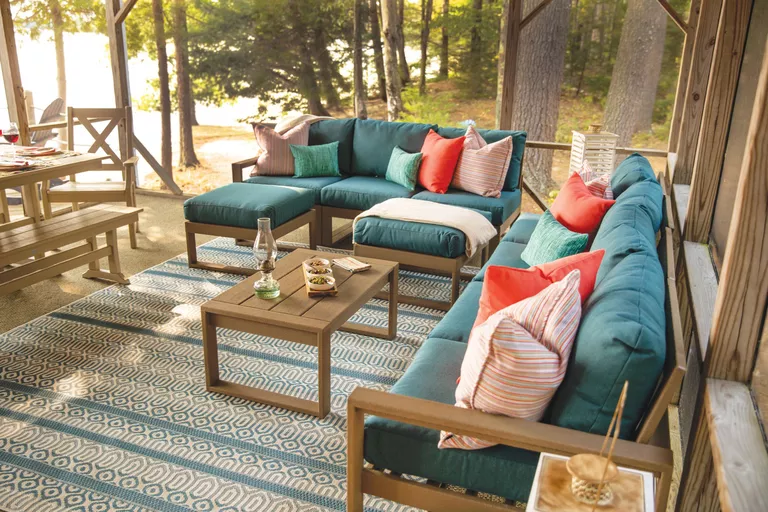
Use the basic wash, and scrub with the grain rather than across it. Wash teak twice a year, and wipe it down every few weeks during heavy use. Teak needs no oil to stay structurally sound. Left alone, it weathers to a silver-gray patina. That color change is not a sign of failure.
The color question
Plenty of people prefer the silver-gray. If you want to slow it down and hold more of the original honey color, follow your manufacturer's system rather than reaching for generic teak oil.
Kingsley Bate is the primary teak brand we carry, and its published care guidance advises against oil and oil-based sealers. Excess oil, or oil applied before the wood is dry, can cause mildew. Kingsley Bate offers a water-based Teak Protector instead and treats it as a cosmetic step, not structural protection. Whatever brand you own, read its care sheet before you put anything on the wood.
What to avoid
Harsh chemical cleaners strip the wood's natural oils. A pressure washer does worse. High pressure drives water deep into the grain and lifts the fibers. The result is a fuzzy surface that takes heavy sanding to repair.
Represented at Christy Sports: Kingsley Bate Spencer, built on solid Grade A teak frames hand-woven with all-weather wicker. Clean the frame by this section and the weave by the next one.
How to clean wicker and rattan furniture
Synthetic and resin wicker take the basic wash with two changes. Vacuum the weave first with a brush attachment. Use a barely damp cloth rather than a soaked one, and work a soft brush into the weave only if the dirt is set in. Dry it immediately. Wet wicker mildews and weakens.
Natural rattan needs more caution. Follow the manufacturer's care instructions for your piece, keep the fiber from getting saturated, and let it dry fully. Low humidity in Colorado and Utah makes natural rattan brittle over time. If your manufacturer approves a conditioning product, use that one. Do not substitute a generic oil.
Key rule: no pressure washer on wicker or rattan of any kind. The stream breaks the weave apart.
What to avoid: bleach-based cleaners and abrasive tools degrade natural and synthetic fibers alike. Linseed oil never goes on synthetic or resin wicker, and goes on natural rattan only when the manufacturer calls for it.
Represented at Christy Sports: Kingsley Bate Spencer pairs all-weather wicker with teak frames. Kettler Pilano uses hand-woven polymer seating on a wrought iron frame. Both take the synthetic wicker method above.
How to clean metal patio furniture
Use the basic wash, then dry the frame completely. Standing water does the damage, not the cleaning.
Metal covers materials with different weak points. Wrought iron carries the most weight, which is what makes it stable on an exposed deck. Its weak point is paint: once a chip opens, rust follows. Powder-coated aluminum resists corrosion and moves easily, but the coating scratches.
Wrought iron
Inspect the frame once a year for rust spots and paint chips. To repair a small spot:
- Sand the rust with fine-grit sandpaper.
- Wipe the area clean.
- Apply a rust-inhibiting primer.
- Finish with outdoor paint matched to the original color.
A light coat of car wax or furniture wax after cleaning protects the paint from UV and moisture.
Some collections mix metals. O.W. Lee's Classico collection pairs wrought iron with galvanized steel strapping, and both take the same care. Heavy pieces like O.W. Lee Monterra suit high-wind decks, thanks to their weight and low center of gravity. O.W. Lee is one of several heritage brands we carry that are still built in the United States, covered in our guide to American made patio furniture.
Powder-coated aluminum
Powder coating is durable, but it chips when furniture gets dropped or dragged. Touch up chips right away with color-matched outdoor paint, before corrosion starts underneath. Keep abrasive scrubbers off the coating.
How to clean ipe outdoor furniture
Use the basic wash and work with the grain, the same as teak. Let the wood dry fully before you apply any finish.
Ipe is a South American hardwood, exceptionally dense and naturally resistant to rot, insects, and moisture. That combination makes it one of the most durable outdoor furniture materials available.
Maintaining ipe's color
Here is where ipe and teak part ways. Kingsley Bate says keep oil off its teak. Jensen Outdoor, whose Ipe and Sky collections we carry, specifies an oil finish for its ipe: Penofin Verde. Apply it after you clean and brighten the wood, with an optional wood shield over the top. Reapply about once a year to hold the original chocolate brown.
None of it is required. Untreated ipe goes silver-gray like teak and stays structurally sound. This is appearance maintenance, not survival maintenance. Check which wood you own, and which brand made it, before you apply anything.
Do not use: linseed oil, which leaves a sticky residue. Bleach, which strips the natural oils. Or a pressure washer, which raises the grain on dense hardwood.
Represented at Christy Sports: Jensen Outdoor Ipe series and the Sky collection.
How to clean bird droppings from outdoor furniture
Do not scrape dried droppings. Wet the spot and wait a few minutes. The residue softens and lifts away without grinding into the fabric or scratching the finish. Then clean the area with the basic wash.
On fabric, blot and rinse. Do not scrub hard. On POLYWOOD, metal, or glass, use a soft cloth or brush. Check your manufacturer's care instructions before you reach for bleach or a stronger cleaner, and skip the pressure washer unless the manufacturer permits one for that material.
How to clean outdoor cushions and fabric
Cushions collect pollen, dust, mildew, and bird droppings. Most quality outdoor fabrics, including Sunbrella and comparable solution-dyed acrylics, resist fading well. They still need regular cleaning to keep mildew out.
- Brush off loose debris and shake the cushions out.
- Mix mild dish soap into warm water.
- Sponge or lightly scrub the surface. Do not saturate the foam insert.
- Rinse thoroughly. Soap residue attracts dirt and breaks fabric down over time.
- Stand the cushions on edge and let them dry all the way through.
That last step is not optional. A cushion laid flat traps water against its foam core, which is exactly what an afternoon thunderstorm followed by intense sun creates at altitude. Stand a soaked cushion on edge. Do not lay it flat and wait for the sun to handle it.
For mold and mildew
Sunbrella's published cleaning guidance calls for one cup of bleach and a quarter cup of mild soap per gallon of clean water. Apply the solution, let it soak for up to 15 minutes, work the area with a soft brush, then rinse thoroughly and air dry. One caution: bleach strips the fabric's water and stain repellency along with the mildew, so plan to re-treat the fabric afterward.
Other outdoor fabrics discolor or degrade under bleach. Check the manufacturer's care instructions before you use it on anything other than confirmed Sunbrella.
Storage
At the end of the season, or ahead of a long stretch of rain, move cushions indoors or into a vented outdoor storage box. Sealed containers trap humidity and grow mildew even on cushions that went in dry.
Not ready to pack up? Our fall patio finds cover what keeps a patio usable into October, and our fire pit guide covers the piece that buys the most extra weeks.
Shopping for a new dining set? Our patio dining set guide covers table sizing, chair clearance, and material picks for mountain homes.

How to clean glass patio tabletops
Glass is the one material that skips the soap. Use a glass cleaner, or equal parts white vinegar and water, applied with a soft cloth and buffed dry.
For stubborn residue, including bird droppings, sap, and mineral deposits, apply a small amount of rubbing alcohol. Let it sit a minute, then wipe. Abrasive scrubbers and steel wool scratch glass permanently.
Hard water is common across Colorado and Utah municipalities. White mineral deposits from sprinkler systems build up on glass over time, and diluted white vinegar dissolves them well. In a high-mineral area, wipe the tabletop down after irrigation runoff reaches it.
Safety note: if a tempered glass top has any chip or crack along the edge, stop using the table until the top is replaced. Compromised tempered glass can shatter suddenly under stress.
How to clean patio umbrellas
Canopies collect pollen, dust, bird droppings, and tree debris all season. Regular cleaning extends the life of the fabric and keeps mildew out of the folds.
- Open the umbrella fully.
- Brush off loose debris with a soft brush.
- Wash the canopy in sections with mild dish soap and warm water.
- Rinse with a garden hose until the water runs clear.
- Leave the umbrella open until it is completely dry.
Most people skip step five. A closed damp umbrella traps moisture in the folds, and that is how mildew starts. Once it takes hold in the fibers, removal is difficult without damage to the fabric.
For mildew on a canopy: if the fabric is confirmed Sunbrella, use the bleach and soap solution from the cushion section, then re-treat the canopy for water repellency. For any other canopy fabric, check the manufacturer's instructions first.
Pole and frame: wipe the pole and frame with a damp cloth. Check the pulley and tilt hardware for debris or corrosion. Apply a small amount of silicone spray to the moving parts at the start and end of each season.
What altitude does to canopy fabric
UV breaks umbrella fabric down faster up here than at sea level. Significant fading or brittleness after three to four seasons is UV exposure, not a care failure. We carry Treasure Garden and Frankford umbrellas, both with Sunbrella canopy options rated for high-UV environments. Canopy replacement is available for most brands we carry, and any of our patio showrooms can walk you through the options.
Choosing a new umbrella instead? Our patio umbrella buying guide covers size, tilt style, and base weight for mountain decks.
What mountain climate does to patio furniture
Colorado and Utah patios face four pressures that lowland guides do not account for.
UV. Exposure increases roughly 4 to 5 percent for every 1,000 feet of elevation gain. That puts Denver and Boulder at approximately 24 percent more UV than sea level, Park City at approximately 31 percent, Vail at approximately 37 percent, and Breckenridge at approximately 43 percent. It is a large part of why gear built for coastal climates underperforms here.
Temperature cycling. Spring and fall in the Rockies bring 40 to 50 degree swings inside a single day. Freezing nights followed by afternoon sun stress every material that absorbs moisture, especially natural fibers, cushion foam, and wood. Over hundreds of cycles, materials that expand and contract unevenly crack and fail at the joints.
Wind. Front Range Chinook events produce 50 to 70 mph gusts in exposed corridors from Fort Collins south through Denver. Utah has its own version. Canyon outflow winds through Emigration, Parleys, and the Cottonwoods mean a patio that looks sheltered can be fully exposed. On a windy site, heavy materials like wrought iron and dense cast aluminum hold better than light aluminum or HDPE, and low, wide furniture beats tall, narrow designs.
Snow load. Six inches overnight is common, and that weight sits on the frame as sustained static stress.
Material selection matters as much as cleaning here. For a Utah home, our guide to patio furniture for Utah covers Salt Lake City and Park City specifically. Our patio furniture materials guide compares every major material with mountain climate context.
When cleaning isn't enough: knowing when to replace
Check the hardware before you judge the furniture. After a winter of temperature cycling, one loose bolt on a chair leg can become a collapse by June. Turn each piece over once a year. The underside is where loose hardware, rust, and nests hide. Check every bolt and joint, and look for hairline cracks at the connection points on anything that sat under snow.
Walk the drainage after the first spring rain. Furniture legs standing in water rot at the base, one of the least-checked spots on a patio, and by the time the damage shows it is structural. Winter settling can redirect water across a deck. If you see pooling under the legs, raise them on furniture feet or regrade the area. Sometimes the drainage problem is really a layout problem. Our guide to planning your patio like a pro covers how to work with the way water moves.
Good cleaning extends the life of every material here, but not indefinitely. What to watch for:
- POLYWOOD. No wear indicators to track. A cracked or broken piece is physical damage, not material degradation. Replace only what is damaged.
- Teak and ipe. Surface cracks deeper than the grain signal advanced drying. If cleaning and a manufacturer-approved finish do not close them, the wood has dried past recovery. Deep checking at the joints is structural.
- Wicker and rattan. Strands that snap during normal use, not just during cleaning, mean the fiber has gone brittle. Synthetic wicker outlasts natural rattan at altitude by a wide margin.
- Cushions. Replace when the foam no longer recovers its shape, or when the fabric is torn, heavily faded, or holds mildew that two treatments cannot clear.
- Metal. Surface rust that cleans and touches up stays manageable for years. Structural rust at a weld or a load-bearing joint is a safety issue.
Ready to replace? Our guide to the most durable outdoor patio furniture for mountain climates covers what survives a Colorado or Utah winter. From there, explore patio collections, or read our POLYWOOD buying guide if low maintenance is the priority.
Frequently asked questions
How do you clean POLYWOOD furniture?
POLYWOOD cleans with mild dish soap and warm water. Use a soft-bristle brush or cloth, scrub the surface, and rinse with a garden hose. For heavier buildup and sanitizing, POLYWOOD's care guidance calls for one part bleach to two parts water, applied and then rinsed thoroughly. The material is non-porous, so dirt stays on the surface instead of soaking in, which keeps routine cleaning quick.
Can you pressure wash POLYWOOD?
Yes, within limits. POLYWOOD specifies 1,500 psi maximum, a 40-degree fan tip, the nozzle about 8 inches from the surface, and slow even sweeps. The material is non-porous, so water does not penetrate it, and the color runs through the lumber at the molecular level rather than sitting in a surface coating. Neither cleaning products nor pressure at those settings can strip it. That resilience is one reason POLYWOOD suits mountain climates, where furniture often needs cleaning after snowmelt or a muddy spring.
Does POLYWOOD need to be stored in winter?
No. POLYWOOD is built for year-round outdoor use and resists the snow, ice, temperature cycling, and UV that crack, warp, or degrade other materials. That matters for Colorado and Utah homeowners without large covered storage, and for anyone who does not want to move furniture twice a year. Brush snow off with a broom if it accumulates.
Do you need to oil teak outdoor furniture?
No. Kingsley Bate, the primary teak brand Christy Sports carries, advises against oil and oil-based sealers entirely, because excess oil can cause mildew. Untreated teak weathers to a silver-gray patina and stays structurally sound. To slow that color change, Kingsley Bate offers a water-based Teak Protector as an optional cosmetic step. Whatever brand you own, follow its care sheet rather than reaching for generic teak oil.
Should you oil ipe outdoor furniture?
Only if you want to keep the dark color. Jensen Outdoor recommends a Penofin Verde oil finish for its ipe, applied after you clean and brighten the wood and reapplied about once a year. This is the opposite of the teak guidance, so check which wood you own and which brand made it before you apply anything. Untreated ipe weathers to silver-gray and stays structurally sound.
What is the easiest outdoor furniture to maintain?
Powder-coated aluminum, synthetic wicker, and POLYWOOD are all low-maintenance options for mountain patios. POLYWOOD is the easiest of the three. It needs no oils, sealants, or annual treatments, it can be pressure washed, and it does not need seasonal storage. Its non-porous surface also means spills, pollen, and bird droppings wipe off instead of staining.
What outdoor furniture materials require the most maintenance?
Natural materials need the most attention. Natural rattan requires gentle cleaning and dries out in Colorado and Utah's low humidity. Wrought iron needs an annual inspection for rust spots and paint chips, with touch-up work as needed. Teak and ipe stay sound without any finish, but holding their original color means following the specific system your manufacturer recommends, which differs by brand.
Can I use bleach to clean outdoor cushions?
It depends on the fabric. Sunbrella permits a diluted bleach solution for mold and mildew: one cup of bleach and a quarter cup of mild soap per gallon of water. Soak for up to 15 minutes, then rinse thoroughly. Bleach also strips the fabric's water and stain repellency, so re-treat it afterward. Other outdoor fabrics discolor or degrade under bleach, so check the manufacturer's care instructions first.
How do you clean outdoor patio furniture after a Colorado or Utah winter?
Inspect before you clean. Check wood for surface cracking or raised grain from temperature cycling, and sand lightly if needed. Check metal frames for rust spots and paint chips that appeared under snow load. Then brush off debris and follow the basic wash, plus whatever your material's section adds. POLYWOOD needs only soap and water after snowmelt. Air cushions out before use to release trapped moisture, and check any stored under an outdoor cover for mildew. Finish metal with a fresh coat of protective wax for the summer UV ahead.
More guides for your mountain patio
Start here
- How to Choose Patio Furniture for Colorado and Utah Homes
- Materials: Choosing the Best Patio Furniture Materials: A Complete Guide
- Durability: What Is the Most Durable Outdoor Patio Furniture for Mountain Climates?
- Utah homes: Best Outdoor Patio Furniture for Utah Homes
By category
- Dining: How to Choose the Perfect Patio Dining Set for Your Mountain Home
- Umbrellas: The Complete Guide to Choosing the Right Patio Umbrella
- Fire pits: How to Choose a Fire Pit for a Colorado or Utah Patio
- POLYWOOD: The POLYWOOD Buying Guide for Colorado and Utah Mountain Homes
Planning your space
- Layout: Plan Your Patio like a Pro
- Setup: Find Your Ideal Patio Setup
Buying and seasons
- American made: American Made Patio Furniture: Heritage Brands Built in the USA
- Custom orders: The Best Custom Patio Furniture in Colorado
- Fall: Extend the Season: Fall Patio Finds to Keep You Outside Longer
See it in person: Christy Sports patio showrooms
All outdoor furniture at Christy Sports is available in-store only. Our showroom team offers free design consultations, and everything on the floor is in stock. White-glove delivery includes assembly, inspection, and installation at your home.
Colorado
- Arvada: 7715 Wadsworth Blvd
- Avon: 182 Avon Rd
- Boulder: 2000 30th St
- Cherry Creek (Denver): 201 University Blvd
- Colorado Springs: 5294 N Nevada Ave
- Denver West (Lakewood): 14371 W Colfax Ave
- Dillon: 817 US-6
- Fort Collins: 3500 S College Ave
- Littleton: 8601 W Cross Dr
- Park Meadows (Englewood): 9607 County Line Rd
- Steamboat Springs: 1835 Central Park Dr
Utah
- Salt Lake City (Christy Sports): 3939 S Wasatch Blvd
- Kimball Junction (Park City): 6622 N Landmark Dr
- Leisure Living (Salt Lake City): 2208 S 900 E. Utah's largest outdoor patio furniture store, and part of the Christy Sports family of brands.
Find a patio showroom near you or schedule a free design consultation.
Last Updated: August 28, 2026
Patio
Aug 28, 2026
Cleaning Outdoor Furniture: A Colorado and Utah Care Guide
Last Updated: August 2026
Quick answer: Almost every patio material cleans with mild dish soap, warm water, a soft brush, and a full rinse. The differences are in what you must not do. Never pressure wash wood or wicker. Never close a damp umbrella or store a wet cushion. And never assume two hardwoods take the same finish: Kingsley Bate says keep oil off its teak, while Jensen Outdoor names an oil finish for its ipe.
Late summer is a good time to clean outdoor furniture. Pollen, sunscreen, food spills, and summer storms have had months to build up. Cleaning now makes winter storage, or year-round outdoor use, easier.
Colorado and Utah patios face conditions that sea-level cleaning guides ignore: stronger UV, wide daily temperature swings, snow, dry air, and high wind. Our guide to patio furniture for high-altitude homes covers those conditions in full. This guide covers what they mean for cleaning.
Whether you bought your set from our outdoor and patio furniture assortment or inherited something that needs reviving, the right routine buys you more seasons.
In this guide
- The basic wash
- How to clean POLYWOOD furniture
- How to clean teak outdoor furniture
- How to clean wicker and rattan furniture
- How to clean metal patio furniture
- How to clean ipe outdoor furniture
- How to clean bird droppings from outdoor furniture
- How to clean outdoor cushions and fabric
- How to clean glass patio tabletops
- How to clean patio umbrellas
- What mountain climate does to patio furniture
- When cleaning isn't enough: knowing when to replace
- Frequently asked questions
- More guides for your mountain patio
The basic wash
Most patio furniture cleans the same way. Learn the method once, then read your material's section for the exceptions.
- Brush off loose dirt and debris.
- Mix mild dish soap into warm water.
- Wash the surface with a soft cloth or a soft-bristle brush.
- Rinse with a garden hose until the water runs clear.
- Let the piece dry completely before you cover or store it.
Two rules apply to nearly everything below. Do not use a pressure washer on wood or wicker. Do not leave any material wet.
Start mild and escalate only if you must. You can always get more aggressive. You cannot undo a damaged finish.
How to clean POLYWOOD furniture
Use the basic wash. POLYWOOD needs nothing more for routine care. The material is non-porous HDPE, so dirt, pollen, and spills stay on the surface and nothing soaks in. Let it air dry. Skip the towel.
For heavier buildup and for sanitizing, POLYWOOD's published care guidance specifies one part bleach to two parts water. Apply the solution, let it work, then rinse thoroughly.
POLYWOOD also permits pressure washing, within limits. Stay at or below 1,500 psi. Use a 40-degree fan tip. Hold the nozzle about 8 inches from the surface and move in slow, even sweeps. The color runs through the lumber at the molecular level rather than sitting in a surface coating. Neither cleaning products nor pressure at these settings can fade, chip, or peel it.
What POLYWOOD never needs
- Oils or sealants
- Annual treatments or staining
- Seasonal storage
That last point matters here. Most outdoor furniture moves to a garage or covered storage before winter. POLYWOOD stays out. When snow piles up, brush it off with a broom and carry on.
Represented at Christy Sports: the Vineyard collection is POLYWOOD's flagship, with dining sets and deep seating in a classic slatted profile. The Edge collection is modern and architectural. The Adirondack line sits low, with wide armrests that shed water and debris.
New to POLYWOOD, or want a custom set? Read our POLYWOOD buying guide or explore POLYWOOD Custom Order Centers for configurations beyond fixed sets.
Not sure what material you have? Christy Sports has spent nearly 30 years fitting patio furniture to mountain conditions. Our specialists can tell you what holds up and what does not. Explore patio collections, find a showroom near you, or schedule a free design consultation.
How to clean teak outdoor furniture
Use the basic wash, and scrub with the grain rather than across it. Wash teak twice a year, and wipe it down every few weeks during heavy use. Teak needs no oil to stay structurally sound. Left alone, it weathers to a silver-gray patina. That color change is not a sign of failure.
The color question
Plenty of people prefer the silver-gray. If you want to slow it down and hold more of the original honey color, follow your manufacturer's system rather than reaching for generic teak oil.
Kingsley Bate is the primary teak brand we carry, and its published care guidance advises against oil and oil-based sealers. Excess oil, or oil applied before the wood is dry, can cause mildew. Kingsley Bate offers a water-based Teak Protector instead and treats it as a cosmetic step, not structural protection. Whatever brand you own, read its care sheet before you put anything on the wood.
What to avoid
Harsh chemical cleaners strip the wood's natural oils. A pressure washer does worse. High pressure drives water deep into the grain and lifts the fibers. The result is a fuzzy surface that takes heavy sanding to repair.
Represented at Christy Sports: Kingsley Bate Spencer, built on solid Grade A teak frames hand-woven with all-weather wicker. Clean the frame by this section and the weave by the next one.
How to clean wicker and rattan furniture
Synthetic and resin wicker take the basic wash with two changes. Vacuum the weave first with a brush attachment. Use a barely damp cloth rather than a soaked one, and work a soft brush into the weave only if the dirt is set in. Dry it immediately. Wet wicker mildews and weakens.
Natural rattan needs more caution. Follow the manufacturer's care instructions for your piece, keep the fiber from getting saturated, and let it dry fully. Low humidity in Colorado and Utah makes natural rattan brittle over time. If your manufacturer approves a conditioning product, use that one. Do not substitute a generic oil.
Key rule: no pressure washer on wicker or rattan of any kind. The stream breaks the weave apart.
What to avoid: bleach-based cleaners and abrasive tools degrade natural and synthetic fibers alike. Linseed oil never goes on synthetic or resin wicker, and goes on natural rattan only when the manufacturer calls for it.
Represented at Christy Sports: Kingsley Bate Spencer pairs all-weather wicker with teak frames. Kettler Pilano uses hand-woven polymer seating on a wrought iron frame. Both take the synthetic wicker method above.
How to clean metal patio furniture
Use the basic wash, then dry the frame completely. Standing water does the damage, not the cleaning.
Metal covers materials with different weak points. Wrought iron carries the most weight, which is what makes it stable on an exposed deck. Its weak point is paint: once a chip opens, rust follows. Powder-coated aluminum resists corrosion and moves easily, but the coating scratches.
Wrought iron
Inspect the frame once a year for rust spots and paint chips. To repair a small spot:
- Sand the rust with fine-grit sandpaper.
- Wipe the area clean.
- Apply a rust-inhibiting primer.
- Finish with outdoor paint matched to the original color.
A light coat of car wax or furniture wax after cleaning protects the paint from UV and moisture.
Some collections mix metals. O.W. Lee's Classico collection pairs wrought iron with galvanized steel strapping, and both take the same care. Heavy pieces like O.W. Lee Monterra suit high-wind decks, thanks to their weight and low center of gravity. O.W. Lee is one of several heritage brands we carry that are still built in the United States, covered in our guide to American made patio furniture.
Powder-coated aluminum
Powder coating is durable, but it chips when furniture gets dropped or dragged. Touch up chips right away with color-matched outdoor paint, before corrosion starts underneath. Keep abrasive scrubbers off the coating.
How to clean ipe outdoor furniture
Use the basic wash and work with the grain, the same as teak. Let the wood dry fully before you apply any finish.
Ipe is a South American hardwood, exceptionally dense and naturally resistant to rot, insects, and moisture. That combination makes it one of the most durable outdoor furniture materials available.
Maintaining ipe's color
Here is where ipe and teak part ways. Kingsley Bate says keep oil off its teak. Jensen Outdoor, whose Ipe and Sky collections we carry, specifies an oil finish for its ipe: Penofin Verde. Apply it after you clean and brighten the wood, with an optional wood shield over the top. Reapply about once a year to hold the original chocolate brown.
None of it is required. Untreated ipe goes silver-gray like teak and stays structurally sound. This is appearance maintenance, not survival maintenance. Check which wood you own, and which brand made it, before you apply anything.
Do not use: linseed oil, which leaves a sticky residue. Bleach, which strips the natural oils. Or a pressure washer, which raises the grain on dense hardwood.
Represented at Christy Sports: Jensen Outdoor Ipe series and the Sky collection.
How to clean bird droppings from outdoor furniture
Do not scrape dried droppings. Wet the spot and wait a few minutes. The residue softens and lifts away without grinding into the fabric or scratching the finish. Then clean the area with the basic wash.
On fabric, blot and rinse. Do not scrub hard. On POLYWOOD, metal, or glass, use a soft cloth or brush. Check your manufacturer's care instructions before you reach for bleach or a stronger cleaner, and skip the pressure washer unless the manufacturer permits one for that material.
How to clean outdoor cushions and fabric
Cushions collect pollen, dust, mildew, and bird droppings. Most quality outdoor fabrics, including Sunbrella and comparable solution-dyed acrylics, resist fading well. They still need regular cleaning to keep mildew out.
- Brush off loose debris and shake the cushions out.
- Mix mild dish soap into warm water.
- Sponge or lightly scrub the surface. Do not saturate the foam insert.
- Rinse thoroughly. Soap residue attracts dirt and breaks fabric down over time.
- Stand the cushions on edge and let them dry all the way through.
That last step is not optional. A cushion laid flat traps water against its foam core, which is exactly what an afternoon thunderstorm followed by intense sun creates at altitude. Stand a soaked cushion on edge. Do not lay it flat and wait for the sun to handle it.
For mold and mildew
Sunbrella's published cleaning guidance calls for one cup of bleach and a quarter cup of mild soap per gallon of clean water. Apply the solution, let it soak for up to 15 minutes, work the area with a soft brush, then rinse thoroughly and air dry. One caution: bleach strips the fabric's water and stain repellency along with the mildew, so plan to re-treat the fabric afterward.
Other outdoor fabrics discolor or degrade under bleach. Check the manufacturer's care instructions before you use it on anything other than confirmed Sunbrella.
Storage
At the end of the season, or ahead of a long stretch of rain, move cushions indoors or into a vented outdoor storage box. Sealed containers trap humidity and grow mildew even on cushions that went in dry.
Not ready to pack up? Our fall patio finds cover what keeps a patio usable into October, and our fire pit guide covers the piece that buys the most extra weeks.
Shopping for a new dining set? Our patio dining set guide covers table sizing, chair clearance, and material picks for mountain homes.
How to clean glass patio tabletops
Glass is the one material that skips the soap. Use a glass cleaner, or equal parts white vinegar and water, applied with a soft cloth and buffed dry.
For stubborn residue, including bird droppings, sap, and mineral deposits, apply a small amount of rubbing alcohol. Let it sit a minute, then wipe. Abrasive scrubbers and steel wool scratch glass permanently.
Hard water is common across Colorado and Utah municipalities. White mineral deposits from sprinkler systems build up on glass over time, and diluted white vinegar dissolves them well. In a high-mineral area, wipe the tabletop down after irrigation runoff reaches it.
Safety note: if a tempered glass top has any chip or crack along the edge, stop using the table until the top is replaced. Compromised tempered glass can shatter suddenly under stress.
How to clean patio umbrellas
Canopies collect pollen, dust, bird droppings, and tree debris all season. Regular cleaning extends the life of the fabric and keeps mildew out of the folds.
- Open the umbrella fully.
- Brush off loose debris with a soft brush.
- Wash the canopy in sections with mild dish soap and warm water.
- Rinse with a garden hose until the water runs clear.
- Leave the umbrella open until it is completely dry.
Most people skip step five. A closed damp umbrella traps moisture in the folds, and that is how mildew starts. Once it takes hold in the fibers, removal is difficult without damage to the fabric.
For mildew on a canopy: if the fabric is confirmed Sunbrella, use the bleach and soap solution from the cushion section, then re-treat the canopy for water repellency. For any other canopy fabric, check the manufacturer's instructions first.
Pole and frame: wipe the pole and frame with a damp cloth. Check the pulley and tilt hardware for debris or corrosion. Apply a small amount of silicone spray to the moving parts at the start and end of each season.
What altitude does to canopy fabric
UV breaks umbrella fabric down faster up here than at sea level. Significant fading or brittleness after three to four seasons is UV exposure, not a care failure. We carry Treasure Garden and Frankford umbrellas, both with Sunbrella canopy options rated for high-UV environments. Canopy replacement is available for most brands we carry, and any of our patio showrooms can walk you through the options.
Choosing a new umbrella instead? Our patio umbrella buying guide covers size, tilt style, and base weight for mountain decks.
What mountain climate does to patio furniture
Colorado and Utah patios face four pressures that lowland guides do not account for.
UV. Exposure increases roughly 4 to 5 percent for every 1,000 feet of elevation gain. That puts Denver and Boulder at approximately 24 percent more UV than sea level, Park City at approximately 31 percent, Vail at approximately 37 percent, and Breckenridge at approximately 43 percent. It is a large part of why gear built for coastal climates underperforms here.
Temperature cycling. Spring and fall in the Rockies bring 40 to 50 degree swings inside a single day. Freezing nights followed by afternoon sun stress every material that absorbs moisture, especially natural fibers, cushion foam, and wood. Over hundreds of cycles, materials that expand and contract unevenly crack and fail at the joints.
Wind. Front Range Chinook events produce 50 to 70 mph gusts in exposed corridors from Fort Collins south through Denver. Utah has its own version. Canyon outflow winds through Emigration, Parleys, and the Cottonwoods mean a patio that looks sheltered can be fully exposed. On a windy site, heavy materials like wrought iron and dense cast aluminum hold better than light aluminum or HDPE, and low, wide furniture beats tall, narrow designs.
Snow load. Six inches overnight is common, and that weight sits on the frame as sustained static stress.
Material selection matters as much as cleaning here. For a Utah home, our guide to patio furniture for Utah covers Salt Lake City and Park City specifically. Our patio furniture materials guide compares every major material with mountain climate context.
When cleaning isn't enough: knowing when to replace
Check the hardware before you judge the furniture. After a winter of temperature cycling, one loose bolt on a chair leg can become a collapse by June. Turn each piece over once a year. The underside is where loose hardware, rust, and nests hide. Check every bolt and joint, and look for hairline cracks at the connection points on anything that sat under snow.
Walk the drainage after the first spring rain. Furniture legs standing in water rot at the base, one of the least-checked spots on a patio, and by the time the damage shows it is structural. Winter settling can redirect water across a deck. If you see pooling under the legs, raise them on furniture feet or regrade the area. Sometimes the drainage problem is really a layout problem. Our guide to planning your patio like a pro covers how to work with the way water moves.
Good cleaning extends the life of every material here, but not indefinitely. What to watch for:
- POLYWOOD. No wear indicators to track. A cracked or broken piece is physical damage, not material degradation. Replace only what is damaged.
- Teak and ipe. Surface cracks deeper than the grain signal advanced drying. If cleaning and a manufacturer-approved finish do not close them, the wood has dried past recovery. Deep checking at the joints is structural.
- Wicker and rattan. Strands that snap during normal use, not just during cleaning, mean the fiber has gone brittle. Synthetic wicker outlasts natural rattan at altitude by a wide margin.
- Cushions. Replace when the foam no longer recovers its shape, or when the fabric is torn, heavily faded, or holds mildew that two treatments cannot clear.
- Metal. Surface rust that cleans and touches up stays manageable for years. Structural rust at a weld or a load-bearing joint is a safety issue.
Ready to replace? Our guide to the most durable outdoor patio furniture for mountain climates covers what survives a Colorado or Utah winter. From there, explore patio collections, or read our POLYWOOD buying guide if low maintenance is the priority.
Frequently asked questions
How do you clean POLYWOOD furniture?
POLYWOOD cleans with mild dish soap and warm water. Use a soft-bristle brush or cloth, scrub the surface, and rinse with a garden hose. For heavier buildup and sanitizing, POLYWOOD's care guidance calls for one part bleach to two parts water, applied and then rinsed thoroughly. The material is non-porous, so dirt stays on the surface instead of soaking in, which keeps routine cleaning quick.
Can you pressure wash POLYWOOD?
Yes, within limits. POLYWOOD specifies 1,500 psi maximum, a 40-degree fan tip, the nozzle about 8 inches from the surface, and slow even sweeps. The material is non-porous, so water does not penetrate it, and the color runs through the lumber at the molecular level rather than sitting in a surface coating. Neither cleaning products nor pressure at those settings can strip it. That resilience is one reason POLYWOOD suits mountain climates, where furniture often needs cleaning after snowmelt or a muddy spring.
Does POLYWOOD need to be stored in winter?
No. POLYWOOD is built for year-round outdoor use and resists the snow, ice, temperature cycling, and UV that crack, warp, or degrade other materials. That matters for Colorado and Utah homeowners without large covered storage, and for anyone who does not want to move furniture twice a year. Brush snow off with a broom if it accumulates.
Do you need to oil teak outdoor furniture?
No. Kingsley Bate, the primary teak brand Christy Sports carries, advises against oil and oil-based sealers entirely, because excess oil can cause mildew. Untreated teak weathers to a silver-gray patina and stays structurally sound. To slow that color change, Kingsley Bate offers a water-based Teak Protector as an optional cosmetic step. Whatever brand you own, follow its care sheet rather than reaching for generic teak oil.
Should you oil ipe outdoor furniture?
Only if you want to keep the dark color. Jensen Outdoor recommends a Penofin Verde oil finish for its ipe, applied after you clean and brighten the wood and reapplied about once a year. This is the opposite of the teak guidance, so check which wood you own and which brand made it before you apply anything. Untreated ipe weathers to silver-gray and stays structurally sound.
What is the easiest outdoor furniture to maintain?
Powder-coated aluminum, synthetic wicker, and POLYWOOD are all low-maintenance options for mountain patios. POLYWOOD is the easiest of the three. It needs no oils, sealants, or annual treatments, it can be pressure washed, and it does not need seasonal storage. Its non-porous surface also means spills, pollen, and bird droppings wipe off instead of staining.
What outdoor furniture materials require the most maintenance?
Natural materials need the most attention. Natural rattan requires gentle cleaning and dries out in Colorado and Utah's low humidity. Wrought iron needs an annual inspection for rust spots and paint chips, with touch-up work as needed. Teak and ipe stay sound without any finish, but holding their original color means following the specific system your manufacturer recommends, which differs by brand.
Can I use bleach to clean outdoor cushions?
It depends on the fabric. Sunbrella permits a diluted bleach solution for mold and mildew: one cup of bleach and a quarter cup of mild soap per gallon of water. Soak for up to 15 minutes, then rinse thoroughly. Bleach also strips the fabric's water and stain repellency, so re-treat it afterward. Other outdoor fabrics discolor or degrade under bleach, so check the manufacturer's care instructions first.
How do you clean outdoor patio furniture after a Colorado or Utah winter?
Inspect before you clean. Check wood for surface cracking or raised grain from temperature cycling, and sand lightly if needed. Check metal frames for rust spots and paint chips that appeared under snow load. Then brush off debris and follow the basic wash, plus whatever your material's section adds. POLYWOOD needs only soap and water after snowmelt. Air cushions out before use to release trapped moisture, and check any stored under an outdoor cover for mildew. Finish metal with a fresh coat of protective wax for the summer UV ahead.
More guides for your mountain patio
Start here
- How to Choose Patio Furniture for Colorado and Utah Homes
- Materials: Choosing the Best Patio Furniture Materials: A Complete Guide
- Durability: What Is the Most Durable Outdoor Patio Furniture for Mountain Climates?
- Utah homes: Best Outdoor Patio Furniture for Utah Homes
By category
- Dining: How to Choose the Perfect Patio Dining Set for Your Mountain Home
- Umbrellas: The Complete Guide to Choosing the Right Patio Umbrella
- Fire pits: How to Choose a Fire Pit for a Colorado or Utah Patio
- POLYWOOD: The POLYWOOD Buying Guide for Colorado and Utah Mountain Homes
Planning your space
- Layout: Plan Your Patio like a Pro
- Setup: Find Your Ideal Patio Setup
Buying and seasons
- American made: American Made Patio Furniture: Heritage Brands Built in the USA
- Custom orders: The Best Custom Patio Furniture in Colorado
- Fall: Extend the Season: Fall Patio Finds to Keep You Outside Longer
See it in person: Christy Sports patio showrooms
All outdoor furniture at Christy Sports is available in-store only. Our showroom team offers free design consultations, and everything on the floor is in stock. White-glove delivery includes assembly, inspection, and installation at your home.
Colorado
- Arvada: 7715 Wadsworth Blvd
- Avon: 182 Avon Rd
- Boulder: 2000 30th St
- Cherry Creek (Denver): 201 University Blvd
- Colorado Springs: 5294 N Nevada Ave
- Denver West (Lakewood): 14371 W Colfax Ave
- Dillon: 817 US-6
- Fort Collins: 3500 S College Ave
- Littleton: 8601 W Cross Dr
- Park Meadows (Englewood): 9607 County Line Rd
- Steamboat Springs: 1835 Central Park Dr
Utah
- Salt Lake City (Christy Sports): 3939 S Wasatch Blvd
- Kimball Junction (Park City): 6622 N Landmark Dr
- Leisure Living (Salt Lake City): 2208 S 900 E. Utah's largest outdoor patio furniture store, and part of the Christy Sports family of brands.
Find a patio showroom near you or schedule a free design consultation.
Last Updated: August 28, 2026