Gear Guides,
Services,
More Activities
Jul 24, 2026
Racquet Stringing, Grip Replacement, and Demo Racquets in Bellevue & Tacoma: Sturtevant's Tennis Guide
Last Updated: July 2026
That gap between a racquet that feels dead after three sets and one that still has pop in the third usually comes down to setup, not the price tag. Fresh strings at the right tension make a real difference. So does a grip that absorbs sweat and stays tacky. When your grip is working properly, your hand can stay relaxed instead of squeezing to compensate, and a relaxed hand carries through the whole arm.
At Sturtevant's, tennis is part of who we are. As part of the Christy Sports family of outdoor stores, Sturtevant's runs two Washington tennis locations, Bellevue and Tacoma (Ski Mart). Both carry the depth of expertise they always have, along with new racquets, strings, and apparel from the brands you want. If you are searching for professional racquet stringing near Bellevue or Tacoma, you will find it at both stores. Call ahead or stop by to confirm timing and availability. Whether you are deep into the tournament season or just picking the game back up, getting your setup tuned to how you actually play is the fastest improvement most players can make.
This guide covers three services available in-store: professional racquet stringing, grip replacement, and our demo racquet program. There is also a plain-language string setup guide at the bottom for anyone who wants to understand their options before they come in.
In this guide:
- What's In Store at Sturtevant's
- Professional Racquet Stringing
- Grip Replacement: Why It Matters More Than You Think
- Demo Racquets: Find Your Match Before You Commit
- The String Setup Guide: Tension, Type, and Gauge Explained
- How Often Should You Restring?
- FAQ (15 questions, including Pacific Northwest advice on strings and grips)
- Visit Us in Bellevue and Tacoma
What's In Store at Sturtevant's
A few frames worth knowing before your next visit or demo session.
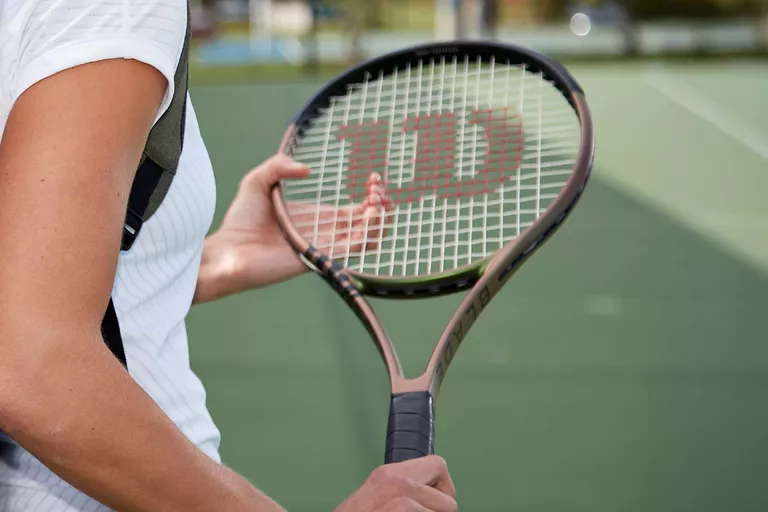
Wilson Blade V10. One of the most respected control frames in the game. The Blade's blend of stability and feel has defined the line across generations. The Blade 98 comes in two string patterns: the 16x19 opens up spin and access to the ball, while the 18x20 tightens things up for players who want maximum control. In-store at both Bellevue and Tacoma, where our staff can help you pick the pattern that fits your game. Browse racquets.
Wilson RF 01 and RF 01 Pro. Built on the Pro Staff legacy that Roger Federer made famous, these are precise, control-oriented frames for players who trust feel and placement over raw power. The RF 01 Pro (98 sq. in.) is a favorite for fast hard courts. Browse racquets.
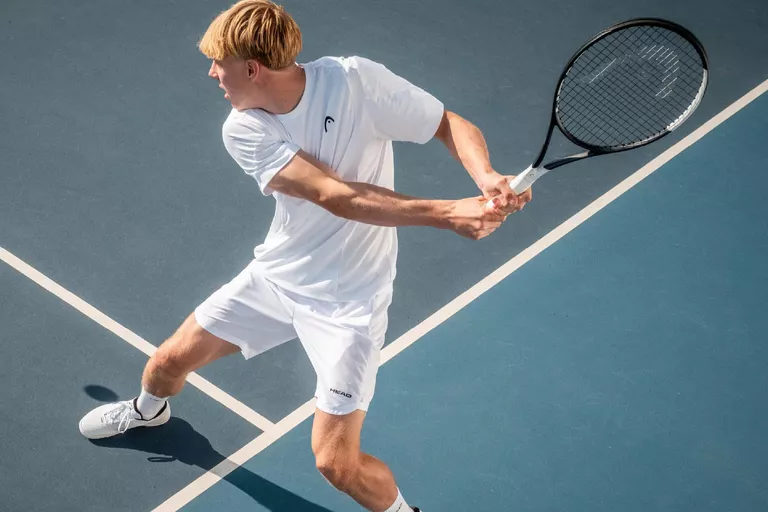
HEAD Squared, Boom, and Speed. Three frames, three styles of play. The Squared is HEAD's most head-light racquet, designed for players who want to swing freely without fighting the frame, a strong fit from beginners through intermediate players. For easy pace and a lively, forgiving feel, the Boom delivers the highest power level in the HEAD lineup. The Speed, the frame Jannik Sinner plays, is a versatile all-court option that blends power, spin, and control. All three are available in-store and online at Bellevue and Tacoma. Browse HEAD racquets.
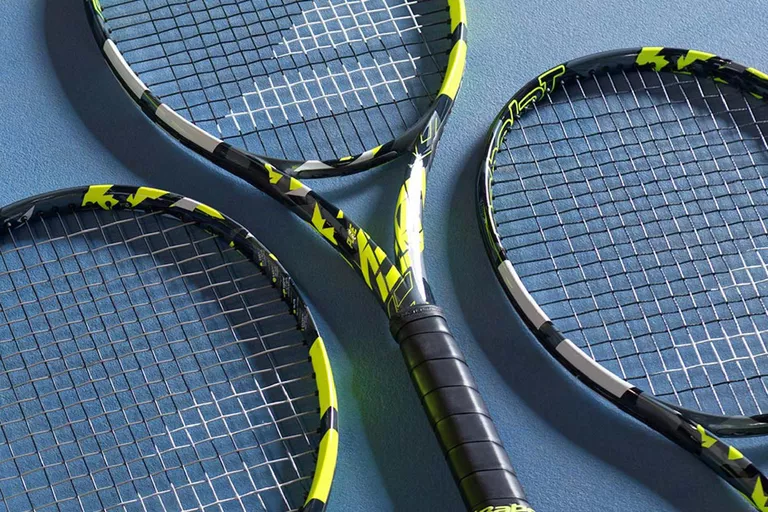
Babolat Pure Strike. A precision control frame built for players who take big cuts and want the ball to land exactly where they aim. In-store at both Bellevue and Tacoma. Browse racquets.
Glyder Apparel. Premium activewear for men and women, made with eco-conscious materials, that moves from the court to wherever you are headed next. In-store at both locations and online at Sturtevant's Tennis.
Professional Racquet Stringing
The Right String Job Changes Everything
Most recreational players think about strings the way they think about tires: you replace them when they break. But strings lose playability long before they snap. Tension drops, the string bed softens, and the racquet starts to feel sluggish or unpredictable, often without you realizing what changed.
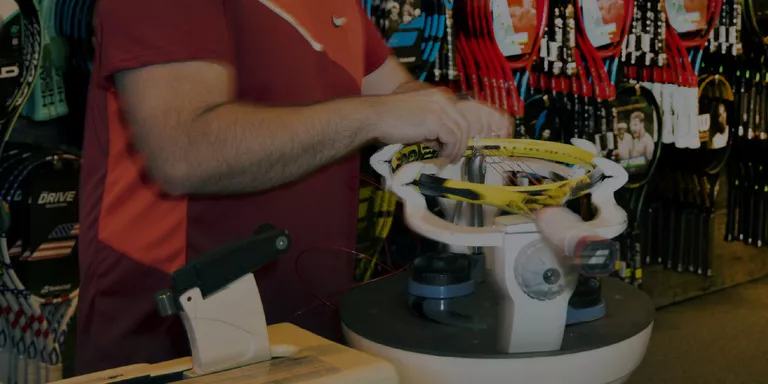
Professional stringing is about more than swapping out old strings. It is about matching the string type, gauge, and tension to how you actually play. A heavy baseline player hitting with a lot of topspin needs a different setup than an all-court player who relies on feel and touch. Our stringers in Bellevue and Tacoma ask about your game before they pick up the machine, and they will walk you through the options in plain terms.
We carry polyester, natural gut, multifilament, and hybrid setups. Shop our full string selection. If arm comfort is a concern, that is worth mentioning too. Softer strings and lower tension go a long way toward keeping you on the court. Most string jobs turn around in 24 to 48 hours, though it helps to call ahead if you are on a deadline before a match or tournament.
One note for Pacific Northwest players: the Puget Sound's marine climate keeps humidity relatively high for much of the year, frequently in the 65 to 80 percent range and highest through the damp fall and winter months. Higher moisture causes most strings to absorb water, lose tension faster, and feel softer over time. Polyester and poly hybrid setups hold up best in damp conditions; natural gut is the most sensitive and may need restringing more often here than in drier climates. Some players string a pound or two above the midpoint of their recommended range to offset the tension drop. If your strings are losing feel faster than you would expect, moisture is often the reason.
Not sure where to start? The string setup guide further down breaks out each option by playing priority.
Grip Replacement: Why It Matters More Than You Think
A Fresh Grip Is the Easiest Performance Upgrade You're Skipping
Worn grips are one of the most overlooked factors in how a racquet performs. When the grip gets smooth, you unconsciously grip harder to compensate, which tightens the arm and shoulder and leads to fatigue. It also affects touch on drop shots and volleys, where finger feel matters.
There are two types, replacement grips and overgrips, and they serve different purposes at different intervals.
A replacement grip (also called a base grip) goes directly on the bare handle with full adhesive backing along the entire strip. It is thick, roughly 1.5 to 2mm, and provides the cushioning foundation and the handle's overall shape. Plan to replace it every 6 to 12 months.
An overgrip wraps on top of the replacement grip, with adhesive only at the end. It is much thinner (around 0.4 to 0.6mm) and is your primary contact surface during play, providing tack, moisture absorption, and a fresh feel. Overgrips are disposable: most players swap them every 10 to 15 hours on court, or when they start to feel slick. One rule worth knowing: never stack replacement grips on top of each other. You will lose the feel of the handle's bevels and change how the racquet sits in your hand.
The Pacific Northwest's damp climate makes grip turnover more important here than in drier regions. Overgrips absorb moisture and go slick faster in wet conditions. During the rainy fall and winter months, plan to swap them every few sessions rather than waiting until the feel is obviously gone. At Sturtevant's, we carry Yonex Super Grap (a popular absorbent option that holds up well in damp conditions), Wilson Pro Overgrip (tacky feel, preferred by many competitive players), and HEAD Prime Tour and Völkl Super Grip II overgrips. For replacement grips, we stock Wilson in both cushioned synthetic and leather.
Browse all grips and overgrips. Installation is available in-store at both Bellevue and Tacoma.
Demo Racquets: Find Your Match Before You Commit
Don't Buy a Racquet Without Playing a Match With It First
A racquet that does not fit your game is more expensive than any demo fee, no matter what it costs. Head weight, balance, grip size, string pattern, swing weight: these are specs that show up differently in real play than they do on a product page.
Here is how our demo program works. For $5 per racquet, our staff will help you pick two frames to take out for three days, so you can feel the difference on your own court and in real points. If you buy a racquet within three months of your demo, we will apply up to $30 in demo credit toward the purchase. It is a low-cost way to make sure you are building your setup on the right frame to begin with.
When you come in, our staff will talk through your game and your swing style, whether you are aggressive from the baseline, comfortable at the net, still developing, or coming back after a break. From there we can narrow the field to two or three frames worth testing. The program covers current racquets from Wilson, HEAD, Babolat, Yonex, and other top brands.
If you are starting your research before visiting, the Tennis Racquet Buying Guide is a useful first step. It covers the core specs and helps you understand what to look for before you swing anything.
The String Setup Guide: Tension, Type, and Gauge Explained
How to Pick the Right String Setup for Your Game
You do not need to walk in knowing your exact setup. But understanding the basics helps you get more out of the conversation with your stringer. Here is what matters most.
Tension
Higher tension (55 to 65 lbs and up) gives you more control and a firmer feel. It is best for advanced players who generate their own pace and want predictable response. Lower tension (40 to 52 lbs) gives more power, a larger sweet spot, and a softer feel, which is better for recreational players, beginners building consistency, or anyone prioritizing arm comfort.
A practical starting point is the middle of the manufacturer's recommended tension range, printed on the racquet throat. From there, adjust by two to three pounds in either direction based on how the strings feel after a few sessions.
String Type
Here is how the main options break down by what you want most.
Polyester (poly, a monofilament)
- Best for: maximum spin and durability
- Good to know: the most popular choice among competitive players, but the stiffest, and it loses tension fastest
Natural gut
- Best for: power and arm comfort
- Good to know: the most expensive option and the most arm-friendly string available
Multifilament
- Best for: comfort and power at a lower price than natural gut
- Good to know: soft and elastic, a good pick for players managing arm or elbow sensitivity
Hybrid (gut mains, poly crosses)
- Best for: the best of both worlds, feel plus spin
- Good to know: many players who switch from full poly to a hybrid notice an immediate gain in both comfort and playability
Synthetic gut
- Best for: a budget-friendly, solid all-around setup
- Good to know: a dependable everyday string that keeps things simple
Shop strings at Sturtevant's, including options from Tecnifibre, Babolat, Wilson, and more.
What string gauge do you need?
Thicker gauge (16) strings are more durable and offer slightly more control. Thinner gauge (17 or 18) strings produce more spin and feel but wear faster. For most recreational players, 17 gauge is the right call.
Our stringers take all of this into account and can make a clear recommendation for you.
How Often Should You Restring?
A useful rule: restring your racquet as many times per year as you play per week. If you play three times a week, that means roughly three restrings per year, or about every four months. Casual players who hit once a week can probably get by with one or two per year, though they should check more frequently if they are using polyester strings, which lose tension faster than other types.
Signs that it is time before the strings actually break: shots that used to feel crisp feel soft or dead, control on flat balls feels inconsistent, or you have not touched the strings since last season. If any of that sounds familiar, it is time to come in.
FAQ
Have more questions? Here are answers to what we hear most often at our Bellevue and Tacoma stores.
How often should I restring my racquet?
As a general rule, restring as many times per year as you play per week. Playing three times a week means restringing every three to four months. Serious players or anyone using polyester strings should restring more frequently, since poly loses tension faster than other string types. When you come in, the Sturtevant's team will inspect your strings and give you a straight answer on where you stand.
What's the best string tension for me?
It depends on your playing style, level, and the string type you are using. Higher tension gives more control; lower tension provides more power and is easier on the arm. A good starting point is the middle of your racquet's suggested tension range, printed on the throat, then adjust two to three pounds in either direction based on feel. Our stringers in Bellevue and Tacoma will help you dial it in.
Should I use polyester or natural gut strings?
Polyester strings excel in spin and durability for players with aggressive, fast swings. Natural gut delivers unmatched comfort, power, and feel, and is the most arm-friendly option available. Many players land on a hybrid setup, gut in the main strings for feel and polyester in the crosses for spin and durability, and find it is the best of both. Browse our full string selection or ask our team which way makes sense for your game.
What's the difference between string gauges?
Gauge refers to the thickness of the string. Thicker gauges (16) are more durable and offer slightly more control. Thinner gauges (17 to 18) produce more spin and feel but wear faster. Most recreational players do well at 17 gauge. We stock multiple gauges and can walk you through the tradeoffs for your racquet and playing frequency.
Are multifilament strings better for arm comfort?
Yes, generally. Multifilament strings are softer and more elastic than polyester, which reduces vibration transmitted to the arm and elbow. They work well for players managing tennis elbow or anyone who wants a plush, responsive feel. If arm sensitivity is a concern, tell our stringers when you come in. We can build a setup around your existing racquet that keeps you playing.
What is a hybrid string setup and should I try one?
A hybrid setup uses two different strings in the same racquet, typically natural gut in the mains for power and feel, and polyester in the crosses for spin and durability. The combination gives you qualities you cannot get from either string alone. Many players who switch from a full polyester bed to a hybrid notice meaningful improvement in both comfort and playability. Our team can build one tailored to your game.
How long does racquet stringing take at Sturtevant's?
Most string jobs turn around in 24 to 48 hours, though it can vary by location and how busy the shop is. If you need your racquet before a match or tournament, call ahead to confirm timing.
Does professional stringing affect my racquet warranty?
No. Professional stringing by our team will not void your racquet warranty. We use proper stringing machines and techniques designed to protect your frame throughout the process.
How much does professional stringing cost at Sturtevant's?
Pricing varies by string type and includes labor. Natural gut runs higher than synthetic alternatives; polyester and synthetic gut sit on the lower end. For current stringing prices, call either location or ask when you drop off your racquet.
Can I bring my own strings?
Yes. We are happy to install strings you have purchased elsewhere, with a labor fee. That said, we recommend choosing from our in-store selection when possible: fresh string performs better and we can stand behind the quality of what we are installing. Browse our full string options before you come in.
What strings do you recommend for beginners?
Beginners typically do well with multifilament or synthetic gut at moderate tension. These options are forgiving, comfortable, and let you build consistency without overcomplicating the setup. Our team will factor in your level, racquet, and how often you play to make the right call.
What is the difference between a replacement grip and an overgrip?
A replacement grip (also called a base grip) goes directly on the bare racquet handle with full adhesive backing along the entire strip. It is thick, around 1.5 to 2mm, and sets the cushioning foundation and handle shape. Plan to replace it every 6 to 12 months. An overgrip wraps on top, with adhesive only at the end. It is much thinner (about 0.4 to 0.6mm), functions as your primary contact surface during play, and provides tack, moisture absorption, and a fresh feel. Overgrips are disposable and should be swapped every 10 to 15 hours on court. One rule: never stack replacement grips on top of each other, as you will lose the feel of the handle's bevels.
Does Pacific Northwest humidity affect my racquet strings?
Yes, noticeably. The Puget Sound's marine climate keeps humidity relatively high for much of the year, frequently in the 65 to 80 percent range and highest through the damp fall and winter months. That moisture causes most strings to absorb water, lose tension faster, and feel softer over time. Natural gut is the most sensitive and may need restringing more often here than in drier climates. Polyester strings and poly hybrid setups hold up best in damp conditions. If your strings are losing feel faster than they should, moisture is often the reason.
Should I string at higher tension in the Pacific Northwest?
Some players string a pound or two above the midpoint of their racquet's recommended tension range to offset the tension drop that comes with humidity. This is most relevant for natural gut or multifilament setups, which absorb moisture faster than polyester. If you play regularly through the wet fall and winter months, mention the local conditions when you bring your racquet in. Our stringers know the climate and can recommend adjustments for your setup.
What overgrips work best for Seattle-area players?
Because the damp Pacific Northwest climate makes hands sweat faster than in drier regions, overgrips that absorb well and hold tack in moist conditions tend to last longest. At Sturtevant's, we carry Yonex Super Grap, a popular absorbent option for wet-weather play, and Wilson Pro Overgrip, which delivers a consistent tacky feel. Both are available in-store at Bellevue and Tacoma. In rainy months, plan to swap your overgrip every few sessions rather than waiting for it to go completely slick.
Still unsure? Stop by or call us. Our team loves talking tennis.

About the Sturtevant's Tennis Team
Sturtevant's has been part of Pacific Northwest racquet sports for decades. As part of the Christy Sports family, our Bellevue and Tacoma locations specialize in professional stringing, custom grip work, demo racquets, and equipment guidance for players at every level. Our stringers and sales staff play the game, which means the advice you get is grounded in actual experience, not just product specs.
Visit Us in Bellevue and Tacoma
Both locations offer professional stringing, grip replacement, and demo racquets. See below for hours and contact information.
Sturtevant's, Bellevue 13131 NE 20th St., Bellevue, WA 98005 | (425) 869-7669
Monday-Friday 10am-7pm | Saturday-Sunday 10am-6pm
Sturtevant's Ski Mart, Tacoma 2220 So. 37th St., Tacoma, WA 98409 | (253) 473-1134
Monday-Friday 11am-7pm | Saturday-Sunday 11am-6pm
Both locations are part of the Sturtevant's family of stores.
Shop online or in-store:
Gear Guides,
Services,
More Activities
Jul 24, 2026
Racquet Stringing, Grip Replacement, and Demo Racquets in Bellevue & Tacoma: Sturtevant's Tennis Guide
Last Updated: July 2026
That gap between a racquet that feels dead after three sets and one that still has pop in the third usually comes down to setup, not the price tag. Fresh strings at the right tension make a real difference. So does a grip that absorbs sweat and stays tacky. When your grip is working properly, your hand can stay relaxed instead of squeezing to compensate, and a relaxed hand carries through the whole arm.
At Sturtevant's, tennis is part of who we are. As part of the Christy Sports family of outdoor stores, Sturtevant's runs two Washington tennis locations, Bellevue and Tacoma (Ski Mart). Both carry the depth of expertise they always have, along with new racquets, strings, and apparel from the brands you want. If you are searching for professional racquet stringing near Bellevue or Tacoma, you will find it at both stores. Call ahead or stop by to confirm timing and availability. Whether you are deep into the tournament season or just picking the game back up, getting your setup tuned to how you actually play is the fastest improvement most players can make.
This guide covers three services available in-store: professional racquet stringing, grip replacement, and our demo racquet program. There is also a plain-language string setup guide at the bottom for anyone who wants to understand their options before they come in.
In this guide:
- What's In Store at Sturtevant's
- Professional Racquet Stringing
- Grip Replacement: Why It Matters More Than You Think
- Demo Racquets: Find Your Match Before You Commit
- The String Setup Guide: Tension, Type, and Gauge Explained
- How Often Should You Restring?
- FAQ (15 questions, including Pacific Northwest advice on strings and grips)
- Visit Us in Bellevue and Tacoma
What's In Store at Sturtevant's
A few frames worth knowing before your next visit or demo session.
Wilson Blade V10. One of the most respected control frames in the game. The Blade's blend of stability and feel has defined the line across generations. The Blade 98 comes in two string patterns: the 16x19 opens up spin and access to the ball, while the 18x20 tightens things up for players who want maximum control. In-store at both Bellevue and Tacoma, where our staff can help you pick the pattern that fits your game. Browse racquets.
Wilson RF 01 and RF 01 Pro. Built on the Pro Staff legacy that Roger Federer made famous, these are precise, control-oriented frames for players who trust feel and placement over raw power. The RF 01 Pro (98 sq. in.) is a favorite for fast hard courts. Browse racquets.
HEAD Squared, Boom, and Speed. Three frames, three styles of play. The Squared is HEAD's most head-light racquet, designed for players who want to swing freely without fighting the frame, a strong fit from beginners through intermediate players. For easy pace and a lively, forgiving feel, the Boom delivers the highest power level in the HEAD lineup. The Speed, the frame Jannik Sinner plays, is a versatile all-court option that blends power, spin, and control. All three are available in-store and online at Bellevue and Tacoma. Browse HEAD racquets.
Babolat Pure Strike. A precision control frame built for players who take big cuts and want the ball to land exactly where they aim. In-store at both Bellevue and Tacoma. Browse racquets.
Glyder Apparel. Premium activewear for men and women, made with eco-conscious materials, that moves from the court to wherever you are headed next. In-store at both locations and online at Sturtevant's Tennis.
Professional Racquet Stringing
The Right String Job Changes Everything
Most recreational players think about strings the way they think about tires: you replace them when they break. But strings lose playability long before they snap. Tension drops, the string bed softens, and the racquet starts to feel sluggish or unpredictable, often without you realizing what changed.
Professional stringing is about more than swapping out old strings. It is about matching the string type, gauge, and tension to how you actually play. A heavy baseline player hitting with a lot of topspin needs a different setup than an all-court player who relies on feel and touch. Our stringers in Bellevue and Tacoma ask about your game before they pick up the machine, and they will walk you through the options in plain terms.
We carry polyester, natural gut, multifilament, and hybrid setups. Shop our full string selection. If arm comfort is a concern, that is worth mentioning too. Softer strings and lower tension go a long way toward keeping you on the court. Most string jobs turn around in 24 to 48 hours, though it helps to call ahead if you are on a deadline before a match or tournament.
One note for Pacific Northwest players: the Puget Sound's marine climate keeps humidity relatively high for much of the year, frequently in the 65 to 80 percent range and highest through the damp fall and winter months. Higher moisture causes most strings to absorb water, lose tension faster, and feel softer over time. Polyester and poly hybrid setups hold up best in damp conditions; natural gut is the most sensitive and may need restringing more often here than in drier climates. Some players string a pound or two above the midpoint of their recommended range to offset the tension drop. If your strings are losing feel faster than you would expect, moisture is often the reason.
Not sure where to start? The string setup guide further down breaks out each option by playing priority.
Grip Replacement: Why It Matters More Than You Think
A Fresh Grip Is the Easiest Performance Upgrade You're Skipping
Worn grips are one of the most overlooked factors in how a racquet performs. When the grip gets smooth, you unconsciously grip harder to compensate, which tightens the arm and shoulder and leads to fatigue. It also affects touch on drop shots and volleys, where finger feel matters.
There are two types, replacement grips and overgrips, and they serve different purposes at different intervals.
A replacement grip (also called a base grip) goes directly on the bare handle with full adhesive backing along the entire strip. It is thick, roughly 1.5 to 2mm, and provides the cushioning foundation and the handle's overall shape. Plan to replace it every 6 to 12 months.
An overgrip wraps on top of the replacement grip, with adhesive only at the end. It is much thinner (around 0.4 to 0.6mm) and is your primary contact surface during play, providing tack, moisture absorption, and a fresh feel. Overgrips are disposable: most players swap them every 10 to 15 hours on court, or when they start to feel slick. One rule worth knowing: never stack replacement grips on top of each other. You will lose the feel of the handle's bevels and change how the racquet sits in your hand.
The Pacific Northwest's damp climate makes grip turnover more important here than in drier regions. Overgrips absorb moisture and go slick faster in wet conditions. During the rainy fall and winter months, plan to swap them every few sessions rather than waiting until the feel is obviously gone. At Sturtevant's, we carry Yonex Super Grap (a popular absorbent option that holds up well in damp conditions), Wilson Pro Overgrip (tacky feel, preferred by many competitive players), and HEAD Prime Tour and Völkl Super Grip II overgrips. For replacement grips, we stock Wilson in both cushioned synthetic and leather.
Browse all grips and overgrips. Installation is available in-store at both Bellevue and Tacoma.
Demo Racquets: Find Your Match Before You Commit
Don't Buy a Racquet Without Playing a Match With It First
A racquet that does not fit your game is more expensive than any demo fee, no matter what it costs. Head weight, balance, grip size, string pattern, swing weight: these are specs that show up differently in real play than they do on a product page.
Here is how our demo program works. For $5 per racquet, our staff will help you pick two frames to take out for three days, so you can feel the difference on your own court and in real points. If you buy a racquet within three months of your demo, we will apply up to $30 in demo credit toward the purchase. It is a low-cost way to make sure you are building your setup on the right frame to begin with.
When you come in, our staff will talk through your game and your swing style, whether you are aggressive from the baseline, comfortable at the net, still developing, or coming back after a break. From there we can narrow the field to two or three frames worth testing. The program covers current racquets from Wilson, HEAD, Babolat, Yonex, and other top brands.
If you are starting your research before visiting, the Tennis Racquet Buying Guide is a useful first step. It covers the core specs and helps you understand what to look for before you swing anything.
The String Setup Guide: Tension, Type, and Gauge Explained
How to Pick the Right String Setup for Your Game
You do not need to walk in knowing your exact setup. But understanding the basics helps you get more out of the conversation with your stringer. Here is what matters most.
Tension
Higher tension (55 to 65 lbs and up) gives you more control and a firmer feel. It is best for advanced players who generate their own pace and want predictable response. Lower tension (40 to 52 lbs) gives more power, a larger sweet spot, and a softer feel, which is better for recreational players, beginners building consistency, or anyone prioritizing arm comfort.
A practical starting point is the middle of the manufacturer's recommended tension range, printed on the racquet throat. From there, adjust by two to three pounds in either direction based on how the strings feel after a few sessions.
String Type
Here is how the main options break down by what you want most.
Polyester (poly, a monofilament)
- Best for: maximum spin and durability
- Good to know: the most popular choice among competitive players, but the stiffest, and it loses tension fastest
Natural gut
- Best for: power and arm comfort
- Good to know: the most expensive option and the most arm-friendly string available
Multifilament
- Best for: comfort and power at a lower price than natural gut
- Good to know: soft and elastic, a good pick for players managing arm or elbow sensitivity
Hybrid (gut mains, poly crosses)
- Best for: the best of both worlds, feel plus spin
- Good to know: many players who switch from full poly to a hybrid notice an immediate gain in both comfort and playability
Synthetic gut
- Best for: a budget-friendly, solid all-around setup
- Good to know: a dependable everyday string that keeps things simple
Shop strings at Sturtevant's, including options from Tecnifibre, Babolat, Wilson, and more.
What string gauge do you need?
Thicker gauge (16) strings are more durable and offer slightly more control. Thinner gauge (17 or 18) strings produce more spin and feel but wear faster. For most recreational players, 17 gauge is the right call.
Our stringers take all of this into account and can make a clear recommendation for you.
How Often Should You Restring?
A useful rule: restring your racquet as many times per year as you play per week. If you play three times a week, that means roughly three restrings per year, or about every four months. Casual players who hit once a week can probably get by with one or two per year, though they should check more frequently if they are using polyester strings, which lose tension faster than other types.
Signs that it is time before the strings actually break: shots that used to feel crisp feel soft or dead, control on flat balls feels inconsistent, or you have not touched the strings since last season. If any of that sounds familiar, it is time to come in.
FAQ
Have more questions? Here are answers to what we hear most often at our Bellevue and Tacoma stores.
How often should I restring my racquet?
As a general rule, restring as many times per year as you play per week. Playing three times a week means restringing every three to four months. Serious players or anyone using polyester strings should restring more frequently, since poly loses tension faster than other string types. When you come in, the Sturtevant's team will inspect your strings and give you a straight answer on where you stand.
What's the best string tension for me?
It depends on your playing style, level, and the string type you are using. Higher tension gives more control; lower tension provides more power and is easier on the arm. A good starting point is the middle of your racquet's suggested tension range, printed on the throat, then adjust two to three pounds in either direction based on feel. Our stringers in Bellevue and Tacoma will help you dial it in.
Should I use polyester or natural gut strings?
Polyester strings excel in spin and durability for players with aggressive, fast swings. Natural gut delivers unmatched comfort, power, and feel, and is the most arm-friendly option available. Many players land on a hybrid setup, gut in the main strings for feel and polyester in the crosses for spin and durability, and find it is the best of both. Browse our full string selection or ask our team which way makes sense for your game.
What's the difference between string gauges?
Gauge refers to the thickness of the string. Thicker gauges (16) are more durable and offer slightly more control. Thinner gauges (17 to 18) produce more spin and feel but wear faster. Most recreational players do well at 17 gauge. We stock multiple gauges and can walk you through the tradeoffs for your racquet and playing frequency.
Are multifilament strings better for arm comfort?
Yes, generally. Multifilament strings are softer and more elastic than polyester, which reduces vibration transmitted to the arm and elbow. They work well for players managing tennis elbow or anyone who wants a plush, responsive feel. If arm sensitivity is a concern, tell our stringers when you come in. We can build a setup around your existing racquet that keeps you playing.
What is a hybrid string setup and should I try one?
A hybrid setup uses two different strings in the same racquet, typically natural gut in the mains for power and feel, and polyester in the crosses for spin and durability. The combination gives you qualities you cannot get from either string alone. Many players who switch from a full polyester bed to a hybrid notice meaningful improvement in both comfort and playability. Our team can build one tailored to your game.
How long does racquet stringing take at Sturtevant's?
Most string jobs turn around in 24 to 48 hours, though it can vary by location and how busy the shop is. If you need your racquet before a match or tournament, call ahead to confirm timing.
Does professional stringing affect my racquet warranty?
No. Professional stringing by our team will not void your racquet warranty. We use proper stringing machines and techniques designed to protect your frame throughout the process.
How much does professional stringing cost at Sturtevant's?
Pricing varies by string type and includes labor. Natural gut runs higher than synthetic alternatives; polyester and synthetic gut sit on the lower end. For current stringing prices, call either location or ask when you drop off your racquet.
Can I bring my own strings?
Yes. We are happy to install strings you have purchased elsewhere, with a labor fee. That said, we recommend choosing from our in-store selection when possible: fresh string performs better and we can stand behind the quality of what we are installing. Browse our full string options before you come in.
What strings do you recommend for beginners?
Beginners typically do well with multifilament or synthetic gut at moderate tension. These options are forgiving, comfortable, and let you build consistency without overcomplicating the setup. Our team will factor in your level, racquet, and how often you play to make the right call.
What is the difference between a replacement grip and an overgrip?
A replacement grip (also called a base grip) goes directly on the bare racquet handle with full adhesive backing along the entire strip. It is thick, around 1.5 to 2mm, and sets the cushioning foundation and handle shape. Plan to replace it every 6 to 12 months. An overgrip wraps on top, with adhesive only at the end. It is much thinner (about 0.4 to 0.6mm), functions as your primary contact surface during play, and provides tack, moisture absorption, and a fresh feel. Overgrips are disposable and should be swapped every 10 to 15 hours on court. One rule: never stack replacement grips on top of each other, as you will lose the feel of the handle's bevels.
Does Pacific Northwest humidity affect my racquet strings?
Yes, noticeably. The Puget Sound's marine climate keeps humidity relatively high for much of the year, frequently in the 65 to 80 percent range and highest through the damp fall and winter months. That moisture causes most strings to absorb water, lose tension faster, and feel softer over time. Natural gut is the most sensitive and may need restringing more often here than in drier climates. Polyester strings and poly hybrid setups hold up best in damp conditions. If your strings are losing feel faster than they should, moisture is often the reason.
Should I string at higher tension in the Pacific Northwest?
Some players string a pound or two above the midpoint of their racquet's recommended tension range to offset the tension drop that comes with humidity. This is most relevant for natural gut or multifilament setups, which absorb moisture faster than polyester. If you play regularly through the wet fall and winter months, mention the local conditions when you bring your racquet in. Our stringers know the climate and can recommend adjustments for your setup.
What overgrips work best for Seattle-area players?
Because the damp Pacific Northwest climate makes hands sweat faster than in drier regions, overgrips that absorb well and hold tack in moist conditions tend to last longest. At Sturtevant's, we carry Yonex Super Grap, a popular absorbent option for wet-weather play, and Wilson Pro Overgrip, which delivers a consistent tacky feel. Both are available in-store at Bellevue and Tacoma. In rainy months, plan to swap your overgrip every few sessions rather than waiting for it to go completely slick.
Still unsure? Stop by or call us. Our team loves talking tennis.
About the Sturtevant's Tennis Team
Sturtevant's has been part of Pacific Northwest racquet sports for decades. As part of the Christy Sports family, our Bellevue and Tacoma locations specialize in professional stringing, custom grip work, demo racquets, and equipment guidance for players at every level. Our stringers and sales staff play the game, which means the advice you get is grounded in actual experience, not just product specs.
Visit Us in Bellevue and Tacoma
Both locations offer professional stringing, grip replacement, and demo racquets. See below for hours and contact information.
Sturtevant's, Bellevue 13131 NE 20th St., Bellevue, WA 98005 | (425) 869-7669
Monday-Friday 10am-7pm | Saturday-Sunday 10am-6pm
Sturtevant's Ski Mart, Tacoma 2220 So. 37th St., Tacoma, WA 98409 | (253) 473-1134
Monday-Friday 11am-7pm | Saturday-Sunday 11am-6pm
Both locations are part of the Sturtevant's family of stores.
Shop online or in-store: