Gear Guides,
Destination Guides,
More Activities
Jun 13, 2026
Summer Mountain Packing List: What to Wear in Colorado, Utah & Montana
Jump to: Mountain weather | The three layers | Trail bottoms | Resort town gear | Trail shoes | Accessories | By destination | Checklists | FAQ
Packing for a summer mountain trip is one of those things that looks obvious until you're standing at the trailhead at 8am in a fleece wondering why you packed four t-shirts and nothing waterproof. Mountain summer weather doesn't operate on the same logic as summer anywhere else. Elevation changes everything: UV exposure is more intense, temperature swings can top 30 degrees in a single day, and afternoon storms build fast and hit hard even when the morning looks clear.
This guide covers what actually works across the full range of a mountain summer trip: trail time, resort town time, cool mornings, hot afternoons, and variable weather throughout. Shop women's summer apparel and men's summer apparel at Christy Sports, or stop into any of our locations in Vail, Breckenridge, Crested Butte, Telluride, Winter Park, Park City, and Big Sky.
Understanding Mountain Summer Weather
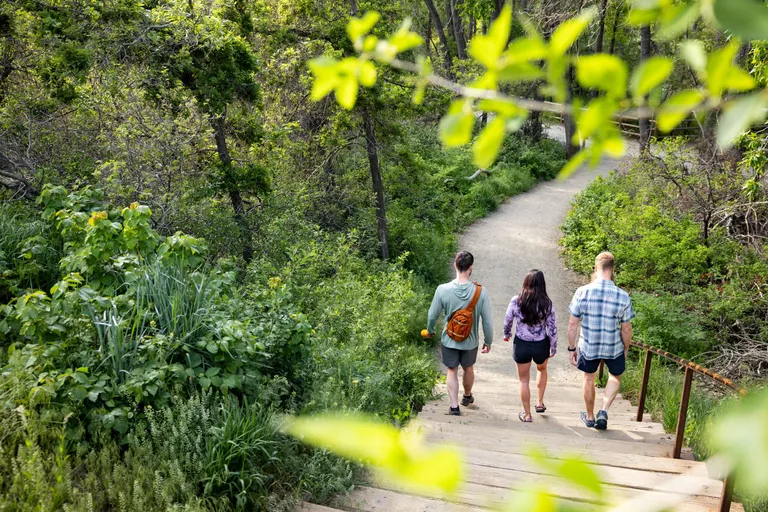
Before building a packing list, it helps to understand what you're actually packing for. Mountain summer weather in Colorado, Utah, and Montana follows predictable patterns. Once you know them, the packing decisions become easier.
UV exposure increases with elevation. UV radiation increases roughly 2% for every 1,000 feet of elevation gain. A ridge at 10,000 feet delivers roughly 20% more UV than the same clear day at sea level. A sun hoody with UPF rating pulls more weight than any other piece you'll pack. It prevents the kind of sunburn that sidelines a trip and handles the daily UV load that most people underestimate at altitude.
Afternoon thunderstorms are a daily occurrence in the high season. In Colorado and Utah, July and August bring storms that develop quickly from clear skies, typically building between noon and 3pm, dropping the temperature 20 degrees, and passing in under an hour. The rule of thumb: start hikes early, carry a packable rain layer always, and don't be above treeline after 1pm.
Temperature swings of 30+ degrees in a single day are normal. A trailhead at 45°F at 7am and 75°F on the same trail at noon is typical. Big Sky and higher Colorado elevations can swing further. This is why layering is the only approach that actually works across a mountain day.
Altitude affects your body in ways packing can address. Above 8,000 feet, your body works harder even at rest. Pack more water capacity than you think you need. Sunscreen requires more frequent reapplication. And the first day or two at altitude, take it easier than you would at lower elevation. The adjustment is real.
The Three Layers That Handle Everything
Mountain summer packing starts with one question: do you have a sun layer, a mid layer, and a packable rain layer? If yes, you can handle almost anything the mountains will throw at you. Everything else builds on this foundation.
1. The Sun Layer
The sun layer is the piece you'll wear the most hours of the day. It needs to be lightweight, moisture-wicking, UPF-rated, and packable enough to carry when temperatures climb. Wear both regardless — the UPF fabric blocks UV from above, but not from reflected surfaces below.
Women's options:
The OR Echo Hoodie is the most versatile sun layer in the lineup: UPF-rated, moisture-wicking, hooded, and packable enough to stuff in a belt bag. You'll reach for it on more days than anything else in the bag.
Free Fly's bamboo-blend fabrics are naturally soft, breathable, and odor-resistant without synthetic feel. The Bamboo Shade Hoodie II (Tidal Teal) and Bamboo Shade Crossover Hoodie (Bright White) work as well on a rest day or a driving day as they do on the trail.
The Patagonia Airshed Pro Pullover is the high-output option: ultralight, wind-resistant, and built for fast-paced, aerobic use. It's not a warmth layer; it's a UV and wind layer for when you're generating your own heat on a steep switchback.
Men's options:
Outdoor Research covers multiple performance levels for men. The Echo Hoodie is the direct counterpart to the women's version: same UPF rating, same versatile fit. The Astroman Short Sleeve Sun Shirt is the technical button-down option for low-output hiking days and resort town wear. For sustained aerobic effort, the ActiveIce Spectrum Sun Hoodie offers higher-performance moisture management.
Free Fly's Bamboo Shade Hoodie and Bamboo Lightweight Hoodie bring the same natural performance to men's.
Best choice by use:
- Most days, most people: OR Echo Hoodie (women's or men's)
- Comfort-first or multi-day trips: Free Fly Bamboo Shade Hoodie
- High-output aerobic hiking: Patagonia Airshed Pro (women's), OR ActiveIce Spectrum Sun Hoodie (men's)
2. The Mid Layer
Mid layers handle the gaps: the 45°F trailhead before the sun hits the valley, the summit that's 15 degrees colder than the parking lot, and every cool resort town evening. You want something that packs small and is clean enough to wear into a restaurant.
Women's options:
Mountain Hardwear's Summit Grid Tunic Hoodie (Beach Breeze) is the standout: a soft-grid fleece midlayer that works on the trail and transitions cleanly into town. The Crater Lake Long-Sleeve Hoodie is a lighter option for morning starts and cooler days.
The Halfdays Gwen UV Jacket is the choice when you want something that doesn't read as technical gear, a clean, considered layer for resort town evenings that still functions as trail insulation on cool days.
Men's options:
Mountain Hardwear's Crater Lake LS Hoody anchors the men's mid-layer selection: long-sleeve coverage, trail-ready construction, resort town-appropriate fit.
The Patagonia R1 Air Full-Zip Hoody offers stretch, breathability, and Polartec® fleece performance in a packable design. It's the performance pick for active use. The KUHL Engineered Hoody brings a more casual, mountain-town aesthetic with technical construction underneath.
Best choice by use:
- Trail and town versatility: MHW Summit Grid (women's), MHW Crater Lake LS Hoody (men's)
- Resort town evenings: Halfdays Gwen UV Jacket (women's), KUHL Engineered Hoody (men's)
- Active performance: Patagonia R1 Air Full-Zip (men's)
3. The Packable Rain Layer
In the Colorado, Utah, and Montana mountains, a rain layer is not a "just in case" item. Leaving it at the hotel is the most common way a mountain afternoon goes sideways. You need something that packs into its own pocket or a belt bag, is genuinely waterproof, and is light enough to carry on any hike without noticing it.
Women's options:
The North Face Antora Rain Hoodie is a packable rain layer with clean enough construction to double as a wind shell on exposed ridges. The North Face Yumiori Off Peak Full-Zip Jacket is a warmer, soft-shell-adjacent option for bigger temperature swings.
The Patagonia Houdini Jacket (Light Plum) is the ultra-packable standard: stuff-sack compatible, genuinely waterproof for intermittent mountain showers, and light enough to forget you're carrying it.
Men's options:
The North Face Antora Jacket is the men's counterpart: same packability, same trail performance. The North Face Alta Vista Jacket is the more substantial shell option for extended rain exposure.

Women's Hiking Pants & Trail Bottoms
Trail bottoms need to handle rock scrambling, dusty trails, and a restaurant booth on the same day. The choice breaks down by how much technical use you're planning:
Trail to town (best overall):
The Halfdays Bastille Trail Pants is the single best packing decision for a resort town trip. It reads as a clean trouser in a restaurant and functions on an easy to moderate trail without overheating. If you're limited to one bottom, this is the one.
Technical trail performance:
The OR Ferrosi Transit Pants handles rocky, technical trails with durable stretch construction. The Patagonia Strider Pro 3.5" Shorts (Berry, Multi Mint) are purpose-built for high-output hiking days: technical fabric, full range of motion.
Casual/resort town:
The Prana Suton Short is a clean, versatile bottom for casual hiking and around-town days. The Halfdays Bastille Trail Pants double here as well.
Men's shorts:
The KUHL Renegade Short is the technical trail short: stretch-woven, durable against rock and brush, and trail-ready from day one. For cooler mornings or full-length coverage on rocky trails, the OR Ferrosi Pants are the technical pants option: stretch-woven, packable, and built for high-output days. The Free Fly Reverb Short is the more casual trail-to-town option. The Flylow Hot Tub Short is the resort town pick when you're not on the trail.
Best choices:
- Trail and town: Halfdays Bastille Trail Pants (women's), Free Fly Reverb Short (men's)
- Technical performance: Patagonia Strider Pro or OR Ferrosi Pants (women's), KUHL Renegade Short or OR Ferrosi Pants (men's)
Versatile Tops & Casual Resort Town Gear
Mountain summer trips typically split their time evenly between the trail and everything else: lunches, shopping, live music, patios, gondola rides. These pieces handle the non-trail hours.
Women's:
Halfdays built its following by making trail-to-town pieces that don't announce themselves as athletic gear. The Ynes Long Sleeve Top is the most versatile casual piece in the summer lineup. Paired with the Bastille Trail Pants, it handles everything from a farmer's market to dinner.
Seniq brings color-forward activewear with a streetwear sensibility. The Oasis Tank is a standout for outdoor afternoons; the Dirtpop Trek Jacket (Hot Pink) is the trail layer that makes a statement.
Toad&Co uses organic and recycled fabrics as standard. The Foothill Pointelle Baby Tee (Multi Cream) is a relaxed, packable casual piece that travels well.
Carve Designs is aimed squarely at resort town days. The Nellie Dress (Vintage Blue) and Gabby Voile Top work for long lunches and Main Street walks in Telluride, Park City, or anywhere else on this list.
Roxy covers the warmer, more relaxed resort town aesthetic. The Cabana Club Tee Stripe Top and Sunset Stripe Top (Cloud Dancer) are purpose-built for the kind of day that involves a patio more than a summit.
Sendero Provisions Co.'s workwear-influenced casualwear travels well. The La Dahlia Dress, Junia Low Waist Denim Shorts, and High Stepper T-Shirt are the most packable casual pieces in the lineup.
Men's:
The Club Ride New West Original Pearl Snap is the resort town anchor: looks right at a music festival, a patio dinner, or a gondola ride. The Mountain Hardwear Canyon short sleeve is the more technical option that earns its place on active days and in town. The Patagonia Capilene Cool Daily Hoody extends the layer-at-altitude idea into casual wear: cool to the touch, moisture-wicking, and clean enough for town.
Best Trail Shoes for Mountain Town Trips
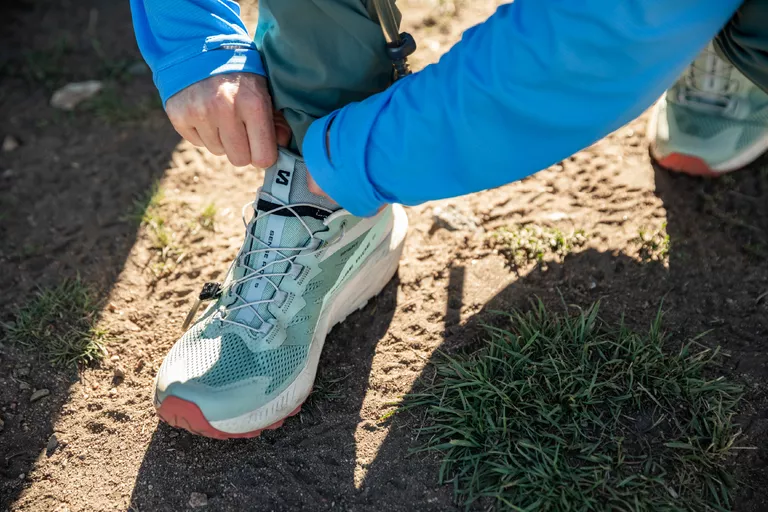
Trail footwear is worth thinking through before the trip, not after. The question is whether your shoes can handle both the trail and the restaurant, and whether your feet hold up at mile 12. Here's how to choose:
The best trail-to-town option:
The Salomon XA Pro V9 GTX (women's) is the answer for one shoe that does everything. Waterproof Gore-Tex, Contagrip sole, and a profile that doesn't announce "trail shoe" in a restaurant. New 2026 colorways extend the trail-to-town range further. Also available in men's.
For serious mileage:
The Salomon Ultra Glide 4 (women's) is lighter and more cushioned than the XA Pro, and the right pick for high-output hiking and trail running. When you're logging 12+ miles or covering real elevation gain, the cushioning payoff is worth it. Also available in men's.
For wide feet or comfort priority:
The Keen Targhee IV WP is the most comfortable all-day option: wide toe box, waterproof construction, and a fit built for consecutive high-mileage days. The Targhee IV is Keen's latest update to the line that's been the go-to wide-foot hiking boot for a decade. Available in men's and women's.
For technical or wet terrain (men's):
The Salomon Men's Speedcross 6 GTX handles aggressive, wet, and technical terrain with the aggressive lug grip designed for off-trail use. If your trip includes technical Crested Butte or Big Sky terrain, this is the men's upgrade from the XA Pro.
How to choose:
- One shoe for everything: Salomon XA Pro V9 GTX
- High-mileage hiking focus: Salomon Ultra Glide 4
- Wide foot or comfort-first: Keen Targhee IV WP
- Technical/wet/off-trail: Salomon Speedcross 6 GTX (men's)
Fit matters more than any spec sheet for all-day footwear. Stop into any Christy Sports location to try these on; staff can match you to the right shoe based on your foot shape and the terrain you're planning.
Accessories: The Gear People Forget
These items don't make the packing list until they're missing.
Socks. Darn Tough merino wool construction regulates temperature, wicks moisture, and resists odor over consecutive hiking days. The Run No Show Tab Ultra-Lightweight is the active hiking and trail running option; the Number 2 Micro Crew Midweight is better for lower-intensity or longer-duration days when you want more cushion. One pair minimum per day of hiking. Available in men's and women's.
A sun hat. Wide brim or structured brim at elevation is not optional. Christy Sports carries the Wallaroo Aspen, McKinley, Viva, Kristy, and Athena hats, all SPF 50+ rated. A hat does more UV work per day than most people realize.
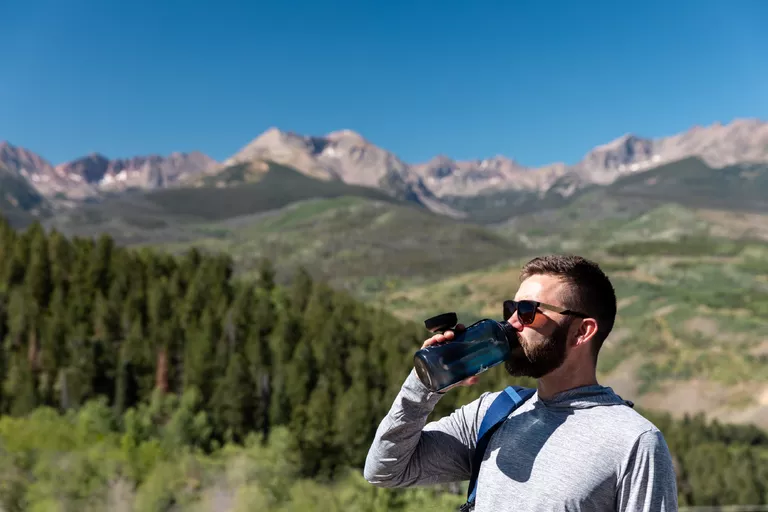
Hydration. YETI bottles and flasks hold temperature through the full day better than most alternatives. A hydration pack is worth adding for any hike over a few miles.
Sunscreen and SPF lip balm. Broad-spectrum SPF 30+ minimum. At 10,000 feet, you burn faster and the effects are more severe than at sea level. Reapply every two hours on exposed ridges. SPF lip balm is the most underestimated item on a mountain packing list.
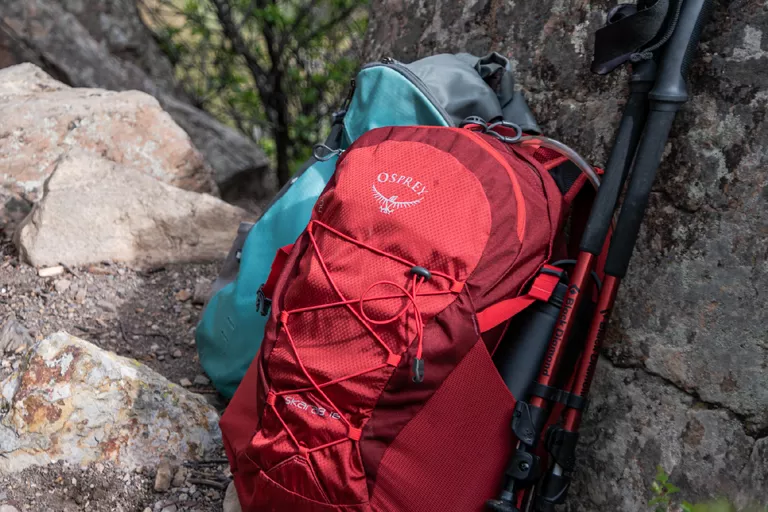
A daypack. Even if your hotel is walking distance from the village, a 15-20L daypack is the difference between carrying your layers all day and leaving them at the hotel when the storm rolls in. Fill it with sunscreen, water, a snack, your rain layer, and your mid layer. That covers you for any weather the day brings.
Bug spray. Not needed on exposed ridges, but relevant at lower elevations, around water, and in Montana. Evenings in Steamboat and around the Park City reservoir can be buggy in midsummer.
Packing Notes by Destination
These notes adjust the general packing list for the specific weather, elevation, and activities at each location. Christy Sports has stores across all of these destinations, so if you need a layer or forgot a rain shell, you're covered.
Vail, Colorado
Elevation: ~8,150 ft at the village. Trail elevations reach 11,000 to 12,500 ft.
Activities: Hiking, mountain biking (Vail Mountain Bike Park), gondola rides, Bravo! Vail music festival, village strolling.
Weather note: Afternoon storms arrive reliably July through August. Village temperatures drop noticeably in the evenings even at peak summer. The gondola to Eagle's Nest crosses above the treeline, so don't skip the rain layer.
Packing note: The split between Vail Village (slightly dressier) and Lionshead (more casual) is real but not dramatic. Halfdays Bastille Trail Pants handle both. One evening piece (a Toad&Co dress or Carve Designs top) covers every restaurant situation you'll encounter.
Christy Sports: Vail Bridge Street, Vail Lionshead
Breckenridge, Colorado
Elevation: ~9,600 ft, one of the highest resort towns in North America. Trails regularly reach 12,000 to 13,000 ft.
Activities: Hiking (Quandary Peak, Blue Lakes Trail), mountain biking, gold rush history, Breckenridge Music Festival.
Weather note: At 9,600 ft, altitude effects are more pronounced than most Colorado destinations. The sun is more intense, afternoon storms build faster, and evenings cool significantly even in July. Trails near summit elevations can be below 50°F in midsummer.
Packing note: Bring a warmer mid layer here than you would for lower-elevation destinations. The MHW Crater Lake LS Hoody (men's) or Summit Grid (women's) earns its spot in the bag for Breck summit trails.
Christy Sports: Main St. Station, South Park Ave
Crested Butte, Colorado
Elevation: ~8,885 ft. Trails reach 12,000+ ft in the Elk Mountains.
Activities: Mountain biking (world-class), wildflower hiking (peak late July), Almont float trips, Gothic Town Site.
Weather note: CB sits in a more protected valley than some Colorado resorts but still gets afternoon storms. Wildflower season (late July) brings significant trail use and variable conditions.
Packing note: Crested Butte is more rugged and casual than Vail or Telluride. Pack for function first, style second.
Christy Sports: The Alpineer, Treasury Center
Telluride, Colorado
Elevation: ~8,750 ft in the town. The free gondola accesses Mountain Village at ~9,500 ft.
Activities: Hiking (Bridal Veil Falls, Bear Creek Trail), free gondola, Telluride Bluegrass Festival, film festival, Main Street.
Weather note: Telluride sits in a narrow box canyon that creates its own microclimate, and storms can feel more intense and more localized than in open-valley towns. Build extra margin into turn-around times on exposed terrain.
Packing note: The gondola makes the trail-to-town transition literal: you can hike in the morning and be at a Mountain Village restaurant by afternoon. Your gear needs to handle both contexts. The Halfdays Bastille Trail Pants are the single best choice for this. Bootdoctors Telluride (650 Mtn. Village Blvd., Mountain Village) is open year-round for bike rentals, hike rentals, water sports rentals, ski/snowboard rentals, tuning, repair, and custom boot fitting.
Christy Sports: Telluride Main Street; Bootdoctors Telluride (Mountain Village)
Winter Park, Colorado
Elevation: ~9,000 ft at the resort base.
Activities: Mountain biking (one of the largest bike parks in the US), hiking, Cooper Creek Square, Fraser River Trail.
Weather note: Standard Colorado afternoon storm pattern. Slightly wetter microclimate than some Front Range-adjacent destinations.
Packing note: Winter Park skews toward biking more than any other CS town. If biking is the plan, liner shorts under trail shorts and a bike-specific jersey make the day significantly more comfortable. Helmets, gloves, and pads are available at Christy Sports if you're not traveling with them.
Christy Sports: Winter Park Cooper Creek
Steamboat Springs, Colorado
Elevation: ~6,700 ft, lower than most Colorado resort towns.
Activities: Hot springs (Strawberry Park), biking, hiking, Strings Music Festival, rodeo.
Weather note: Lower elevation means more moderate conditions: less intense UV, slightly warmer temperatures, and less severe altitude effects than Breckenridge or Crested Butte. Still pack layers; the principles apply, just less aggressively.
Packing note: Steamboat's mountain-meets-cowboy aesthetic runs casual. Add a swimsuit for the hot springs. Warm evenings through midsummer mean lighter layering than higher-elevation destinations.
Christy Sports: Steamboat Square
Park City & Deer Valley, Utah
Elevation: ~7,000 ft in town. Deer Valley trails reach ~9,500 ft.
Activities: Hiking (Mid-Mountain Trail, Spiro Trail), mountain biking, Main Street, Deer Valley Summer Concert Series.
Weather note: Utah's summer pattern is drier and slightly less stormy than Colorado, but afternoon storms still occur, and UV at altitude is just as intense. You'll use the rain layer less than in Colorado, but don't leave it at the hotel.
Packing note: Park City trends slightly warmer and drier than comparable Colorado resorts. The mountain-casual dress code for Main Street and Deer Valley outdoor concerts is well-covered by the Halfdays, Carve Designs, or Roxy options for women; KUHL or MHW Canyon for men.
Christy Sports: Deer Valley, Kimball Junction
Big Sky, Montana
Elevation: ~7,218 ft at the village.
Activities: Hiking (Ousel Falls, Lone Peak Wilderness, Beehive Basin), mountain biking, whitewater, zip lines, Big Sky Resort summer activities.
Weather note: Montana mountain weather shifts quickly. Mornings run cooler than comparable Colorado elevations, and temperatures drop noticeably at night even in July. Big Sky July evenings can reach the low 40s°F.
Packing note: Bring a warmer mid layer than you'd pack for Vail or Park City. The Patagonia R1 Air (men's) or MHW Summit Grid (women's) is worth the bag space here. The trails above 10,000 ft see snow well into July, so check conditions before heading above the treeline.
Christy Sports: Big Sky
Quick Packing Checklists by Trip Type
Day hike from a resort town: Sun hoody (OR Echo or Free Fly Bamboo Shade) + packable rain layer + trail shorts or hiking pants + trail shoes (Salomon XA Pro V9 GTX) + Darn Tough Trail Run socks + sun hat + sunscreen + 1L water bottle + small daypack.
Long weekend at a resort town: Full layer stack (sun, mid, rain) + 1-2 casual tops + one versatile bottom (Halfdays Bastille Trail Pants or trail shorts) + one evening piece (Toad&Co or Carve Designs dress, or equivalent for men) + trail shoes that work in town + Darn Tough socks + sun protection.
Active multi-day trip: OR Echo Hoodie + Patagonia Airshed or OR ActiveIce Spectrum for aerobic days + OR Ferrosi Pants or trail shorts + The North Face Antora rain shell + MHW Summit Grid mid layer + Salomon Ultra Glide 4 for high mileage + Salomon Speedcross 6 GTX for men on technical/wet terrain + 2+ pairs Darn Tough socks + full sun protection kit.
Family trip with kids: Same layering stack for every person. Kids' Darn Tough socks worth adding. Kids at altitude cool down faster than you'd expect and complain loudly when they do. The layer stack applies to every person in the party. One packable rain layer each is the thing that saves an afternoon. Build in extra altitude adjustment time on the first day.
FAQs: Packing for Summer in the Mountains
What should I wear hiking in the mountains in summer? The three essentials: a moisture-wicking, UPF-rated sun hoody; a packable rain layer; and waterproof trail shoes with solid grip. UV exposure increases roughly 2% per 1,000 feet of elevation gain, so UV protection matters more than most people expect at altitude. Add a light mid layer for morning starts and summit temps. Darn Tough merino socks and a wide-brim sun hat complete a functional mountain hiking kit.
Is it cold in the Colorado mountains in summer? It depends on the time of day and your elevation. Colorado resort towns in July typically see daytime highs in the 60s to 70s°F at village level, with trail temperatures 10 to 15°F cooler. Morning trailheads can be in the 40s. At 12,000 feet, July summit temperatures can be below 50°F even on clear days. Night temperatures at most Colorado resort towns drop to the 40s to 50s°F throughout summer. Layers are essential, not optional.
Do I need a rain jacket for a summer mountain trip? Yes. Afternoon thunderstorms are a near-daily occurrence in Colorado and Utah from late June through August, and Big Sky sees its share of rapid weather changes. The storms typically build between noon and 3pm. A packable rain jacket is the highest-consequence item to leave at the hotel. The Patagonia Houdini or The North Face Antora both pack small enough to carry in a belt bag, so there's no reason to leave it behind.
What's the difference between a sun hoodie and a regular hoodie? A sun hoody is designed for trail use: UPF-rated fabric blocks UV radiation, moisture-wicking construction moves sweat away from the skin, and the cut allows full range of motion for hiking. A cotton hoodie is heavier, holds sweat against the skin, and provides no meaningful UV protection. The OR Echo Hoodie is lighter and more functional for mountain use than most regular hoodies.
What's the best trail shoe for a mountain summer trip? It depends on your use. For one shoe that handles trail and resort town: the Salomon XA Pro V9 GTX (men's and women's). For high-mileage hiking where cushioning matters: the Salomon Ultra Glide 4. For a wider toe box or all-day comfort priority: the Keen Targhee IV WP. For men on technical or wet terrain: the Salomon Speedcross 6 GTX. All are waterproof and available at Christy Sports locations. Fit matters more than any spec sheet for all-day footwear — stop into any location and staff can match you to the right shoe based on your foot shape and the terrain you're planning.
What should I pack for Vail in summer? Start with the full layer stack: sun hoody, mid layer, packable rain jacket. Trail shoes that work in the village (Salomon XA Pro V9 GTX handles this). For the village itself, the Halfdays Bastille Trail Pants and one evening piece cover most situations. The gondola means you can start a morning hike and be at a Mountain Village restaurant by afternoon, and your gear needs to handle both without changing. Don't skip the rain layer on gondola days above the treeline.
What should I pack for Breckenridge in summer? Breckenridge sits at 9,600 ft, higher than most Colorado resorts. Bring a warmer mid layer than you'd pack for a lower-elevation destination. Summit trail temperatures near Quandary Peak can be below 50°F in July. The full layer stack applies here more aggressively than anywhere else on this list.
What should I pack for Park City in summer? Park City runs slightly drier and warmer than comparable Colorado resorts. The same layer stack applies (sun hoody, mid layer, packable rain), but you'll use the rain layer less often. Main Street and Deer Valley outdoor concerts call for mountain-casual: Halfdays or Carve Designs for women, KUHL or Mountain Hardwear Canyon for men.
What should I pack for Big Sky in summer? Big Sky runs cooler than comparable Colorado elevations, especially in the mornings and evenings. Add a warmer mid layer than you'd pack for Vail. July evenings in Big Sky can reach the low 40s°F. Otherwise the standard mountain layer stack applies. Check trail conditions before heading above 10,000 ft: snow lingers into July on the highest terrain.
What brands does Christy Sports carry for summer mountain clothing? The 2026 summer lineup includes Outdoor Research, Mountain Hardwear, Free Fly, Patagonia, The North Face, KUHL, Halfdays, Seniq, Toad&Co, Carve Designs, Roxy, Prana, Sendero Provisions Co., Salomon, and Keen. Shop women's summer apparel, men's summer apparel, and trail footwear online or at any of our 50+ stores.
About This Guide
Christy Sports has outfitted mountain communities in Colorado, Utah, Montana, and Washington since 1958, with stores in the resort towns on this list, not just near them. That means our buyers spend time in the same conditions you're packing for, and our staff can give advice based on what actually gets worn on the mountain, not what looks good on a hanger.
Our team has advised customers on mountain gear across everything from Front Range day hikes to multi-day backcountry trips. Our standard starting point: pack for the worst conditions you're likely to encounter, carry the lightest version of each layer, and never leave the hotel without a rain jacket.
Related Reading
Gear Guides,
Destination Guides,
More Activities
Jun 13, 2026
Summer Mountain Packing List: What to Wear in Colorado, Utah & Montana
Jump to: Mountain weather | The three layers | Trail bottoms | Resort town gear | Trail shoes | Accessories | By destination | Checklists | FAQ
Packing for a summer mountain trip is one of those things that looks obvious until you're standing at the trailhead at 8am in a fleece wondering why you packed four t-shirts and nothing waterproof. Mountain summer weather doesn't operate on the same logic as summer anywhere else. Elevation changes everything: UV exposure is more intense, temperature swings can top 30 degrees in a single day, and afternoon storms build fast and hit hard even when the morning looks clear.
This guide covers what actually works across the full range of a mountain summer trip: trail time, resort town time, cool mornings, hot afternoons, and variable weather throughout. Shop women's summer apparel and men's summer apparel at Christy Sports, or stop into any of our locations in Vail, Breckenridge, Crested Butte, Telluride, Winter Park, Park City, and Big Sky.
Understanding Mountain Summer Weather
Before building a packing list, it helps to understand what you're actually packing for. Mountain summer weather in Colorado, Utah, and Montana follows predictable patterns. Once you know them, the packing decisions become easier.
UV exposure increases with elevation. UV radiation increases roughly 2% for every 1,000 feet of elevation gain. A ridge at 10,000 feet delivers roughly 20% more UV than the same clear day at sea level. A sun hoody with UPF rating pulls more weight than any other piece you'll pack. It prevents the kind of sunburn that sidelines a trip and handles the daily UV load that most people underestimate at altitude.
Afternoon thunderstorms are a daily occurrence in the high season. In Colorado and Utah, July and August bring storms that develop quickly from clear skies, typically building between noon and 3pm, dropping the temperature 20 degrees, and passing in under an hour. The rule of thumb: start hikes early, carry a packable rain layer always, and don't be above treeline after 1pm.
Temperature swings of 30+ degrees in a single day are normal. A trailhead at 45°F at 7am and 75°F on the same trail at noon is typical. Big Sky and higher Colorado elevations can swing further. This is why layering is the only approach that actually works across a mountain day.
Altitude affects your body in ways packing can address. Above 8,000 feet, your body works harder even at rest. Pack more water capacity than you think you need. Sunscreen requires more frequent reapplication. And the first day or two at altitude, take it easier than you would at lower elevation. The adjustment is real.
The Three Layers That Handle Everything
Mountain summer packing starts with one question: do you have a sun layer, a mid layer, and a packable rain layer? If yes, you can handle almost anything the mountains will throw at you. Everything else builds on this foundation.
1. The Sun Layer
The sun layer is the piece you'll wear the most hours of the day. It needs to be lightweight, moisture-wicking, UPF-rated, and packable enough to carry when temperatures climb. Wear both regardless — the UPF fabric blocks UV from above, but not from reflected surfaces below.
Women's options:
The OR Echo Hoodie is the most versatile sun layer in the lineup: UPF-rated, moisture-wicking, hooded, and packable enough to stuff in a belt bag. You'll reach for it on more days than anything else in the bag.
Free Fly's bamboo-blend fabrics are naturally soft, breathable, and odor-resistant without synthetic feel. The Bamboo Shade Hoodie II (Tidal Teal) and Bamboo Shade Crossover Hoodie (Bright White) work as well on a rest day or a driving day as they do on the trail.
The Patagonia Airshed Pro Pullover is the high-output option: ultralight, wind-resistant, and built for fast-paced, aerobic use. It's not a warmth layer; it's a UV and wind layer for when you're generating your own heat on a steep switchback.
Men's options:
Outdoor Research covers multiple performance levels for men. The Echo Hoodie is the direct counterpart to the women's version: same UPF rating, same versatile fit. The Astroman Short Sleeve Sun Shirt is the technical button-down option for low-output hiking days and resort town wear. For sustained aerobic effort, the ActiveIce Spectrum Sun Hoodie offers higher-performance moisture management.
Free Fly's Bamboo Shade Hoodie and Bamboo Lightweight Hoodie bring the same natural performance to men's.
Best choice by use:
- Most days, most people: OR Echo Hoodie (women's or men's)
- Comfort-first or multi-day trips: Free Fly Bamboo Shade Hoodie
- High-output aerobic hiking: Patagonia Airshed Pro (women's), OR ActiveIce Spectrum Sun Hoodie (men's)
2. The Mid Layer
Mid layers handle the gaps: the 45°F trailhead before the sun hits the valley, the summit that's 15 degrees colder than the parking lot, and every cool resort town evening. You want something that packs small and is clean enough to wear into a restaurant.
Women's options:
Mountain Hardwear's Summit Grid Tunic Hoodie (Beach Breeze) is the standout: a soft-grid fleece midlayer that works on the trail and transitions cleanly into town. The Crater Lake Long-Sleeve Hoodie is a lighter option for morning starts and cooler days.
The Halfdays Gwen UV Jacket is the choice when you want something that doesn't read as technical gear, a clean, considered layer for resort town evenings that still functions as trail insulation on cool days.
Men's options:
Mountain Hardwear's Crater Lake LS Hoody anchors the men's mid-layer selection: long-sleeve coverage, trail-ready construction, resort town-appropriate fit.
The Patagonia R1 Air Full-Zip Hoody offers stretch, breathability, and Polartec® fleece performance in a packable design. It's the performance pick for active use. The KUHL Engineered Hoody brings a more casual, mountain-town aesthetic with technical construction underneath.
Best choice by use:
- Trail and town versatility: MHW Summit Grid (women's), MHW Crater Lake LS Hoody (men's)
- Resort town evenings: Halfdays Gwen UV Jacket (women's), KUHL Engineered Hoody (men's)
- Active performance: Patagonia R1 Air Full-Zip (men's)
3. The Packable Rain Layer
In the Colorado, Utah, and Montana mountains, a rain layer is not a "just in case" item. Leaving it at the hotel is the most common way a mountain afternoon goes sideways. You need something that packs into its own pocket or a belt bag, is genuinely waterproof, and is light enough to carry on any hike without noticing it.
Women's options:
The North Face Antora Rain Hoodie is a packable rain layer with clean enough construction to double as a wind shell on exposed ridges. The North Face Yumiori Off Peak Full-Zip Jacket is a warmer, soft-shell-adjacent option for bigger temperature swings.
The Patagonia Houdini Jacket (Light Plum) is the ultra-packable standard: stuff-sack compatible, genuinely waterproof for intermittent mountain showers, and light enough to forget you're carrying it.
Men's options:
The North Face Antora Jacket is the men's counterpart: same packability, same trail performance. The North Face Alta Vista Jacket is the more substantial shell option for extended rain exposure.
Women's Hiking Pants & Trail Bottoms
Trail bottoms need to handle rock scrambling, dusty trails, and a restaurant booth on the same day. The choice breaks down by how much technical use you're planning:
Trail to town (best overall):
The Halfdays Bastille Trail Pants is the single best packing decision for a resort town trip. It reads as a clean trouser in a restaurant and functions on an easy to moderate trail without overheating. If you're limited to one bottom, this is the one.
Technical trail performance:
The OR Ferrosi Transit Pants handles rocky, technical trails with durable stretch construction. The Patagonia Strider Pro 3.5" Shorts (Berry, Multi Mint) are purpose-built for high-output hiking days: technical fabric, full range of motion.
Casual/resort town:
The Prana Suton Short is a clean, versatile bottom for casual hiking and around-town days. The Halfdays Bastille Trail Pants double here as well.
Men's shorts:
The KUHL Renegade Short is the technical trail short: stretch-woven, durable against rock and brush, and trail-ready from day one. For cooler mornings or full-length coverage on rocky trails, the OR Ferrosi Pants are the technical pants option: stretch-woven, packable, and built for high-output days. The Free Fly Reverb Short is the more casual trail-to-town option. The Flylow Hot Tub Short is the resort town pick when you're not on the trail.
Best choices:
- Trail and town: Halfdays Bastille Trail Pants (women's), Free Fly Reverb Short (men's)
- Technical performance: Patagonia Strider Pro or OR Ferrosi Pants (women's), KUHL Renegade Short or OR Ferrosi Pants (men's)
Versatile Tops & Casual Resort Town Gear
Mountain summer trips typically split their time evenly between the trail and everything else: lunches, shopping, live music, patios, gondola rides. These pieces handle the non-trail hours.
Women's:
Halfdays built its following by making trail-to-town pieces that don't announce themselves as athletic gear. The Ynes Long Sleeve Top is the most versatile casual piece in the summer lineup. Paired with the Bastille Trail Pants, it handles everything from a farmer's market to dinner.
Seniq brings color-forward activewear with a streetwear sensibility. The Oasis Tank is a standout for outdoor afternoons; the Dirtpop Trek Jacket (Hot Pink) is the trail layer that makes a statement.
Toad&Co uses organic and recycled fabrics as standard. The Foothill Pointelle Baby Tee (Multi Cream) is a relaxed, packable casual piece that travels well.
Carve Designs is aimed squarely at resort town days. The Nellie Dress (Vintage Blue) and Gabby Voile Top work for long lunches and Main Street walks in Telluride, Park City, or anywhere else on this list.
Roxy covers the warmer, more relaxed resort town aesthetic. The Cabana Club Tee Stripe Top and Sunset Stripe Top (Cloud Dancer) are purpose-built for the kind of day that involves a patio more than a summit.
Sendero Provisions Co.'s workwear-influenced casualwear travels well. The La Dahlia Dress, Junia Low Waist Denim Shorts, and High Stepper T-Shirt are the most packable casual pieces in the lineup.
Men's:
The Club Ride New West Original Pearl Snap is the resort town anchor: looks right at a music festival, a patio dinner, or a gondola ride. The Mountain Hardwear Canyon short sleeve is the more technical option that earns its place on active days and in town. The Patagonia Capilene Cool Daily Hoody extends the layer-at-altitude idea into casual wear: cool to the touch, moisture-wicking, and clean enough for town.
Best Trail Shoes for Mountain Town Trips
Trail footwear is worth thinking through before the trip, not after. The question is whether your shoes can handle both the trail and the restaurant, and whether your feet hold up at mile 12. Here's how to choose:
The best trail-to-town option:
The Salomon XA Pro V9 GTX (women's) is the answer for one shoe that does everything. Waterproof Gore-Tex, Contagrip sole, and a profile that doesn't announce "trail shoe" in a restaurant. New 2026 colorways extend the trail-to-town range further. Also available in men's.
For serious mileage:
The Salomon Ultra Glide 4 (women's) is lighter and more cushioned than the XA Pro, and the right pick for high-output hiking and trail running. When you're logging 12+ miles or covering real elevation gain, the cushioning payoff is worth it. Also available in men's.
For wide feet or comfort priority:
The Keen Targhee IV WP is the most comfortable all-day option: wide toe box, waterproof construction, and a fit built for consecutive high-mileage days. The Targhee IV is Keen's latest update to the line that's been the go-to wide-foot hiking boot for a decade. Available in men's and women's.
For technical or wet terrain (men's):
The Salomon Men's Speedcross 6 GTX handles aggressive, wet, and technical terrain with the aggressive lug grip designed for off-trail use. If your trip includes technical Crested Butte or Big Sky terrain, this is the men's upgrade from the XA Pro.
How to choose:
- One shoe for everything: Salomon XA Pro V9 GTX
- High-mileage hiking focus: Salomon Ultra Glide 4
- Wide foot or comfort-first: Keen Targhee IV WP
- Technical/wet/off-trail: Salomon Speedcross 6 GTX (men's)
Fit matters more than any spec sheet for all-day footwear. Stop into any Christy Sports location to try these on; staff can match you to the right shoe based on your foot shape and the terrain you're planning.
Accessories: The Gear People Forget
These items don't make the packing list until they're missing.
Socks. Darn Tough merino wool construction regulates temperature, wicks moisture, and resists odor over consecutive hiking days. The Run No Show Tab Ultra-Lightweight is the active hiking and trail running option; the Number 2 Micro Crew Midweight is better for lower-intensity or longer-duration days when you want more cushion. One pair minimum per day of hiking. Available in men's and women's.
A sun hat. Wide brim or structured brim at elevation is not optional. Christy Sports carries the Wallaroo Aspen, McKinley, Viva, Kristy, and Athena hats, all SPF 50+ rated. A hat does more UV work per day than most people realize.
Hydration. YETI bottles and flasks hold temperature through the full day better than most alternatives. A hydration pack is worth adding for any hike over a few miles.
Sunscreen and SPF lip balm. Broad-spectrum SPF 30+ minimum. At 10,000 feet, you burn faster and the effects are more severe than at sea level. Reapply every two hours on exposed ridges. SPF lip balm is the most underestimated item on a mountain packing list.
A daypack. Even if your hotel is walking distance from the village, a 15-20L daypack is the difference between carrying your layers all day and leaving them at the hotel when the storm rolls in. Fill it with sunscreen, water, a snack, your rain layer, and your mid layer. That covers you for any weather the day brings.
Bug spray. Not needed on exposed ridges, but relevant at lower elevations, around water, and in Montana. Evenings in Steamboat and around the Park City reservoir can be buggy in midsummer.
Packing Notes by Destination
These notes adjust the general packing list for the specific weather, elevation, and activities at each location. Christy Sports has stores across all of these destinations, so if you need a layer or forgot a rain shell, you're covered.
Vail, Colorado
Elevation: ~8,150 ft at the village. Trail elevations reach 11,000 to 12,500 ft.
Activities: Hiking, mountain biking (Vail Mountain Bike Park), gondola rides, Bravo! Vail music festival, village strolling.
Weather note: Afternoon storms arrive reliably July through August. Village temperatures drop noticeably in the evenings even at peak summer. The gondola to Eagle's Nest crosses above the treeline, so don't skip the rain layer.
Packing note: The split between Vail Village (slightly dressier) and Lionshead (more casual) is real but not dramatic. Halfdays Bastille Trail Pants handle both. One evening piece (a Toad&Co dress or Carve Designs top) covers every restaurant situation you'll encounter.
Christy Sports: Vail Bridge Street, Vail Lionshead
Breckenridge, Colorado
Elevation: ~9,600 ft, one of the highest resort towns in North America. Trails regularly reach 12,000 to 13,000 ft.
Activities: Hiking (Quandary Peak, Blue Lakes Trail), mountain biking, gold rush history, Breckenridge Music Festival.
Weather note: At 9,600 ft, altitude effects are more pronounced than most Colorado destinations. The sun is more intense, afternoon storms build faster, and evenings cool significantly even in July. Trails near summit elevations can be below 50°F in midsummer.
Packing note: Bring a warmer mid layer here than you would for lower-elevation destinations. The MHW Crater Lake LS Hoody (men's) or Summit Grid (women's) earns its spot in the bag for Breck summit trails.
Christy Sports: Main St. Station, South Park Ave
Crested Butte, Colorado
Elevation: ~8,885 ft. Trails reach 12,000+ ft in the Elk Mountains.
Activities: Mountain biking (world-class), wildflower hiking (peak late July), Almont float trips, Gothic Town Site.
Weather note: CB sits in a more protected valley than some Colorado resorts but still gets afternoon storms. Wildflower season (late July) brings significant trail use and variable conditions.
Packing note: Crested Butte is more rugged and casual than Vail or Telluride. Pack for function first, style second.
Christy Sports: The Alpineer, Treasury Center
Telluride, Colorado
Elevation: ~8,750 ft in the town. The free gondola accesses Mountain Village at ~9,500 ft.
Activities: Hiking (Bridal Veil Falls, Bear Creek Trail), free gondola, Telluride Bluegrass Festival, film festival, Main Street.
Weather note: Telluride sits in a narrow box canyon that creates its own microclimate, and storms can feel more intense and more localized than in open-valley towns. Build extra margin into turn-around times on exposed terrain.
Packing note: The gondola makes the trail-to-town transition literal: you can hike in the morning and be at a Mountain Village restaurant by afternoon. Your gear needs to handle both contexts. The Halfdays Bastille Trail Pants are the single best choice for this. Bootdoctors Telluride (650 Mtn. Village Blvd., Mountain Village) is open year-round for bike rentals, hike rentals, water sports rentals, ski/snowboard rentals, tuning, repair, and custom boot fitting.
Christy Sports: Telluride Main Street; Bootdoctors Telluride (Mountain Village)
Winter Park, Colorado
Elevation: ~9,000 ft at the resort base.
Activities: Mountain biking (one of the largest bike parks in the US), hiking, Cooper Creek Square, Fraser River Trail.
Weather note: Standard Colorado afternoon storm pattern. Slightly wetter microclimate than some Front Range-adjacent destinations.
Packing note: Winter Park skews toward biking more than any other CS town. If biking is the plan, liner shorts under trail shorts and a bike-specific jersey make the day significantly more comfortable. Helmets, gloves, and pads are available at Christy Sports if you're not traveling with them.
Christy Sports: Winter Park Cooper Creek
Steamboat Springs, Colorado
Elevation: ~6,700 ft, lower than most Colorado resort towns.
Activities: Hot springs (Strawberry Park), biking, hiking, Strings Music Festival, rodeo.
Weather note: Lower elevation means more moderate conditions: less intense UV, slightly warmer temperatures, and less severe altitude effects than Breckenridge or Crested Butte. Still pack layers; the principles apply, just less aggressively.
Packing note: Steamboat's mountain-meets-cowboy aesthetic runs casual. Add a swimsuit for the hot springs. Warm evenings through midsummer mean lighter layering than higher-elevation destinations.
Christy Sports: Steamboat Square
Park City & Deer Valley, Utah
Elevation: ~7,000 ft in town. Deer Valley trails reach ~9,500 ft.
Activities: Hiking (Mid-Mountain Trail, Spiro Trail), mountain biking, Main Street, Deer Valley Summer Concert Series.
Weather note: Utah's summer pattern is drier and slightly less stormy than Colorado, but afternoon storms still occur, and UV at altitude is just as intense. You'll use the rain layer less than in Colorado, but don't leave it at the hotel.
Packing note: Park City trends slightly warmer and drier than comparable Colorado resorts. The mountain-casual dress code for Main Street and Deer Valley outdoor concerts is well-covered by the Halfdays, Carve Designs, or Roxy options for women; KUHL or MHW Canyon for men.
Christy Sports: Deer Valley, Kimball Junction
Big Sky, Montana
Elevation: ~7,218 ft at the village.
Activities: Hiking (Ousel Falls, Lone Peak Wilderness, Beehive Basin), mountain biking, whitewater, zip lines, Big Sky Resort summer activities.
Weather note: Montana mountain weather shifts quickly. Mornings run cooler than comparable Colorado elevations, and temperatures drop noticeably at night even in July. Big Sky July evenings can reach the low 40s°F.
Packing note: Bring a warmer mid layer than you'd pack for Vail or Park City. The Patagonia R1 Air (men's) or MHW Summit Grid (women's) is worth the bag space here. The trails above 10,000 ft see snow well into July, so check conditions before heading above the treeline.
Christy Sports: Big Sky
Quick Packing Checklists by Trip Type
Day hike from a resort town: Sun hoody (OR Echo or Free Fly Bamboo Shade) + packable rain layer + trail shorts or hiking pants + trail shoes (Salomon XA Pro V9 GTX) + Darn Tough Trail Run socks + sun hat + sunscreen + 1L water bottle + small daypack.
Long weekend at a resort town: Full layer stack (sun, mid, rain) + 1-2 casual tops + one versatile bottom (Halfdays Bastille Trail Pants or trail shorts) + one evening piece (Toad&Co or Carve Designs dress, or equivalent for men) + trail shoes that work in town + Darn Tough socks + sun protection.
Active multi-day trip: OR Echo Hoodie + Patagonia Airshed or OR ActiveIce Spectrum for aerobic days + OR Ferrosi Pants or trail shorts + The North Face Antora rain shell + MHW Summit Grid mid layer + Salomon Ultra Glide 4 for high mileage + Salomon Speedcross 6 GTX for men on technical/wet terrain + 2+ pairs Darn Tough socks + full sun protection kit.
Family trip with kids: Same layering stack for every person. Kids' Darn Tough socks worth adding. Kids at altitude cool down faster than you'd expect and complain loudly when they do. The layer stack applies to every person in the party. One packable rain layer each is the thing that saves an afternoon. Build in extra altitude adjustment time on the first day.
FAQs: Packing for Summer in the Mountains
What should I wear hiking in the mountains in summer? The three essentials: a moisture-wicking, UPF-rated sun hoody; a packable rain layer; and waterproof trail shoes with solid grip. UV exposure increases roughly 2% per 1,000 feet of elevation gain, so UV protection matters more than most people expect at altitude. Add a light mid layer for morning starts and summit temps. Darn Tough merino socks and a wide-brim sun hat complete a functional mountain hiking kit.
Is it cold in the Colorado mountains in summer? It depends on the time of day and your elevation. Colorado resort towns in July typically see daytime highs in the 60s to 70s°F at village level, with trail temperatures 10 to 15°F cooler. Morning trailheads can be in the 40s. At 12,000 feet, July summit temperatures can be below 50°F even on clear days. Night temperatures at most Colorado resort towns drop to the 40s to 50s°F throughout summer. Layers are essential, not optional.
Do I need a rain jacket for a summer mountain trip? Yes. Afternoon thunderstorms are a near-daily occurrence in Colorado and Utah from late June through August, and Big Sky sees its share of rapid weather changes. The storms typically build between noon and 3pm. A packable rain jacket is the highest-consequence item to leave at the hotel. The Patagonia Houdini or The North Face Antora both pack small enough to carry in a belt bag, so there's no reason to leave it behind.
What's the difference between a sun hoodie and a regular hoodie? A sun hoody is designed for trail use: UPF-rated fabric blocks UV radiation, moisture-wicking construction moves sweat away from the skin, and the cut allows full range of motion for hiking. A cotton hoodie is heavier, holds sweat against the skin, and provides no meaningful UV protection. The OR Echo Hoodie is lighter and more functional for mountain use than most regular hoodies.
What's the best trail shoe for a mountain summer trip? It depends on your use. For one shoe that handles trail and resort town: the Salomon XA Pro V9 GTX (men's and women's). For high-mileage hiking where cushioning matters: the Salomon Ultra Glide 4. For a wider toe box or all-day comfort priority: the Keen Targhee IV WP. For men on technical or wet terrain: the Salomon Speedcross 6 GTX. All are waterproof and available at Christy Sports locations. Fit matters more than any spec sheet for all-day footwear — stop into any location and staff can match you to the right shoe based on your foot shape and the terrain you're planning.
What should I pack for Vail in summer? Start with the full layer stack: sun hoody, mid layer, packable rain jacket. Trail shoes that work in the village (Salomon XA Pro V9 GTX handles this). For the village itself, the Halfdays Bastille Trail Pants and one evening piece cover most situations. The gondola means you can start a morning hike and be at a Mountain Village restaurant by afternoon, and your gear needs to handle both without changing. Don't skip the rain layer on gondola days above the treeline.
What should I pack for Breckenridge in summer? Breckenridge sits at 9,600 ft, higher than most Colorado resorts. Bring a warmer mid layer than you'd pack for a lower-elevation destination. Summit trail temperatures near Quandary Peak can be below 50°F in July. The full layer stack applies here more aggressively than anywhere else on this list.
What should I pack for Park City in summer? Park City runs slightly drier and warmer than comparable Colorado resorts. The same layer stack applies (sun hoody, mid layer, packable rain), but you'll use the rain layer less often. Main Street and Deer Valley outdoor concerts call for mountain-casual: Halfdays or Carve Designs for women, KUHL or Mountain Hardwear Canyon for men.
What should I pack for Big Sky in summer? Big Sky runs cooler than comparable Colorado elevations, especially in the mornings and evenings. Add a warmer mid layer than you'd pack for Vail. July evenings in Big Sky can reach the low 40s°F. Otherwise the standard mountain layer stack applies. Check trail conditions before heading above 10,000 ft: snow lingers into July on the highest terrain.
What brands does Christy Sports carry for summer mountain clothing? The 2026 summer lineup includes Outdoor Research, Mountain Hardwear, Free Fly, Patagonia, The North Face, KUHL, Halfdays, Seniq, Toad&Co, Carve Designs, Roxy, Prana, Sendero Provisions Co., Salomon, and Keen. Shop women's summer apparel, men's summer apparel, and trail footwear online or at any of our 50+ stores.
About This Guide
Christy Sports has outfitted mountain communities in Colorado, Utah, Montana, and Washington since 1958, with stores in the resort towns on this list, not just near them. That means our buyers spend time in the same conditions you're packing for, and our staff can give advice based on what actually gets worn on the mountain, not what looks good on a hanger.
Our team has advised customers on mountain gear across everything from Front Range day hikes to multi-day backcountry trips. Our standard starting point: pack for the worst conditions you're likely to encounter, carry the lightest version of each layer, and never leave the hotel without a rain jacket.
Related Reading