Patio
Apr 8, 2026
How to Choose Patio Furniture for Colorado and Utah Homes
Nobody said your favorite room needed to be inside.
But designing an outdoor space in Colorado or Utah takes more than finding something that looks good in a catalog. Most patio furniture is built for average weather. The Front Range, the High Rockies, and the Wasatch Front are not average.
This guide gives you two things: a way to figure out what your patio is actually up against, and a framework for choosing materials that hold up where you live. For location-specific showroom recommendations and collection availability, see our Custom Patio Furniture in Colorado and our Best Outdoor Patio Furniture for Utah Homes.
Jump to:
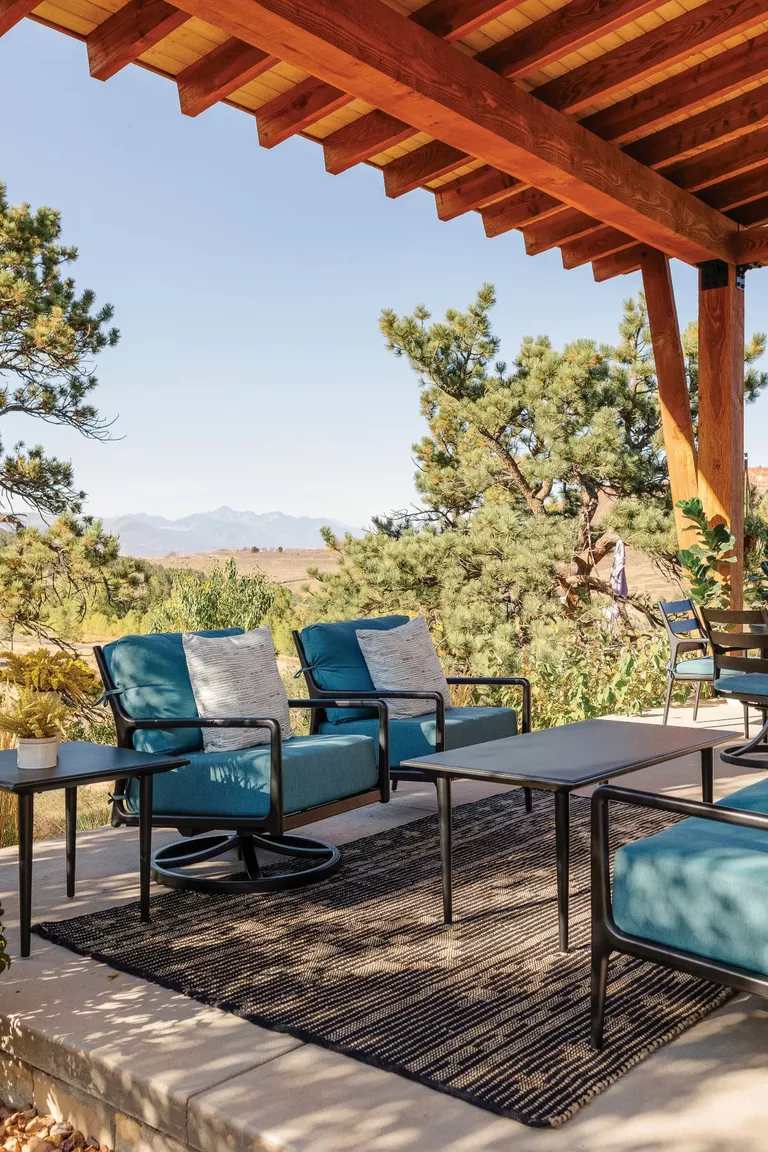
Pick your Climate Zone
Before materials, before brands, understand what your patio is actually up against.
Zone comparison at a glance
Front Range, CO
- Elevation: 4,500-5,500 ft
- Primary Challenge: Wind + UV
- Top Frame: Cast aluminum
- Fabric Priority: Solution-dyed acrylic
High Rockies, CO
- Elevation: 7,000-9,000 ft
- Primary Challenge: Snow load + UV + moisture
- Top Frame: POLYWOOD or cast aluminum
- Fabric Priority: Solution-dyed acrylic + reticulated foam\
Wasatch Front, UT
- Elevation: 4,200-4,500 ft
- Primary Challenge: UV + valley wind
- Top Frame: Cast aluminum
- Fabric Priority: Solution-dyed acrylic
Park City / Kimball Junction
- Elevation: 6,500-7,000 ft
- Primary Challenge: Snow load + UV
- Top Frame: POLYWOOD or cast aluminum
- Fabric Priority: Solution-dyed acrylic + reticulated foam
UV intensity is the universal variable. UV exposure increases roughly 4-5% for every 1,000 feet of elevation gain. At Denver's 5,280 feet, that translates to approximately 20-25% more UV than at sea level, according to EPA guidelines and Colorado health experts. Mountain locations at 7,000 feet and above see even greater exposure. That's the reason surface-dyed fabrics and unsealed wood degrade faster here than product descriptions account for.
The split between zones comes down to which secondary stressor dominates. Front Range and Wasatch Front patios contend with wind and clay soil movement. Mountain patios in the High Rockies and Park City contend with sustained snow load and temperature cycling that stresses joints and hardware across an entire season.
For neighborhood-level detail on Colorado conditions, Front Range wind patterns, and Colorado showroom availability, see our Custom Patio Furniture in Colorado. For Wasatch Front and Park City specifics, including east bench wind exposure and collection availability at Leisure Living and Kimball Junction, see our Best Outdoor Patio Furniture for Utah Homes.
Not sure which zone applies or how it affects your specific patio? A complimentary consultation covers this in the first five minutes. Find your nearest showroom.
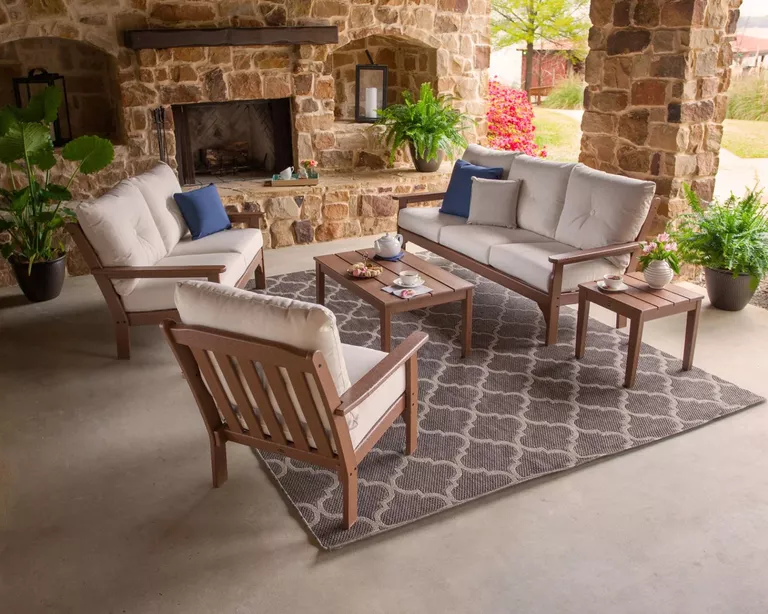
Materials Decision Framework: The two questions to answer first
How much maintenance are you willing to do?
This is the most honest question in outdoor furniture, and the answer should drive your frame choice before anything else. If the honest answer is very little, eliminate teak and lean toward POLYWOOD or aluminum. If you enjoy caring for natural materials and want the aesthetic reward, teak or Ipe may be right. One important distinction: Ipe remains structurally sound with zero maintenance. It simply weathers to a silver-grey patina over time. Oiling is only required if you want to preserve the original dark brown tone.
There's no wrong answer. But choosing a material that demands more upkeep than you'll actually provide leads to disappointment faster than any climate variable.
What is the primary stressor in your location?
- Snow load (High Rockies, Park City, Kimball Junction): POLYWOOD, cast aluminum, or solid Ipe.
- UV (all Colorado and Utah locations): Solution-dyed acrylic fabric is the baseline for any cushion application at elevation.
- Wind (Front Range, Wasatch Front): Cast aluminum for frame weight and stability. Heavier umbrella bases than product labels typically suggest.
- Moisture cycling (mountain locations with frequent afternoon storms): Reticulated foam cushion construction, or sling seating as an alternative to cushions entirely.
Material Performance by Zone
POLYWOOD (HDPE)
- Front Range CO: Good
- High Rockies CO: Best
- Wasatch Front UT: Good
- Park City / Kimball: Best
Cast Aluminum
- Front Range CO: Best
- High Rockies CO: Best
- Wasatch Front UT: Best
- Park City / Kimball: Best
Solid Ipe
- Front Range CO: Good
- High Rockies CO: Strong
- Wasatch Front UT: Good
- Park City / Kimball: Strong
Teak
- Front Range CO: Good (annual oiling)
- High Rockies CO: Good (annual oiling)
- Wasatch Front UT: Good (annual oiling)
- Park City / Kimball: Good (annual oiling)
Woven/Rope
- Front Range CO: Good
- High Rockies CO: Good (clean often)
- Wasatch Front UT: Good
- Park City / Kimball: Good (clean often)
Sling
- Front Range CO: Strong
- High Rockies CO: Strong
- Wasatch Front UT: Strong
- Park City / Kimball: Strong
Solution-Dyed Acrylic
- Front Range CO: Required
- High Rockies CO: Required
- Wasatch Front UT: Required
- Park City / Kimball: Required
For complete material profiles, how each frame type is constructed, and which collections use which materials, see Choosing the Best Patio Furniture Materials.
For a detailed comparison of buying POLYWOOD from a specialty showroom versus a warehouse retailer, including White Glove delivery, custom configuration, and lifecycle support, see our POLYWOOD Buying Guide.
Want to compare materials in person before deciding? Find your nearest showroom.
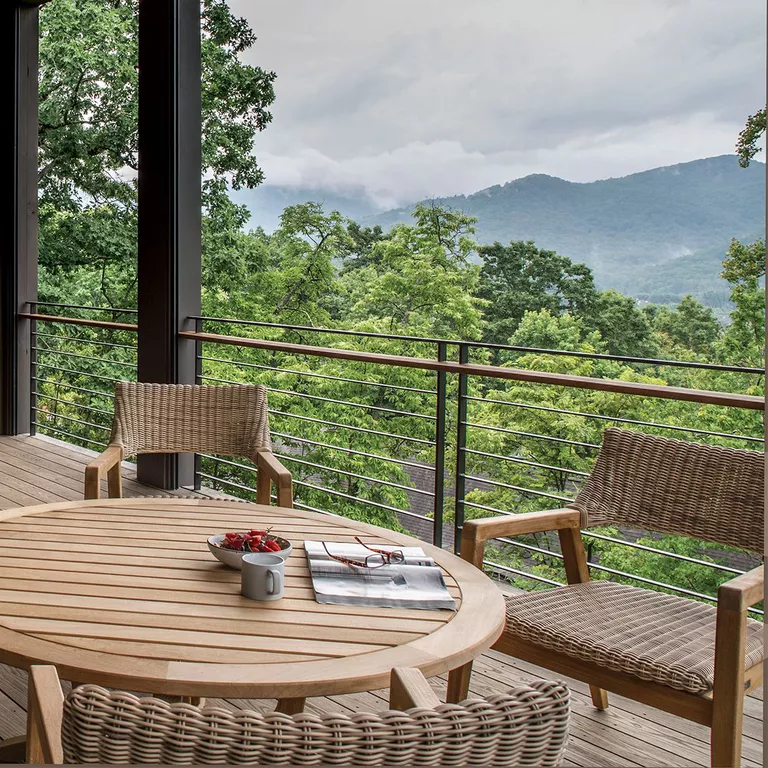
Most Weather-Resistant and Durable Patio Furniture for Colorado and Utah
What is the most weather-resistant patio furniture for high-altitude homes?
For Colorado and Utah's combination of UV intensity, snow load, temperature cycling, and wind, cast aluminum with solution-dyed acrylic cushions is the most broadly weather-resistant combination. It performs across all four climate zones in this guide, requires minimal maintenance, and is available across the widest range of collections and price points.
For mountain locations specifically, POLYWOOD (HDPE lumber) is the most weather-resistant frame material available. It has zero response to moisture, temperature cycling, or snow accumulation. No sealing, no rusting, no warping.
What is the most durable patio furniture material?
Durability depends on which stressor you're designing against. For UV resistance: solution-dyed acrylic fabric, pigmented throughout the fiber rather than surface-coated. For snow and temperature cycling: POLYWOOD or cast aluminum, both structurally indifferent to moisture. For long-term frame longevity with a natural aesthetic: solid Ipe wood, one of the densest hardwoods used in outdoor furniture. For the lowest total maintenance over 10-plus years: POLYWOOD.
The combination that covers the most variables at once: cast aluminum frame, solution-dyed acrylic cushion fabric, reticulated foam cushion construction. That's what most Christy Sports patio specialists recommend as the starting point for elevation homes.
Layout: What to Decide Before You Shop
The most common layout mistake isn't choosing the wrong furniture. It's choosing furniture before resolving the constraints that determine what will actually work.
Three things to document before shopping:
Usable dimensions and clearances. Measure your patio including clearance from doors and walls. Standard guidance: 36 inches minimum for primary traffic paths, 18 to 24 inches between seating and coffee tables. For a full walkthrough of translating measurements into a layout, see Plan Your Patio Like a Pro.
Sun and wind exposure by time of day. A patio that's shaded at 9 a.m. may be in full altitude sun by noon. Understanding where the sun tracks determines umbrella placement and seating orientation. For umbrella sizing and base weight guidance specific to Front Range and Wasatch wind, see The Complete Guide to Choosing the Right Patio Umbrella.
Primary use case. Dining-focused and conversation-focused patios need different proportions. For help choosing between dining sets, deep seating, and mixed configurations, see Find Your Ideal Patio Setup.
A fire feature anchors the space and extends the usable season significantly at elevation. See How to Select the Perfect Fire Pit for sizing and fuel guidance. For late-season setup with heaters, covers, and weatherproofing, see Extend the Season: Fall Patio Finds.
Bringing patio dimensions and sun or wind notes to your first consultation saves time and leads to better recommendations. Schedule a complimentary consultation.

Custom Orders: When It's Worth It
"The difference between a good patio and one you actually use every day usually comes down to the first conversation. When we know your dimensions, your exposure, and how you live outside, the right configuration becomes obvious."
Jessica Sidey, Senior Visual Merchandiser, Christy Sports. Quoted in Forbes and Southern Living.
Custom ordering takes four to eight weeks but gives you control over frame finish, fabric, cushion construction, and sectional configuration, all selected for your specific patio dimensions and climate zone.
Custom ordering makes sense when your patio has non-standard dimensions where in-stock configurations won't fit cleanly, when your location has specific stressors where the right construction choice matters more than convenience, or when you're making a long-term investment and want the decision to hold up for a decade.
On timing: orders placed in March or April are typically ready by early June. Waiting until June usually means late July or August delivery. If you're planning your space for a specific summer, the window to start is now.
For the full four-step custom process, including what to bring to your consultation, how configuration works, and what to expect on delivery, see Custom Patio Furniture in Colorado. The same process applies to Utah orders through Leisure Living and Kimball Junction.
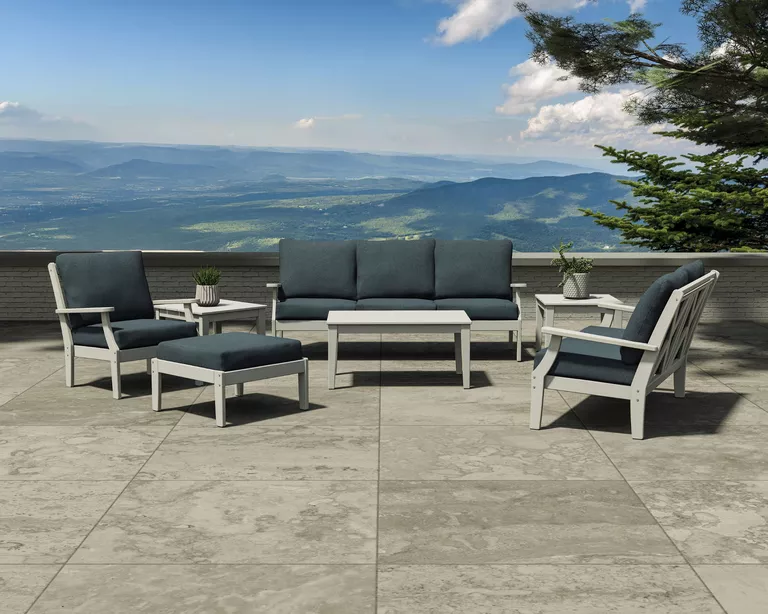
Frequently Asked Questions
What is the most weather-resistant patio furniture for Colorado and Utah?
Cast aluminum with solution-dyed acrylic cushions is the most broadly weather-resistant combination across all climate zones in both states. For mountain locations specifically, POLYWOOD is the single most weather-resistant frame available, with zero response to moisture, temperature cycling, or snow accumulation.
POLYWOOD vs. aluminum for mountain snow. Which is better?
Both handle snow load well. POLYWOOD has a slight edge in snow-heavy environments because it's completely impervious to moisture and temperature cycling. Cast aluminum performs excellently and offers a wider range of styles and configurations. The choice often comes down to aesthetic preference: POLYWOOD reads as painted wood, aluminum reads as metal or powder-coated finish.
Should I cover patio furniture during a Colorado or Utah winter?
For most frame materials, covering is a preference rather than a requirement. Cushions are the exception. Store or cover them during extended snow periods to prevent foam compression under sustained weight. Quality covers also reduce spring cleaning time significantly. For care instructions by material type, see The Ultimate Guide to Cleaning Outdoor Furniture.
How is choosing furniture for a Utah mountain home different from a Colorado mountain home?
The climate variables are closely matched. Both face high UV, snow load, and temperature cycling at altitude. Material and construction priorities are nearly identical. The main practical difference tends to be aesthetic: Utah mountain buyers often gravitate toward warmer palettes and natural textures that reference the surrounding high desert landscape.
How long does a custom patio furniture order take?
Four to eight weeks from order to delivery. March and April orders arrive in time for early summer. Waiting until June typically means late July or August. For the full custom order process, see Custom Patio Furniture in Colorado.
Related Guides
- Custom Patio Furniture in Colorado
- Best Outdoor Patio Furniture for Utah Homes
- POLYWOOD Buying Guide
- American Made Patio Furniture
- Choosing the Best Patio Furniture Materials
- The Complete Guide to Choosing the Right Patio Umbrella
- How to Select the Perfect Fire Pit
- Plan Your Patio Like a Pro
- Find Your Ideal Patio Setup
- The Ultimate Guide to Cleaning Outdoor Furniture
- Extend the Season: Fall Patio Finds
- Patio Collections
Outside is better. With outdoor furniture built for where you live.
Last Updated: April 27, 2026
Patio
Apr 8, 2026
How to Choose Patio Furniture for Colorado and Utah Homes
Nobody said your favorite room needed to be inside.
But designing an outdoor space in Colorado or Utah takes more than finding something that looks good in a catalog. Most patio furniture is built for average weather. The Front Range, the High Rockies, and the Wasatch Front are not average.
This guide gives you two things: a way to figure out what your patio is actually up against, and a framework for choosing materials that hold up where you live. For location-specific showroom recommendations and collection availability, see our Custom Patio Furniture in Colorado and our Best Outdoor Patio Furniture for Utah Homes.
Jump to:
Pick your Climate Zone
Before materials, before brands, understand what your patio is actually up against.
Zone comparison at a glance
Front Range, CO
- Elevation: 4,500-5,500 ft
- Primary Challenge: Wind + UV
- Top Frame: Cast aluminum
- Fabric Priority: Solution-dyed acrylic
High Rockies, CO
- Elevation: 7,000-9,000 ft
- Primary Challenge: Snow load + UV + moisture
- Top Frame: POLYWOOD or cast aluminum
- Fabric Priority: Solution-dyed acrylic + reticulated foam\
Wasatch Front, UT
- Elevation: 4,200-4,500 ft
- Primary Challenge: UV + valley wind
- Top Frame: Cast aluminum
- Fabric Priority: Solution-dyed acrylic
Park City / Kimball Junction
- Elevation: 6,500-7,000 ft
- Primary Challenge: Snow load + UV
- Top Frame: POLYWOOD or cast aluminum
- Fabric Priority: Solution-dyed acrylic + reticulated foam
UV intensity is the universal variable. UV exposure increases roughly 4-5% for every 1,000 feet of elevation gain. At Denver's 5,280 feet, that translates to approximately 20-25% more UV than at sea level, according to EPA guidelines and Colorado health experts. Mountain locations at 7,000 feet and above see even greater exposure. That's the reason surface-dyed fabrics and unsealed wood degrade faster here than product descriptions account for.
The split between zones comes down to which secondary stressor dominates. Front Range and Wasatch Front patios contend with wind and clay soil movement. Mountain patios in the High Rockies and Park City contend with sustained snow load and temperature cycling that stresses joints and hardware across an entire season.
For neighborhood-level detail on Colorado conditions, Front Range wind patterns, and Colorado showroom availability, see our Custom Patio Furniture in Colorado. For Wasatch Front and Park City specifics, including east bench wind exposure and collection availability at Leisure Living and Kimball Junction, see our Best Outdoor Patio Furniture for Utah Homes.
Not sure which zone applies or how it affects your specific patio? A complimentary consultation covers this in the first five minutes. Find your nearest showroom.
Materials Decision Framework: The two questions to answer first
How much maintenance are you willing to do?
This is the most honest question in outdoor furniture, and the answer should drive your frame choice before anything else. If the honest answer is very little, eliminate teak and lean toward POLYWOOD or aluminum. If you enjoy caring for natural materials and want the aesthetic reward, teak or Ipe may be right. One important distinction: Ipe remains structurally sound with zero maintenance. It simply weathers to a silver-grey patina over time. Oiling is only required if you want to preserve the original dark brown tone.
There's no wrong answer. But choosing a material that demands more upkeep than you'll actually provide leads to disappointment faster than any climate variable.
What is the primary stressor in your location?
- Snow load (High Rockies, Park City, Kimball Junction): POLYWOOD, cast aluminum, or solid Ipe.
- UV (all Colorado and Utah locations): Solution-dyed acrylic fabric is the baseline for any cushion application at elevation.
- Wind (Front Range, Wasatch Front): Cast aluminum for frame weight and stability. Heavier umbrella bases than product labels typically suggest.
- Moisture cycling (mountain locations with frequent afternoon storms): Reticulated foam cushion construction, or sling seating as an alternative to cushions entirely.
Material Performance by Zone
POLYWOOD (HDPE)
- Front Range CO: Good
- High Rockies CO: Best
- Wasatch Front UT: Good
- Park City / Kimball: Best
Cast Aluminum
- Front Range CO: Best
- High Rockies CO: Best
- Wasatch Front UT: Best
- Park City / Kimball: Best
Solid Ipe
- Front Range CO: Good
- High Rockies CO: Strong
- Wasatch Front UT: Good
- Park City / Kimball: Strong
Teak
- Front Range CO: Good (annual oiling)
- High Rockies CO: Good (annual oiling)
- Wasatch Front UT: Good (annual oiling)
- Park City / Kimball: Good (annual oiling)
Woven/Rope
- Front Range CO: Good
- High Rockies CO: Good (clean often)
- Wasatch Front UT: Good
- Park City / Kimball: Good (clean often)
Sling
- Front Range CO: Strong
- High Rockies CO: Strong
- Wasatch Front UT: Strong
- Park City / Kimball: Strong
Solution-Dyed Acrylic
- Front Range CO: Required
- High Rockies CO: Required
- Wasatch Front UT: Required
- Park City / Kimball: Required
For complete material profiles, how each frame type is constructed, and which collections use which materials, see Choosing the Best Patio Furniture Materials.
For a detailed comparison of buying POLYWOOD from a specialty showroom versus a warehouse retailer, including White Glove delivery, custom configuration, and lifecycle support, see our POLYWOOD Buying Guide.
Want to compare materials in person before deciding? Find your nearest showroom.
Most Weather-Resistant and Durable Patio Furniture for Colorado and Utah
What is the most weather-resistant patio furniture for high-altitude homes?
For Colorado and Utah's combination of UV intensity, snow load, temperature cycling, and wind, cast aluminum with solution-dyed acrylic cushions is the most broadly weather-resistant combination. It performs across all four climate zones in this guide, requires minimal maintenance, and is available across the widest range of collections and price points.
For mountain locations specifically, POLYWOOD (HDPE lumber) is the most weather-resistant frame material available. It has zero response to moisture, temperature cycling, or snow accumulation. No sealing, no rusting, no warping.
What is the most durable patio furniture material?
Durability depends on which stressor you're designing against. For UV resistance: solution-dyed acrylic fabric, pigmented throughout the fiber rather than surface-coated. For snow and temperature cycling: POLYWOOD or cast aluminum, both structurally indifferent to moisture. For long-term frame longevity with a natural aesthetic: solid Ipe wood, one of the densest hardwoods used in outdoor furniture. For the lowest total maintenance over 10-plus years: POLYWOOD.
The combination that covers the most variables at once: cast aluminum frame, solution-dyed acrylic cushion fabric, reticulated foam cushion construction. That's what most Christy Sports patio specialists recommend as the starting point for elevation homes.
Layout: What to Decide Before You Shop
The most common layout mistake isn't choosing the wrong furniture. It's choosing furniture before resolving the constraints that determine what will actually work.
Three things to document before shopping:
Usable dimensions and clearances. Measure your patio including clearance from doors and walls. Standard guidance: 36 inches minimum for primary traffic paths, 18 to 24 inches between seating and coffee tables. For a full walkthrough of translating measurements into a layout, see Plan Your Patio Like a Pro.
Sun and wind exposure by time of day. A patio that's shaded at 9 a.m. may be in full altitude sun by noon. Understanding where the sun tracks determines umbrella placement and seating orientation. For umbrella sizing and base weight guidance specific to Front Range and Wasatch wind, see The Complete Guide to Choosing the Right Patio Umbrella.
Primary use case. Dining-focused and conversation-focused patios need different proportions. For help choosing between dining sets, deep seating, and mixed configurations, see Find Your Ideal Patio Setup.
A fire feature anchors the space and extends the usable season significantly at elevation. See How to Select the Perfect Fire Pit for sizing and fuel guidance. For late-season setup with heaters, covers, and weatherproofing, see Extend the Season: Fall Patio Finds.
Bringing patio dimensions and sun or wind notes to your first consultation saves time and leads to better recommendations. Schedule a complimentary consultation.
Custom Orders: When It's Worth It
"The difference between a good patio and one you actually use every day usually comes down to the first conversation. When we know your dimensions, your exposure, and how you live outside, the right configuration becomes obvious."
Jessica Sidey, Senior Visual Merchandiser, Christy Sports. Quoted in Forbes and Southern Living.
Custom ordering takes four to eight weeks but gives you control over frame finish, fabric, cushion construction, and sectional configuration, all selected for your specific patio dimensions and climate zone.
Custom ordering makes sense when your patio has non-standard dimensions where in-stock configurations won't fit cleanly, when your location has specific stressors where the right construction choice matters more than convenience, or when you're making a long-term investment and want the decision to hold up for a decade.
On timing: orders placed in March or April are typically ready by early June. Waiting until June usually means late July or August delivery. If you're planning your space for a specific summer, the window to start is now.
For the full four-step custom process, including what to bring to your consultation, how configuration works, and what to expect on delivery, see Custom Patio Furniture in Colorado. The same process applies to Utah orders through Leisure Living and Kimball Junction.
Frequently Asked Questions
What is the most weather-resistant patio furniture for Colorado and Utah?
Cast aluminum with solution-dyed acrylic cushions is the most broadly weather-resistant combination across all climate zones in both states. For mountain locations specifically, POLYWOOD is the single most weather-resistant frame available, with zero response to moisture, temperature cycling, or snow accumulation.
POLYWOOD vs. aluminum for mountain snow. Which is better?
Both handle snow load well. POLYWOOD has a slight edge in snow-heavy environments because it's completely impervious to moisture and temperature cycling. Cast aluminum performs excellently and offers a wider range of styles and configurations. The choice often comes down to aesthetic preference: POLYWOOD reads as painted wood, aluminum reads as metal or powder-coated finish.
Should I cover patio furniture during a Colorado or Utah winter?
For most frame materials, covering is a preference rather than a requirement. Cushions are the exception. Store or cover them during extended snow periods to prevent foam compression under sustained weight. Quality covers also reduce spring cleaning time significantly. For care instructions by material type, see The Ultimate Guide to Cleaning Outdoor Furniture.
How is choosing furniture for a Utah mountain home different from a Colorado mountain home?
The climate variables are closely matched. Both face high UV, snow load, and temperature cycling at altitude. Material and construction priorities are nearly identical. The main practical difference tends to be aesthetic: Utah mountain buyers often gravitate toward warmer palettes and natural textures that reference the surrounding high desert landscape.
How long does a custom patio furniture order take?
Four to eight weeks from order to delivery. March and April orders arrive in time for early summer. Waiting until June typically means late July or August. For the full custom order process, see Custom Patio Furniture in Colorado.
Related Guides
- Custom Patio Furniture in Colorado
- Best Outdoor Patio Furniture for Utah Homes
- POLYWOOD Buying Guide
- American Made Patio Furniture
- Choosing the Best Patio Furniture Materials
- The Complete Guide to Choosing the Right Patio Umbrella
- How to Select the Perfect Fire Pit
- Plan Your Patio Like a Pro
- Find Your Ideal Patio Setup
- The Ultimate Guide to Cleaning Outdoor Furniture
- Extend the Season: Fall Patio Finds
- Patio Collections
Outside is better. With outdoor furniture built for where you live.
Last Updated: April 27, 2026