Choosing the Best Patio Furniture Materials: A Complete Guide
Reviewed by Todd Proctor, Sales & Service Manager, Leisure Living. Todd's material expertise has been cited in Forbes, Better Homes & Gardens, and Bob Vila.
What's in this guide:
- Frame materials: wood, metal, and recycled lumber
- Outdoor cushion fabrics and foam construction
- Sling, woven, and mesh seating options
- Sustainability and recycled materials
- Quick reference: material comparison chart
- What to bring to the showroom
- Frequently asked questions
Every outdoor furniture decision starts with one question: what is this thing actually made of?
The frame determines how long it lasts. The fabric determines how it looks after a few seasons in the sun. And the cushion construction determines whether you're sitting on something comfortable in July or wringing out a waterlogged sponge after every afternoon storm.
We see this play out in our showrooms constantly. A buyer falls in love with the look of a piece, skips the material conversation, and calls us two years later wondering why the finish is peeling or the cushions won't dry. The material IS the furniture. Everything else is just aesthetics.
This guide covers what each material actually is, how it's built, and which collections in our 2026 lineup use it. For help choosing the right material based on your specific climate zone and elevation, see our How to Choose Patio Furniture for Colorado and Utah Homes.
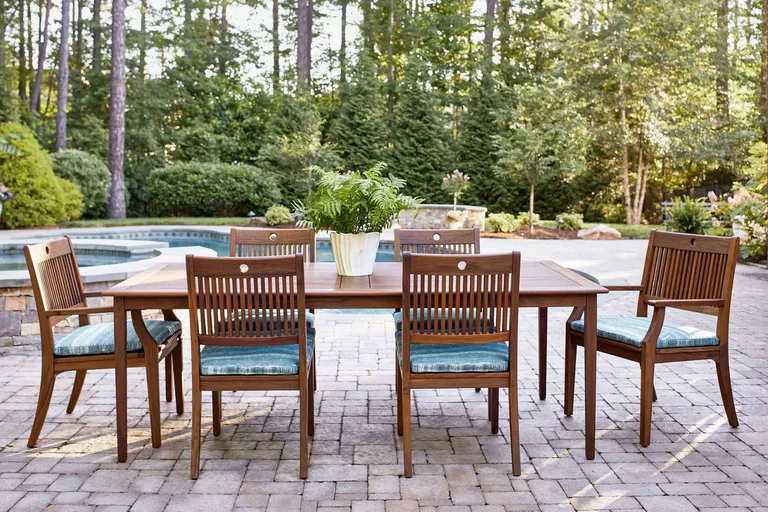
Patio Furniture Frame Materials: Wood, Metal, and Recycled Lumber
POLYWOOD®: Best Low-Maintenance Patio Furniture
POLYWOOD® frames are made from high-density polyethylene (HDPE), a type of plastic derived primarily from recycled milk jugs and detergent bottles. The raw HDPE is cleaned, melted, and extruded into lumber-profile boards that are then milled and assembled like traditional woodworking.
Here's the detail that matters most: the pigment is compounded into the HDPE during extrusion, so the color runs through the full thickness of the material. It's not a coating. There's nothing to chip, peel, or fade the way painted or stained surfaces do. Scratch it and you'll see the same color underneath.
The practical result: POLYWOOD is completely impervious to moisture. It can't rot, swell, crack, or splinter. It's indifferent to temperature cycling and has no response to sustained snow accumulation. Leave it outside year-round and it won't care. POLYWOOD backs every piece with a 20-year residential warranty, and in our experience, that warranty is almost never used.
Collections: Vineyard by POLYWOOD, Edge by POLYWOOD, Braxton by POLYWOOD, Adirondacks by POLYWOOD
Solid Ipe Wood: The Strongest Natural Hardwood for Outdoor Use
Ipe (pronounced "EE-pay") is a tropical hardwood native to Central and South America, and it's in a different league from any other wood you'll find in outdoor furniture. It rates approximately 3,680 on the Janka hardness scale, roughly seven times harder than cedar and more than three times harder than teak. That density is why Ipe resists moisture infiltration, insect damage, and surface wear without requiring chemical treatment or sealant.
Here's what surprises most buyers: Ipe requires zero structural maintenance. It will not rot, crack, or warp even after years of exposure. The only change is cosmetic. Untreated Ipe weathers to a silver-grey patina as UV breaks down surface pigment over time. Many owners prefer the weathered look. To preserve the original deep brown tone, apply a UV-inhibitor oil annually. The Jensen Outdoor Ipe collections are FSC-certified, meaning the wood is sourced from responsibly managed forests.
Collections: Sky by Jensen Outdoor, Ipe by Jensen Outdoor
Teak Patio Furniture: Beautiful but Requires Annual Care
Teak is the material buyers ask about most, and for good reason. Its natural oil content provides inherent resistance to moisture, rot, and insect damage without chemical treatment, and the warm golden tone is hard to match with any other material.
The honest trade-off: teak requires annual oiling to keep that golden look. Without it, UV exposure causes teak to develop a silver-grey patina similar to Ipe, though the graying tends to happen faster at higher elevations. The wood remains structurally sound either way, so this is purely a cosmetic choice.
Teak is softer than Ipe (roughly 1,000-1,200 on the Janka scale compared to Ipe's 3,680), which means it's more susceptible to surface scratches and denting. It's also heavier than aluminum, which contributes to stability but makes repositioning less convenient. If you love the look and genuinely enjoy the annual upkeep ritual, teak rewards you. If oiling sounds like a chore you'll skip, consider POLYWOOD or Ipe instead.
Collections: Spencer by Kingsley Bate (solid Grade A teak with all-weather wicker detailing)
Cast Aluminum Patio Furniture: Most Versatile Frame Material
Cast aluminum is the material our specialists recommend most often, and the reason is simple: it does everything well.
The frames are produced by pouring molten aluminum into molds, creating denser, heavier pieces with more intricate detail than other aluminum methods. The casting process allows for ornamental patterns and contoured shapes that extruded or tubular aluminum can't replicate. After casting, frames are finished with electrostatic powder coating: a dry powder is applied using an electrical charge, then baked at 350-400 degrees. The result is a finish significantly more durable than liquid paint, resistant to chipping, scratching, and UV degradation.
Cast aluminum doesn't rust. It's heavy enough to resist wind displacement, strong enough to handle sustained snow load, and holds up through repeated temperature cycling. It's available in the widest range of styles and price points across the 2026 lineup, which is why it ends up being the right answer for most buyers.
Collections: Kenzo by Tropitone, Berkeley by Castelle, Siena by Ebel, Cedar by Hanamint
Extruded and Tubular Aluminum: Lighter, Modern, Budget-Friendly
Extruded aluminum is produced by pushing heated aluminum through a die, creating uniform, lightweight profiles. Tubular aluminum uses hollow cross-sections for further weight reduction. Both are powder-coated for durability.
The key difference from cast: extruded and tubular frames are lighter (easier to move and reposition), less expensive, and better suited to clean, modern silhouettes. The trade-off is lower wind resistance due to reduced weight and less ornamental detail. If you rearrange your patio frequently or want a contemporary look at a lower price point, this is where to start.
Collections: Ridgway by Christy Outdoor Living (aluminum with thermal-transfer wood grain finish and woven rope back), Lucia by Ratana, Dakoda by Mallin, Penelope by Alfresco Home (aluminum with eco-wood poly slats)
Wrought Iron and Steel: Heaviest, Most Wind-Resistant Frames
Wrought iron and galvanized steel produce the heaviest frames in the lineup, and that weight is the point. Nothing moves these in the wind. They have a substantial, grounded presence that lighter materials can't replicate.
Wrought iron frames are typically hand-forged or formed from solid stock, while galvanized steel uses a zinc coating to resist corrosion. Both require periodic inspection for finish wear, particularly at joints and contact points. If the powder coating chips or wears through, touch up the exposed metal promptly to prevent surface rust. This is the one material category where a little vigilance pays off.
Collections: Classico by O.W. Lee, Monterra by O.W. Lee, Marin by O.W. Lee
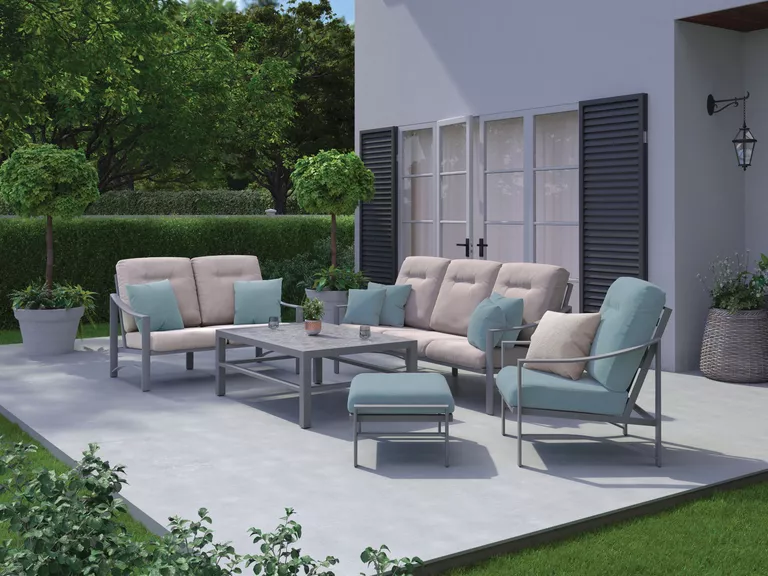
Outdoor Cushion Fabrics and Foam Construction
Solution-Dyed Acrylic: The Only Outdoor Cushion Fabric Worth Considering
Solution-dyed acrylic is the industry benchmark for outdoor cushion fabric, and we don't recommend anything else for cushioned furniture.
The term "solution-dyed" describes the manufacturing process: pigment is added to the acrylic fibers while they're still in liquid form, before being spun into thread. The color is distributed throughout the entire fiber, not applied as a surface coating. Think of it like a carrot (color all the way through) versus a radish (white inside, color only on the surface). UV exposure can wear at the surface without affecting the color underneath, which is why solution-dyed acrylic maintains its appearance for years longer than surface-dyed or printed fabrics.
Sunbrella is the most widely recognized brand in this category. Every cushioned collection in our 2026 lineup is available in solution-dyed acrylic options. O'Bravia, produced by Treasure Garden, is another high-performance option available primarily in umbrella fabrics.
Reticulated Foam: Why Your Cushions Won't Dry (and How to Fix It)
If you've ever flipped a patio cushion and found it still soaked two days after a rainstorm, you've experienced the problem with standard closed-cell foam. It absorbs water and holds it.
Reticulated foam is engineered differently. The cell walls are deliberately broken open during manufacturing (a process called reticulation), creating an interconnected network of channels that allows water to drain through the cushion rather than being absorbed. Cushions built with reticulated foam typically dry in hours instead of days.
This construction matters most in locations with frequent afternoon storms. We've seen homeowners stop using their outdoor spaces entirely because the cushions are perpetually damp. Reticulated foam solves that problem at the manufacturing level.
Woven and Rope Seating: Modern Wicker That Actually Lasts
If your experience with outdoor wicker is "it cracked after one winter," you're thinking of natural rattan. Modern outdoor woven furniture is a different material entirely: UV-stabilized synthetic fibers wrapped over aluminum frames. PVC-coated polyester and high-density polyethylene rope are the two most common weave materials. Both resist moisture, UV degradation, and temperature cycling.
One practical note: woven surfaces trap pine needles, pollen, and debris in the weave pattern. They require slightly more post-storm cleaning than smooth frame surfaces. A leaf blower or quick rinse with a hose handles most of it.
Collections: Palma and Cupido by Kettler (weatherproof rattan with Sunbrella cushions), Hixon by Christy Outdoor Living, Timber by Life
Sling and Mesh Seating: Zero-Maintenance Outdoor Chairs
Sling furniture is the lowest-maintenance seating option in outdoor furniture. A taut synthetic mesh stretches across an aluminum frame. No cushion, no foam, no fabric upkeep. The mesh is typically PVC-coated polyester, heat-sealed at the attachment points for durability. It breathes in summer heat, dries immediately after rain, and asks essentially nothing of you.
Slings are replaceable when they eventually wear, extending the life of the frame significantly. This makes sling furniture one of the best long-term values in the lineup. Mesh seating uses a similar principle with a metal mesh surface that stays cooler to the touch and provides ventilation in warm conditions.
Collections: Amaka by Les Jardins, Koton by Les Jardins, Pilano by Kettler (ergonomic metal mesh)
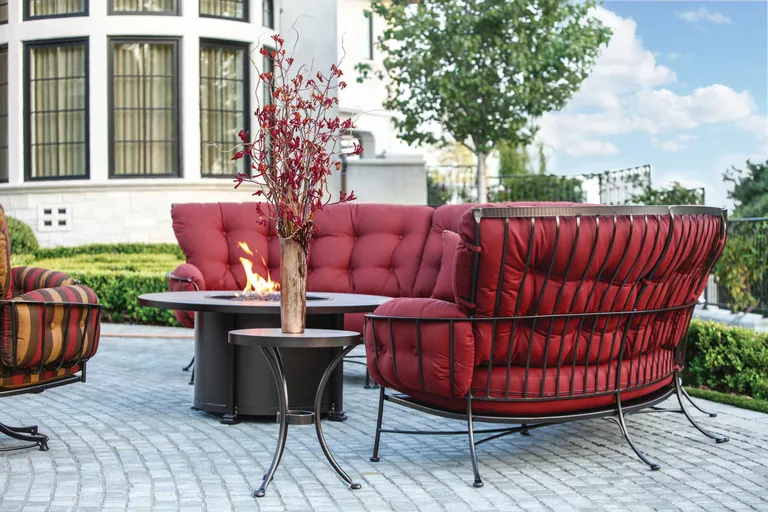
Sustainability and Recycled Materials in Outdoor Furniture
Outdoor furniture isn't often discussed as an environmental choice, but the material differences are worth knowing.
POLYWOOD diverts hundreds of millions of plastic bottles from landfills annually through its HDPE recycling program. Every POLYWOOD piece is manufactured in the USA from recycled content, and the material itself is recyclable at end of life. The 20-year warranty also means fewer replacement cycles compared to lower-durability options.
Jensen Outdoor's Ipe collections carry FSC certification, confirming the wood is harvested from responsibly managed forests with replanting and biodiversity standards. Ipe's natural longevity (often 25-plus years in outdoor applications without chemical treatment) further reduces its lifecycle footprint.
Powder-coated aluminum frames last longer than painted finishes, which reduces the frequency of refinishing and the associated chemical waste. And when aluminum furniture does reach end of life, the metal is fully recyclable.
Quick Reference: Patio Furniture Material Comparison Chart
POLYWOOD (HDPE)
- Maintenance: None
- Durability: 20 year warranty
- Weight: Medium
- Aesthetic: Painted wood look
- Eco: Recycled content
Solid Ipe
- Maintenance: None (structural) / Annual oil (color)
- Durability: 20+ years
- Weight: Heavy
- Aesthetic: Natural hardwood
- Eco: FSC-certified
Teak
- Maintenance: Annual oiling
- Durability: 15-20+ years
- Weight: Heavy
- Aesthetic: Warm golden to silver
- Eco: Naturally renewable
Cast Aluminum
- Maintenance: Low (occasional cleaning)
- Durability: 15-20+ years
- Weight: Medium-heavy
- Aesthetic: Ornamental to modern
- Eco: Recyclable
Extruded Aluminum
- Maintenance: Low
- Durability: 10-15+ years
- Weight: Light
- Aesthetic: Clean, modern lines
- Eco: Recyclable
Wrought Iron/Steel
- Maintenance: Moderate (inspect finish)
- Durability: 20+ years
- Weight: Very heavy
- Aesthetic: Classic, substantial
- Eco: Recyclable
Sling/Mesh
- Maintenance: Very low (replaceable slings)
- Durability: 10-15+ years (frame); 5-7 years (sling)
- Weight: Light
- Aesthetic: Minimal, open
- Eco: Low waste (replaceable parts)
Woven Resin/Rope
- Maintenance: Low (debris clearing)
- Durability: 10-15+ years
- Weight: Medium
- Aesthetic: Textured, warm
- Eco: Varies
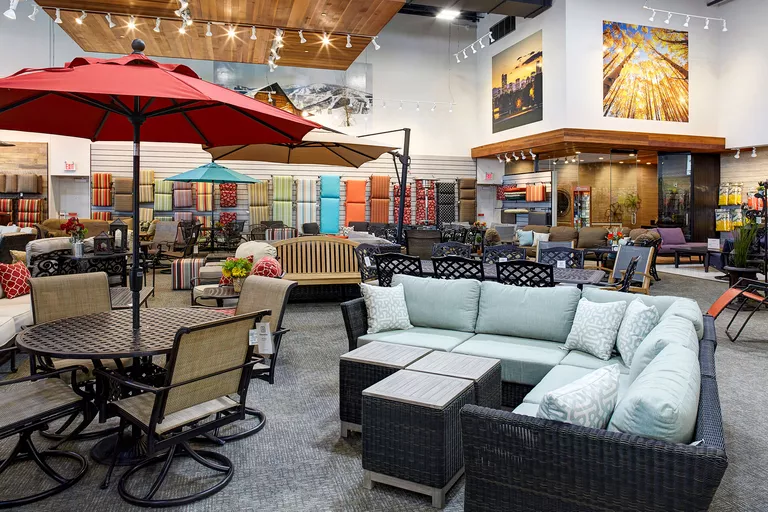
What to Bring to the Showroom
Walking into a patio showroom without preparation leads to the most common purchasing mistakes. Our specialists can do a lot more for you when you arrive with these:
- Patio dimensions and a rough layout sketch. Include clearance from doors, walls, and railings. Even a phone photo with approximate measurements helps.
- Notes on sun and wind exposure. Which direction does your patio face? Is it shaded in the morning and exposed in the afternoon, or the reverse? Is wind a regular factor or occasional?
- Your honest maintenance tolerance. If you won't oil teak annually, don't buy teak. If cushion storage sounds like a chore, look at sling or POLYWOOD.
- Color and material preferences. Photos of your home's exterior, existing outdoor elements, or inspiration images help the specialist narrow options faster.
- Budget range. Not a specific number, but a range. This prevents spending time on collections that aren't realistic and ensures you see options that are.
- Questions for the specialist. Write them down. The consultation is complimentary, and the team expects them.
For more on translating these inputs into a layout, see Plan Your Patio Like a Pro. For help choosing between dining sets, deep seating, and mixed configurations, see Find Your Ideal Patio Setup.
Ready to compare materials in person? Find your nearest showroom or schedule a complimentary consultation.
Frequently Asked Questions
What is the difference between cast and extruded aluminum patio furniture?
Cast aluminum is poured into molds, producing denser, heavier frames with ornamental detail. Extruded aluminum is pushed through a die for lighter, more uniform profiles. Both are powder-coated and rust-free. Cast is heavier and more wind-stable. Extruded is easier to move and typically less expensive. Both hold up well in variable weather.
How often does teak need to be oiled?
Once a year is the standard recommendation for maintaining the original golden color. If you prefer the silver-grey patina that develops naturally, you can skip oiling entirely. The wood remains structurally sound either way. At higher elevations, UV accelerates the graying process, so the color change may be noticeable within the first season.
Is POLYWOOD really maintenance-free?
Yes, in practical terms. POLYWOOD requires no sealing, staining, oiling, or painting. Soap and water is all it needs. It can stay outside year-round in any weather without covering. The 20-year residential warranty reflects that confidence. The only caveat: dark colors can get warm in direct afternoon sun, the same way any dark surface absorbs heat.
What is reticulated foam and why does it matter for outdoor cushions?
Reticulated foam has an open-cell structure that allows water to drain through rather than being absorbed. Standard closed-cell foam traps water and can take days to dry. In locations with frequent rain or afternoon storms, reticulated foam is the difference between cushions that are ready to use the next morning and cushions that sit wet for two days.
Can sling fabric be replaced?
Yes. Most sling furniture is designed so the sling panel can be replaced when it eventually stretches or wears, without replacing the frame. This extends the useful life of the piece significantly and reduces long-term cost compared to fully upholstered options. Ask a specialist about replacement sling availability for specific collections.
Related Guides
- How to Choose Patio Furniture for Colorado and Utah Homes
- Best Outdoor Patio Furniture for Utah Homes - coming soon
- Custom Patio Furniture in Colorado
- The Complete Guide to Choosing the Right Patio Umbrella
- How to Select the Perfect Fire Pit
- Plan Your Patio Like a Pro
- Find Your Ideal Patio Setup
- The Ultimate Guide to Cleaning Outdoor Furniture
- Extend the Season: Fall Patio Finds
- Patio Collections
Outside is better. With materials built to prove it.
Last Updated: April 10, 2026
Choosing the Best Patio Furniture Materials: A Complete Guide
Reviewed by Todd Proctor, Sales & Service Manager, Leisure Living. Todd's material expertise has been cited in Forbes, Better Homes & Gardens, and Bob Vila.
What's in this guide:
- Frame materials: wood, metal, and recycled lumber
- Outdoor cushion fabrics and foam construction
- Sling, woven, and mesh seating options
- Sustainability and recycled materials
- Quick reference: material comparison chart
- What to bring to the showroom
- Frequently asked questions
Every outdoor furniture decision starts with one question: what is this thing actually made of?
The frame determines how long it lasts. The fabric determines how it looks after a few seasons in the sun. And the cushion construction determines whether you're sitting on something comfortable in July or wringing out a waterlogged sponge after every afternoon storm.
We see this play out in our showrooms constantly. A buyer falls in love with the look of a piece, skips the material conversation, and calls us two years later wondering why the finish is peeling or the cushions won't dry. The material IS the furniture. Everything else is just aesthetics.
This guide covers what each material actually is, how it's built, and which collections in our 2026 lineup use it. For help choosing the right material based on your specific climate zone and elevation, see our How to Choose Patio Furniture for Colorado and Utah Homes.
Patio Furniture Frame Materials: Wood, Metal, and Recycled Lumber
POLYWOOD®: Best Low-Maintenance Patio Furniture
POLYWOOD® frames are made from high-density polyethylene (HDPE), a type of plastic derived primarily from recycled milk jugs and detergent bottles. The raw HDPE is cleaned, melted, and extruded into lumber-profile boards that are then milled and assembled like traditional woodworking.
Here's the detail that matters most: the pigment is compounded into the HDPE during extrusion, so the color runs through the full thickness of the material. It's not a coating. There's nothing to chip, peel, or fade the way painted or stained surfaces do. Scratch it and you'll see the same color underneath.
The practical result: POLYWOOD is completely impervious to moisture. It can't rot, swell, crack, or splinter. It's indifferent to temperature cycling and has no response to sustained snow accumulation. Leave it outside year-round and it won't care. POLYWOOD backs every piece with a 20-year residential warranty, and in our experience, that warranty is almost never used.
Collections: Vineyard by POLYWOOD, Edge by POLYWOOD, Braxton by POLYWOOD, Adirondacks by POLYWOOD
Solid Ipe Wood: The Strongest Natural Hardwood for Outdoor Use
Ipe (pronounced "EE-pay") is a tropical hardwood native to Central and South America, and it's in a different league from any other wood you'll find in outdoor furniture. It rates approximately 3,680 on the Janka hardness scale, roughly seven times harder than cedar and more than three times harder than teak. That density is why Ipe resists moisture infiltration, insect damage, and surface wear without requiring chemical treatment or sealant.
Here's what surprises most buyers: Ipe requires zero structural maintenance. It will not rot, crack, or warp even after years of exposure. The only change is cosmetic. Untreated Ipe weathers to a silver-grey patina as UV breaks down surface pigment over time. Many owners prefer the weathered look. To preserve the original deep brown tone, apply a UV-inhibitor oil annually. The Jensen Outdoor Ipe collections are FSC-certified, meaning the wood is sourced from responsibly managed forests.
Collections: Sky by Jensen Outdoor, Ipe by Jensen Outdoor
Teak Patio Furniture: Beautiful but Requires Annual Care
Teak is the material buyers ask about most, and for good reason. Its natural oil content provides inherent resistance to moisture, rot, and insect damage without chemical treatment, and the warm golden tone is hard to match with any other material.
The honest trade-off: teak requires annual oiling to keep that golden look. Without it, UV exposure causes teak to develop a silver-grey patina similar to Ipe, though the graying tends to happen faster at higher elevations. The wood remains structurally sound either way, so this is purely a cosmetic choice.
Teak is softer than Ipe (roughly 1,000-1,200 on the Janka scale compared to Ipe's 3,680), which means it's more susceptible to surface scratches and denting. It's also heavier than aluminum, which contributes to stability but makes repositioning less convenient. If you love the look and genuinely enjoy the annual upkeep ritual, teak rewards you. If oiling sounds like a chore you'll skip, consider POLYWOOD or Ipe instead.
Collections: Spencer by Kingsley Bate (solid Grade A teak with all-weather wicker detailing)
Cast Aluminum Patio Furniture: Most Versatile Frame Material
Cast aluminum is the material our specialists recommend most often, and the reason is simple: it does everything well.
The frames are produced by pouring molten aluminum into molds, creating denser, heavier pieces with more intricate detail than other aluminum methods. The casting process allows for ornamental patterns and contoured shapes that extruded or tubular aluminum can't replicate. After casting, frames are finished with electrostatic powder coating: a dry powder is applied using an electrical charge, then baked at 350-400 degrees. The result is a finish significantly more durable than liquid paint, resistant to chipping, scratching, and UV degradation.
Cast aluminum doesn't rust. It's heavy enough to resist wind displacement, strong enough to handle sustained snow load, and holds up through repeated temperature cycling. It's available in the widest range of styles and price points across the 2026 lineup, which is why it ends up being the right answer for most buyers.
Collections: Kenzo by Tropitone, Berkeley by Castelle, Siena by Ebel, Cedar by Hanamint
Extruded and Tubular Aluminum: Lighter, Modern, Budget-Friendly
Extruded aluminum is produced by pushing heated aluminum through a die, creating uniform, lightweight profiles. Tubular aluminum uses hollow cross-sections for further weight reduction. Both are powder-coated for durability.
The key difference from cast: extruded and tubular frames are lighter (easier to move and reposition), less expensive, and better suited to clean, modern silhouettes. The trade-off is lower wind resistance due to reduced weight and less ornamental detail. If you rearrange your patio frequently or want a contemporary look at a lower price point, this is where to start.
Collections: Ridgway by Christy Outdoor Living (aluminum with thermal-transfer wood grain finish and woven rope back), Lucia by Ratana, Dakoda by Mallin, Penelope by Alfresco Home (aluminum with eco-wood poly slats)
Wrought Iron and Steel: Heaviest, Most Wind-Resistant Frames
Wrought iron and galvanized steel produce the heaviest frames in the lineup, and that weight is the point. Nothing moves these in the wind. They have a substantial, grounded presence that lighter materials can't replicate.
Wrought iron frames are typically hand-forged or formed from solid stock, while galvanized steel uses a zinc coating to resist corrosion. Both require periodic inspection for finish wear, particularly at joints and contact points. If the powder coating chips or wears through, touch up the exposed metal promptly to prevent surface rust. This is the one material category where a little vigilance pays off.
Collections: Classico by O.W. Lee, Monterra by O.W. Lee, Marin by O.W. Lee
Outdoor Cushion Fabrics and Foam Construction
Solution-Dyed Acrylic: The Only Outdoor Cushion Fabric Worth Considering
Solution-dyed acrylic is the industry benchmark for outdoor cushion fabric, and we don't recommend anything else for cushioned furniture.
The term "solution-dyed" describes the manufacturing process: pigment is added to the acrylic fibers while they're still in liquid form, before being spun into thread. The color is distributed throughout the entire fiber, not applied as a surface coating. Think of it like a carrot (color all the way through) versus a radish (white inside, color only on the surface). UV exposure can wear at the surface without affecting the color underneath, which is why solution-dyed acrylic maintains its appearance for years longer than surface-dyed or printed fabrics.
Sunbrella is the most widely recognized brand in this category. Every cushioned collection in our 2026 lineup is available in solution-dyed acrylic options. O'Bravia, produced by Treasure Garden, is another high-performance option available primarily in umbrella fabrics.
Reticulated Foam: Why Your Cushions Won't Dry (and How to Fix It)
If you've ever flipped a patio cushion and found it still soaked two days after a rainstorm, you've experienced the problem with standard closed-cell foam. It absorbs water and holds it.
Reticulated foam is engineered differently. The cell walls are deliberately broken open during manufacturing (a process called reticulation), creating an interconnected network of channels that allows water to drain through the cushion rather than being absorbed. Cushions built with reticulated foam typically dry in hours instead of days.
This construction matters most in locations with frequent afternoon storms. We've seen homeowners stop using their outdoor spaces entirely because the cushions are perpetually damp. Reticulated foam solves that problem at the manufacturing level.
Woven and Rope Seating: Modern Wicker That Actually Lasts
If your experience with outdoor wicker is "it cracked after one winter," you're thinking of natural rattan. Modern outdoor woven furniture is a different material entirely: UV-stabilized synthetic fibers wrapped over aluminum frames. PVC-coated polyester and high-density polyethylene rope are the two most common weave materials. Both resist moisture, UV degradation, and temperature cycling.
One practical note: woven surfaces trap pine needles, pollen, and debris in the weave pattern. They require slightly more post-storm cleaning than smooth frame surfaces. A leaf blower or quick rinse with a hose handles most of it.
Collections: Palma and Cupido by Kettler (weatherproof rattan with Sunbrella cushions), Hixon by Christy Outdoor Living, Timber by Life
Sling and Mesh Seating: Zero-Maintenance Outdoor Chairs
Sling furniture is the lowest-maintenance seating option in outdoor furniture. A taut synthetic mesh stretches across an aluminum frame. No cushion, no foam, no fabric upkeep. The mesh is typically PVC-coated polyester, heat-sealed at the attachment points for durability. It breathes in summer heat, dries immediately after rain, and asks essentially nothing of you.
Slings are replaceable when they eventually wear, extending the life of the frame significantly. This makes sling furniture one of the best long-term values in the lineup. Mesh seating uses a similar principle with a metal mesh surface that stays cooler to the touch and provides ventilation in warm conditions.
Collections: Amaka by Les Jardins, Koton by Les Jardins, Pilano by Kettler (ergonomic metal mesh)
Sustainability and Recycled Materials in Outdoor Furniture
Outdoor furniture isn't often discussed as an environmental choice, but the material differences are worth knowing.
POLYWOOD diverts hundreds of millions of plastic bottles from landfills annually through its HDPE recycling program. Every POLYWOOD piece is manufactured in the USA from recycled content, and the material itself is recyclable at end of life. The 20-year warranty also means fewer replacement cycles compared to lower-durability options.
Jensen Outdoor's Ipe collections carry FSC certification, confirming the wood is harvested from responsibly managed forests with replanting and biodiversity standards. Ipe's natural longevity (often 25-plus years in outdoor applications without chemical treatment) further reduces its lifecycle footprint.
Powder-coated aluminum frames last longer than painted finishes, which reduces the frequency of refinishing and the associated chemical waste. And when aluminum furniture does reach end of life, the metal is fully recyclable.
Quick Reference: Patio Furniture Material Comparison Chart
POLYWOOD (HDPE)
- Maintenance: None
- Durability: 20 year warranty
- Weight: Medium
- Aesthetic: Painted wood look
- Eco: Recycled content
Solid Ipe
- Maintenance: None (structural) / Annual oil (color)
- Durability: 20+ years
- Weight: Heavy
- Aesthetic: Natural hardwood
- Eco: FSC-certified
Teak
- Maintenance: Annual oiling
- Durability: 15-20+ years
- Weight: Heavy
- Aesthetic: Warm golden to silver
- Eco: Naturally renewable
Cast Aluminum
- Maintenance: Low (occasional cleaning)
- Durability: 15-20+ years
- Weight: Medium-heavy
- Aesthetic: Ornamental to modern
- Eco: Recyclable
Extruded Aluminum
- Maintenance: Low
- Durability: 10-15+ years
- Weight: Light
- Aesthetic: Clean, modern lines
- Eco: Recyclable
Wrought Iron/Steel
- Maintenance: Moderate (inspect finish)
- Durability: 20+ years
- Weight: Very heavy
- Aesthetic: Classic, substantial
- Eco: Recyclable
Sling/Mesh
- Maintenance: Very low (replaceable slings)
- Durability: 10-15+ years (frame); 5-7 years (sling)
- Weight: Light
- Aesthetic: Minimal, open
- Eco: Low waste (replaceable parts)
Woven Resin/Rope
- Maintenance: Low (debris clearing)
- Durability: 10-15+ years
- Weight: Medium
- Aesthetic: Textured, warm
- Eco: Varies
What to Bring to the Showroom
Walking into a patio showroom without preparation leads to the most common purchasing mistakes. Our specialists can do a lot more for you when you arrive with these:
- Patio dimensions and a rough layout sketch. Include clearance from doors, walls, and railings. Even a phone photo with approximate measurements helps.
- Notes on sun and wind exposure. Which direction does your patio face? Is it shaded in the morning and exposed in the afternoon, or the reverse? Is wind a regular factor or occasional?
- Your honest maintenance tolerance. If you won't oil teak annually, don't buy teak. If cushion storage sounds like a chore, look at sling or POLYWOOD.
- Color and material preferences. Photos of your home's exterior, existing outdoor elements, or inspiration images help the specialist narrow options faster.
- Budget range. Not a specific number, but a range. This prevents spending time on collections that aren't realistic and ensures you see options that are.
- Questions for the specialist. Write them down. The consultation is complimentary, and the team expects them.
For more on translating these inputs into a layout, see Plan Your Patio Like a Pro. For help choosing between dining sets, deep seating, and mixed configurations, see Find Your Ideal Patio Setup.
Ready to compare materials in person? Find your nearest showroom or schedule a complimentary consultation.
Frequently Asked Questions
What is the difference between cast and extruded aluminum patio furniture?
Cast aluminum is poured into molds, producing denser, heavier frames with ornamental detail. Extruded aluminum is pushed through a die for lighter, more uniform profiles. Both are powder-coated and rust-free. Cast is heavier and more wind-stable. Extruded is easier to move and typically less expensive. Both hold up well in variable weather.
How often does teak need to be oiled?
Once a year is the standard recommendation for maintaining the original golden color. If you prefer the silver-grey patina that develops naturally, you can skip oiling entirely. The wood remains structurally sound either way. At higher elevations, UV accelerates the graying process, so the color change may be noticeable within the first season.
Is POLYWOOD really maintenance-free?
Yes, in practical terms. POLYWOOD requires no sealing, staining, oiling, or painting. Soap and water is all it needs. It can stay outside year-round in any weather without covering. The 20-year residential warranty reflects that confidence. The only caveat: dark colors can get warm in direct afternoon sun, the same way any dark surface absorbs heat.
What is reticulated foam and why does it matter for outdoor cushions?
Reticulated foam has an open-cell structure that allows water to drain through rather than being absorbed. Standard closed-cell foam traps water and can take days to dry. In locations with frequent rain or afternoon storms, reticulated foam is the difference between cushions that are ready to use the next morning and cushions that sit wet for two days.
Can sling fabric be replaced?
Yes. Most sling furniture is designed so the sling panel can be replaced when it eventually stretches or wears, without replacing the frame. This extends the useful life of the piece significantly and reduces long-term cost compared to fully upholstered options. Ask a specialist about replacement sling availability for specific collections.
Related Guides
- How to Choose Patio Furniture for Colorado and Utah Homes
- Best Outdoor Patio Furniture for Utah Homes - coming soon
- Custom Patio Furniture in Colorado
- The Complete Guide to Choosing the Right Patio Umbrella
- How to Select the Perfect Fire Pit
- Plan Your Patio Like a Pro
- Find Your Ideal Patio Setup
- The Ultimate Guide to Cleaning Outdoor Furniture
- Extend the Season: Fall Patio Finds
- Patio Collections
Outside is better. With materials built to prove it.
Last Updated: April 10, 2026