Patio
Jul 2, 2026
What Is the Most Durable Outdoor Patio Furniture for Mountain Climates?
What's in this guide:
- Why mountain climates are the ultimate durability test
- The most durable patio furniture materials, ranked
- Top Recommended Collections for 2026
- Brand spotlight: collections built for altitude
- Altitude Adjuster: quick-reference comparison table
- How to extend the life of any outdoor furniture
- Before you buy: a mountain-climate durability checklist
- Visit a Colorado or Utah showroom
- Frequently asked questions
A well-chosen piece of patio furniture is not a seasonal purchase. It is a long-term investment in how you use your outdoor space, and in mountain climates, that investment gets tested harder than almost anywhere else in the country.
A dining set that performs beautifully at a sea-level showroom may show serious wear within two Colorado summers. UV intensity increases with elevation. Temperature swings are wider. Snow loads are heavier. And in certain corridors along the Front Range and Wasatch Front, the wind is in a category of its own.
The specialists at Leisure Living and Christy Sports have helped thousands of Colorado and Utah homeowners find furniture that's still performing a decade later. The durability question worth asking isn't simply whether a piece will hold up. It's whether it will hold up to your specific conditions: your elevation, your sun exposure, and whether the property is occupied every weekend or visited twice a season.
This guide answers that question for mountain homeowners. For a complete breakdown of how each material is constructed, including HDPE extrusion, powder-coating chemistry, and Janka hardness ratings, see our Patio Furniture Materials Guide. Here, we focus on what matters most at altitude: which materials survive, which require your attention to do so, and how to make the right call for your specific patio.
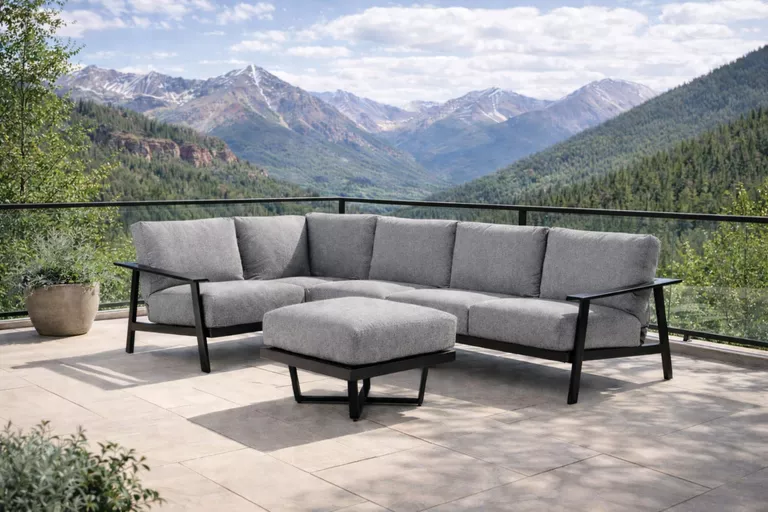
Why Mountain Climates Are the Ultimate Durability Test
Four key environmental stressors make patio furniture in Colorado and Utah face a much tougher test than in most other parts of the country. Understanding these factors helps you choose materials that will actually last in your specific mountain setting.
UV Intensity at High Altitude
Because the atmosphere is thinner at higher elevations, more ultraviolet (UV) radiation reaches the surface.
According to the U.S. Environmental Protection Agency (EPA), UV intensity increases by about 2% for every 1,000-foot gain in elevation. Here's what that looks like for popular mountain locations:
Denver/Boulder
- Elevation: ~5,280-5,430 ft
- Estimated UV Increase vs. Sea Level: ~10-12% more UV
Park City, UT
- Elevation: ~6,900 ft
- Estimated UV Increase vs. Sea Level: ~14% more UV
Vail, CO
- Elevation: ~8,150 ft
- Estimated UV Increase vs. Sea Level: ~16% more UV
Breckenridge, CO
- Elevation: ~9,600 ft
- Estimated UV Increase vs. Sea Level: ~19% more UV
Leadville, CO
- Elevation: ~10,152 ft
- Estimated UV Increase vs. Sea Level: ~20% more UV
Estimates based primarily on the EPA's 2% per 1,000 feet guideline. Actual exposure can be significantly higher on clear days, south-facing slopes, or when snow is present (fresh snow can reflect up to 80% of UV rays back upward).
What this means for your furniture: UV breaks down surface coatings, fades fabrics, and degrades finishes faster at altitude. Materials that look fine after several seasons at sea level can show fading or chalking much sooner on a Colorado or Utah deck. This is why zero-maintenance options like HDPE poly lumber, where color runs all the way through the material, and high-quality powder-coated cast aluminum perform so well in mountain climates.
Snow Load and Structural Stress
Mountain patios regularly face heavy, wet snow that can accumulate quickly. Furniture left outdoors must support significant static weight without bending, cracking, or permanently deforming. Thin or lightweight frames are more vulnerable than solid cast aluminum, dense hardwoods, or heavy HDPE poly lumber. Covers reduce accumulation but do not eliminate the load if snow builds heavily on top.
Temperature Cycling
Daily temperature swings of 40-50 degrees or more are common in spring and fall. These repeated expansions and contractions put stress on joints, welds, and hardware over time. The best-performing pieces use stainless steel hardware and well-engineered connections that can handle this movement.
Wind Load at Elevation
Colorado's Front Range experiences warm downslope winds, sometimes called Chinooks, that arrive from the Rockies with gusts reaching 50-70 mph in exposed corridors from Fort Collins through Denver to Pueblo.
Utah's Wasatch Front sees powerful cold canyon outflow winds funneling through Emigration, Parleys, and the Cottonwood canyons. Even patios that feel sheltered on a calm morning can be fully exposed during a canyon wind event.
Low-profile designs with a wide footprint and heavier frames (cast aluminum or wrought iron) perform best in exposed locations. Deep seating with a 15-18 inch seat height creates significantly less wind resistance than a high-back dining chair at 36-40 inches. If your patio faces a canyon mouth, a ridge, or an exposed southern slope, profile is as important as material when you are evaluating durability.
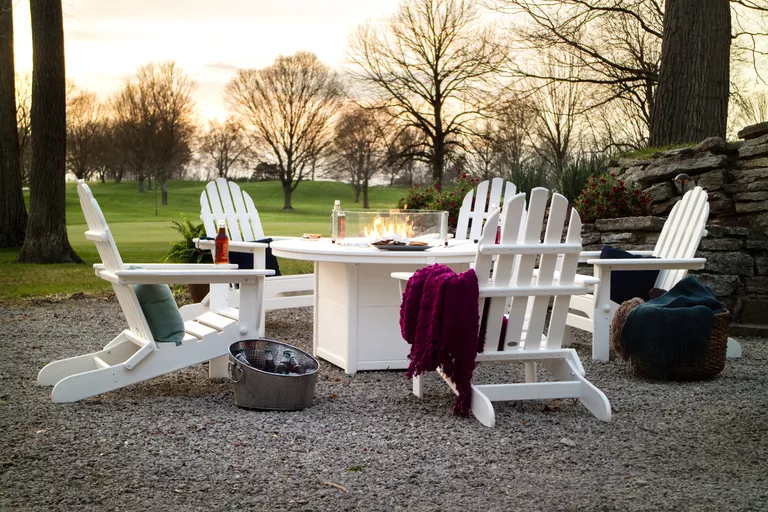
The Most Durable Patio Furniture Materials, Ranked for Mountain Climates
Best Zero-Maintenance Option: HDPE / Poly Lumber (POLYWOOD)
HDPE poly lumber is the most maintenance-free material in the lineup, and it is not particularly close. The pigment is compounded into the material during manufacturing, so there is no surface coating to fade, chip, or peel. It neither absorbs moisture nor reacts to snow accumulation or temperature cycling. UV cannot degrade the color because the color runs through the full thickness of the material.
At high altitude, this matters more than it does anywhere else. South-facing Colorado decks and open Park City terraces that would accelerate the wear on almost any other material have essentially no effect on HDPE. Leave it outside year-round and it will look the same in year ten as it did in year one.
POLYWOOD backs the structural lumber on every piece with a 20-year residential warranty; metal frames and hardware carry a five-year warranty. In our experience, that warranty is almost never used.
Best for: buyers who want to stop thinking about their furniture. Vacation rentals, second homes, and high-exposure decks where maintenance visits are infrequent. If your patio chair is going to sit on a Breckenridge deck from October through May without anyone checking on it, this is your material.
Trade-off: heavier than aluminum for its size, with a more casual aesthetic. Limited ornamental detailing compared to cast aluminum.
2026 collections: Vineyard by POLYWOOD, Braxton by POLYWOOD, Adirondacks by POLYWOOD, Edge by POLYWOOD
Best All-Around Choice: Cast Aluminum
Cast aluminum is the material Christy Sports specialists recommend most often, for most buyers, and the reasoning is straightforward: it does everything well.
The frames are produced by pouring molten aluminum into molds, creating denser, heavier pieces with more intricate detail than lighter aluminum methods. Electrostatic powder coating handles the finish, significantly more durable and UV-resistant than liquid paint. Cast aluminum does not rust. Snow load doesn't deflect it. Its finish survives repeated temperature cycling. And no material in the 2026 lineup matches it for design range.
For mountain homeowners who want design flexibility without sacrificing durability, cast aluminum is almost always the right answer.
Best for: most buyers. Dining sets, deep seating, fire pit surrounds. Works across all 14 Colorado and Utah showroom configurations. For wind-exposed sites, heavier cast pieces offer meaningful stability that lighter aluminum cannot match.
Cast aluminum buyers regularly return to our showrooms years later, not because they need to replace anything, but out of curiosity about what's new.
Trade-off: ornate cast pieces are heavier than extruded aluminum and less convenient to reposition frequently.
2026 collections: Cedar by Hanamint, Kenzo by Tropitone, Berkeley by Castelle, Siena by Ebel
Best Natural Wood Option: Ipe Hardwood
Ipe (pronounced "EE-pay") is a tropical hardwood that requires essentially zero structural maintenance. It will not rot, crack, or warp after years of outdoor exposure, and its density makes it resistant to surface damage from hail, abrasion, and heavy use.
The only change that happens to untreated Ipe over time is cosmetic. UV exposure breaks down surface pigment gradually, and the wood weathers to a silver-grey patina. Many mountain homeowners prefer the weathered look. To preserve the original deep brown tone, apply a UV-inhibitor oil formulated for outdoor hardwoods annually. The Jensen Outdoor Ipe collections available at Christy Sports are FSC-certified, meaning the wood is sourced from responsibly managed forests. Jensen Outdoor has held FSC® accreditation since 1995, covering more than two million acres of Bolivian forest.
Best for: buyers who want the warmth and character of real wood without the attention teak requires at altitude. Full-sun decks and high-UV exposure sites.
Trade-off: higher price point than most aluminum options. Less color variety. Heavier than aluminum.
2026 collections: Ipe by Jensen Outdoor, Sky by Jensen Outdoor
Best for Attentive Owners: Teak
Teak's natural oil content provides inherent resistance to moisture, rot, and insect damage, and the warm golden tone is difficult to match with any other material. It is genuinely durable. The honest consideration for mountain climates is that durability and appearance are two separate things with teak, and altitude accelerates the gap between them.
At Vail or Park City elevations, UV exposure will silver teak faster than it would at lower elevations. The wood remains structurally sound either way. But if preserving the golden color matters to you, apply a UV-inhibitor oil formulated for outdoor hardwoods annually. If you can commit to that, teak is a worthy long-term investment. If annual UV-inhibitor oil applications are something you will skip, Ipe or POLYWOOD will give you better results with less effort.
Best for: buyers in sheltered or partially covered outdoor spaces who appreciate natural materials and can commit to annual care. Not recommended for second homes or unattended installations at high elevation.
For a full breakdown of teak grades and what to look for in construction quality, see our Patio Furniture Materials Guide.
2026 collections: Spencer by Kingsley Bate
Best for Wind-Exposed Sites: Wrought Iron and Steel
Wrought iron and galvanized steel produce the heaviest frames in the lineup, and that weight is the point. For patios on exposed ridges, canyon-facing decks along the Wasatch Front, or Front Range locations that see Chinook wind events, nothing stays put like wrought iron.
The maintenance consideration is specific: powder coat finish on wrought iron and steel must be inspected seasonally, particularly at joints and contact points where wear concentrates. If the finish chips or wears through, touch up the exposed metal promptly. This is the one material category where vigilance pays a real structural dividend.
Best for: wind-exposed sites where displacement is a genuine concern. Heavy cast fire pit tables and anchored dining sets. Buyers who are willing to inspect the finish annually in exchange for maximum stability.
2026 collections: Monterra by O.W. Lee, Marin by O.W. Lee
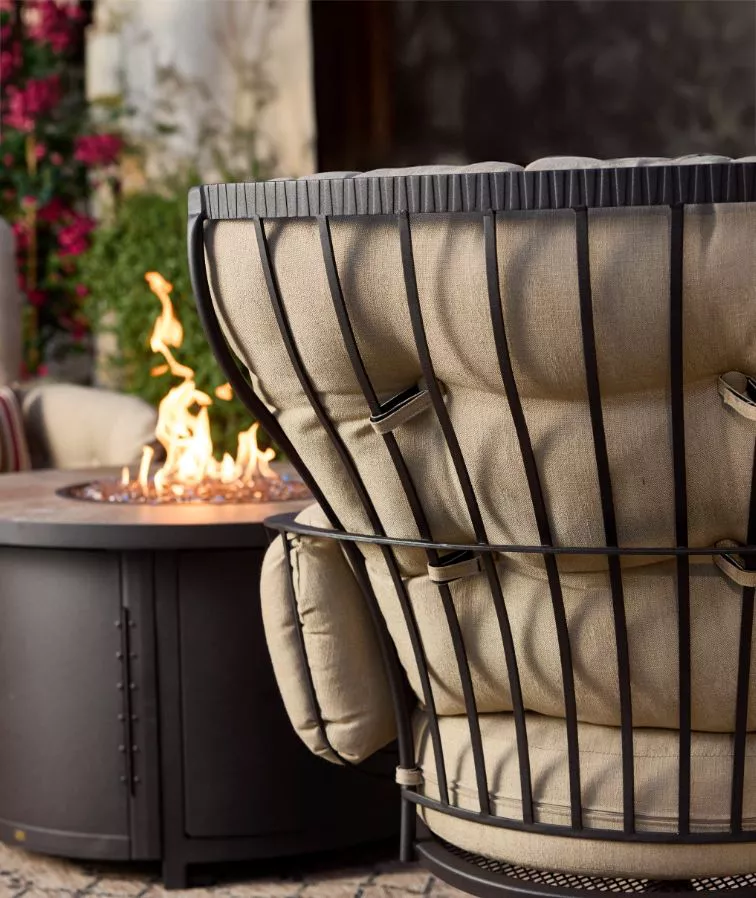
Top Recommended Collections for 2026
Not sure where to start? These three collections are our specialists' top picks this season, one from each of the three materials we recommend most often for Colorado and Utah homes.
- Best all-around: Cedar by Hanamint — Cast aluminum dining and deep seating in a Raven powder coat finish, with stainless steel hardware throughout.
- Best zero-maintenance: Vineyard by POLYWOOD — HDPE poly lumber backed by a 20-year warranty on the structural lumber. Leave it on a Breckenridge deck all winter. No painting, sealing, or seasonal treatment needed.
- Best for wind-exposed sites: Monterra by O.W. Lee — Wrought iron deep seating with the frame weight to stay put during Front Range Chinooks and Wasatch canyon outflow events. Inspect the powder coat finish seasonally and this collection will last for decades.
Browse all 2026 patio collections to see the full lineup at Christy Sports and Leisure Living showrooms.
Brand Spotlight: Collections Built for Mountain Living
Hanamint Cedar: Cast Aluminum Built for Altitude
The Cedar collection from Hanamint covers the full range of outdoor living configurations — dining (three table options, swivel rocker and standard chairs, sling options), deep seating, chaise lounge, and occasional tables — all with electrostatic powder coating in a Raven finish, stainless steel hardware, and 2026 fabrics including Shaded Spruce, Lunar Rock, and Smokehouse Sling.
Browse the Cedar collection. If you're building a full outdoor living space around a fire feature, see our guide to selecting a fire pit for what to consider alongside your furniture choice.
Kingsley Bate Spencer: Grade A Teak for Serious Buyers
Spencer is built from Grade A teak, cut entirely from the dense heartwood of mature plantation trees, with no sapwood and tight, even grain. That distinction matters. Grade A teak has higher natural oil content than lower grades, which means better inherent moisture resistance and slower weathering. The collection combines solid teak frames with all-weather wicker detailing.
This is a premium investment that rewards consistent owners. If you visit your Colorado or Utah property regularly and are willing to apply UV-inhibitor oil formulated for outdoor hardwoods once a season, Spencer will be on your deck for twenty years. If consistent care is not realistic for your schedule, cast aluminum or POLYWOOD will serve you better at altitude.
Browse the Spencer collection.
POLYWOOD Adirondacks and Vineyard: The No-Excuses Option
The Vineyard seating series and Adirondack chairs from POLYWOOD carry a 20-year residential warranty on the structural lumber and require no paint, sealing, or seasonal treatment. Leave them outside year-round on a Breckenridge deck, a Park City terrace, or a Steamboat cabin porch. Soap and water when they look dirty is the entire maintenance program.
For anyone shopping for a vacation rental property or a second home in Colorado or Utah, the POLYWOOD collections deserve serious consideration.
Also Worth Considering: Les Jardins Koton
Buyers looking for a softer aesthetic alongside genuine durability should take a look at Les Jardins Koton, a woven collection that ranks among our highest-priority 2026 offerings. The synthetic woven material is UV-stabilized and designed for outdoor exposure without the seasonal care that natural rattan requires, making it a reasonable choice for mountain homes where the look of woven furniture is a priority but the maintenance commitment for natural materials is not.
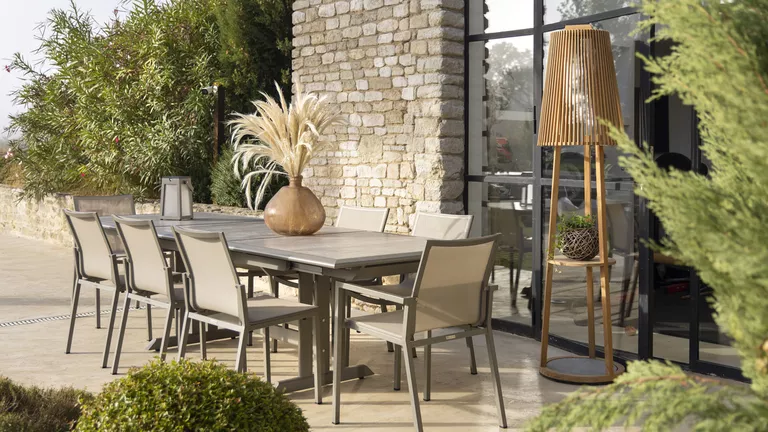
The Altitude Adjuster: Quick-Reference Durability Comparison
The right material depends on your conditions and how much maintenance you are genuinely willing to do. This table rates each material against the four mountain-climate stressors.
HDPE/Polywood
- UV Resilience (1-5): 5
- Wind Stability (1-5): 2*
- Annual Maintenance: None
- Leave Outside Year-Round: Yes, confidently
- Best Mountain Use Case: Second homes, vacation rentals, zero-maintenance buyers
Cast Aluminum
- UV Resilience (1-5): 4
- Wind Stability (1-5): 4
- Annual Maintenance: Very low (wash seasonally)
- Leave Outside Year-Round: Yes
- Best Mountain Use Case: Most configurations, dining and deep seating
Ipe Hardwood
- UV Resilience (1-5): 4
- Wind Stability (1-5): 3
- Annual Maintenance: Optional UV-inhibitor oil (cosmetic)
- Leave Outside Year-Round: Yes
- Best Mountain Use Case: Full-sun decks, natural wood buyers
Teak
- UV Resilience (1-5): 3
- Wind Stability (1-5): 3
- Annual Maintenance: Annual UV-inhibitor oil
- Leave Outside Year-Round: Yes, with oil
- Best Mountain Use Case: Sheltered patios, attentive primary-home owners
Wrought Iron / Steel
- UV Resilience (1-5): 3
- Wind Stability (1-5): 5
- Annual Maintenance: Seasonal finish inspection
- Leave Outside Year-Round: Yes, with inspection
- Best Mountain Use Case: Wind-exposed ridges and canyon-facing decks
UV Resilience reflects how well the material resists fading and surface degradation under mountain UV conditions. Wind Stability reflects frame weight, base design, and resistance to displacement in high-wind events. Scores reflect real-world performance across Colorado and Utah showrooms.
* HDPE / POLYWOOD scores a 2 for Wind Stability not because of a material weakness, but because of its lighter profile relative to cast aluminum and wrought iron. Secure lightweight POLYWOOD pieces or move them to a sheltered position during high-wind events along the Front Range or Wasatch Front. Structural integrity is unaffected.
The table captures most of what matters, but the most useful durability conversations tend to come down to a few practical questions: How often is someone actually at the property? What direction does the patio face? Is it covered or fully exposed? Those site-specific answers often shift a material recommendation more than any general ranking.
How to Extend the Life of Any Outdoor Furniture in Mountain Climates
Cover or Store Cushions Seasonally
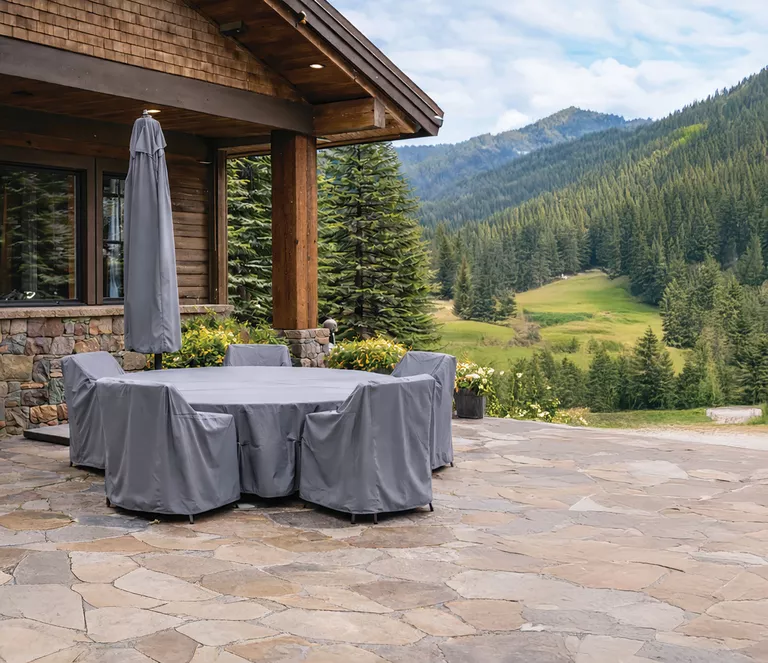
Cushion fabrics at altitude experience the same UV challenge as frames, and even solution-dyed acrylic fabrics benefit from cover protection or indoor storage during the late-fall and winter shoulder months. Furniture covers designed to fit specific collections, including options from Treasure Garden, are available at Christy Sports patio showrooms.
Secure Lightweight Pieces During Wind Events
POLYWOOD and lighter extruded aluminum pieces should be stored or folded flat during predicted high-wind events along the Front Range or Wasatch Front. This is not a reflection of material quality. It is a wind load issue, and even premium lightweight furniture can become a projectile in a 60 mph Chinook or canyon outflow event.
Heavier cast aluminum and wrought iron may need to be moved to a sheltered position but rarely require full storage.
Clean in Fall, Not Spring
Cleaning furniture in the fall, before it goes into storage or under covers, prevents debris, organic matter, and residue from breaking down finishes or cushion fabrics over winter. Soap and water works for most frames. For material-specific cleaning instructions, see our guide to cleaning and caring for outdoor patio furniture.
Inspect Hardware Annually
Stainless steel hardware resists corrosion at altitude. Standard zinc-plated hardware may show wear at high-elevation, high-UV installations. A brief annual check of bolts, screws, and pivot points adds little time and extends a frame's useful life significantly. Pay particular attention to the joints and feet on wrought iron and steel pieces.
Before You Buy: A Mountain-Climate Durability Checklist
Use this checklist to stress-test any furniture you are considering against your specific Colorado or Utah conditions before committing.
UV Resistance: Is the color compounded into the material itself (HDPE), or applied via a high-grade electrostatic powder coat (cast aluminum)? Both hold up well at altitude. Surface-painted or liquid-coated finishes do not.
Weight vs. Wind: If your patio faces a canyon corridor, a ridge line, or an exposed southern slope, is the frame heavy enough (wrought iron, heavy cast aluminum) or low-profile enough in design to resist displacement during a Chinook or canyon outflow event?
Snow Load Capacity: Does the piece feature solid cast sections or reinforced joints built to handle the static weight of 6-12 inches of accumulated snow without deflecting or deforming?
Hardware Quality: Does the furniture use stainless steel hardware at joints and connection points? Standard zinc-plated hardware shows wear faster under high-altitude UV and temperature cycling conditions.
Maintenance Reality: Are you, or a property manager, realistically able to apply UV-inhibitor oil formulated for outdoor hardwoods annually? If not, choose HDPE or cast aluminum rather than teak or Ipe and accept the cosmetic trade-off.
Storage Plan: Do you have a plan for cushion storage or high-quality protective covers, such as those from Treasure Garden, to shield fabrics during the winter shoulder months? Even UV-stable fabrics benefit from protection during extended periods of inactivity.
Need a second opinion? Bring a photo of your patio and your elevation to any of our 14 Colorado and Utah showrooms. Our specialists can help you work through this checklist against the specific collections in stock.

Where to Shop for Mountain-Climate Patio Furniture in Colorado and Utah
Durability is easier to evaluate in person than in a product listing. Our specialists across Colorado and Utah can show you the weight difference between cast and extruded aluminum, walk you through the material options for your specific elevation and exposure, and help you identify which 2026 collections make the most sense for your patio.
Every purchase comes with white glove delivery: furniture arrives fully assembled, inspected, and placed exactly where you want it. All packaging is removed. If you want to plan the configuration before you buy, our in-store design consultations are free.
Christy Sports operates 14 patio showrooms across Colorado and Utah.
Colorado
- Arvada, 7715 Wadsworth Blvd, (303) 421-0261
- Avon, 182 Avon Rd, (970) 949-0241
- Boulder, 2000 30th St, (303) 442-2493
- Cherry Creek, 201 University Blvd, (303) 321-3885
- Colorado Springs, 5294 N Nevada Ave, (719) 597-5222
- Denver West, 14371 W Colfax Ave, (303) 271-0155
- Dillon, 817 US-6, (970) 468-2329
- Fort Collins, 3500 S College Ave, (970) 223-4411
- Littleton, 8601 W Cross Dr, (720) 981-1761
- Park Meadows, 9607 County Line Rd, (303) 708-8535
- Steamboat Springs, 1835 Central Park Dr, (970) 879-1250
Utah
- Leisure Living, 2208 S 900 E, Salt Lake City, (801) 487-3289
- Olympus Hills, 3939 S Wasatch Blvd, Salt Lake City, (801) 272-5550
- Kimball Junction, 6622 N Landmark Dr, Park City, (435) 649-0311
Handling cast aluminum and extruded aluminum side by side at a showroom makes the weight difference immediately apparent. It's a comparison that tends to settle questions a product listing can't answer.
Find a patio showroom near you or browse the full 2026 patio collection online.
Want a personalized recommendation before you visit? Use the patio contact form to describe your patio, elevation, and conditions. A Christy Sports patio specialist will follow up with specific collection recommendations tailored to your site.
For Colorado buyers interested in furniture built specifically for your space, see our guide to custom patio furniture in Colorado for lead times, the custom order process, and what to bring to your showroom appointment.
Frequently Asked Questions
What is the most durable outdoor patio furniture material? HDPE poly lumber and cast aluminum are the two most durable choices for most mountain-climate buyers. HDPE requires no maintenance, cannot rust or fade, and the structural lumber carries a 20-year residential warranty. Cast aluminum is nearly as durable, rustproof by nature, and available in the widest range of styles in the 2026 lineup. For buyers who want the warmth of natural wood with minimal structural maintenance, Ipe hardwood is the strongest natural option.
What patio furniture holds up best in snow? Cast aluminum, HDPE poly lumber, and Ipe hardwood handle snow accumulation without warping, rusting, or deteriorating structurally. Lighter extruded aluminum pieces should be covered during periods of heavy accumulation. Cushions should be brought inside or covered during sustained snowfall regardless of frame material.
Does patio furniture last longer at lower or higher altitudes? All other things being equal, patio furniture experiences more UV stress at higher altitudes due to the measurable increase in UV intensity with elevation gain. The EPA estimates approximately 2% per 1,000 feet of elevation; other high-altitude studies cite a range of 4-10% depending on conditions such as cloud cover, snow reflection, and wavelength. Either way, UV accelerates fading of surface coatings and cushion fabrics, making UV-stable materials and finishes more important at elevation than at sea level.
How long should quality outdoor patio furniture last? Investment-grade patio furniture, meaning solid teak, cast aluminum, Ipe, or HDPE from a reputable manufacturer, is designed to last 15-25 years or more with appropriate care. Budget furniture built from lower-grade materials may require replacement within 3-5 seasons in mountain climates, where UV, temperature cycling, and snow load accelerate wear.
Is cast aluminum or wrought iron more durable for mountain patios? Both are highly durable, but they solve different problems. Cast aluminum is rustproof, handles snow load and temperature cycling with very low maintenance, and is available in the widest design range. Wrought iron is heavier and provides better wind stability on exposed ridge and canyon-facing sites, but the powder coat finish requires periodic inspection and touch-up at the joints to prevent surface rust. For most mountain buyers, cast aluminum is the more practical choice. For exposed wind sites, wrought iron earns its weight.
What outdoor furniture does not rust? Cast aluminum, extruded aluminum, HDPE poly lumber, teak, and Ipe do not rust. Wrought iron and galvanized steel have rust-resistant powder coat finishes that must be maintained. Avoid any untreated ferrous metal for Colorado or Utah outdoor use.
What is the best patio furniture for a Colorado or Utah vacation rental or second home? HDPE poly lumber (POLYWOOD) and cast aluminum are the strongest choices for vacation rentals and second homes in Colorado and Utah. POLYWOOD requires no seasonal care, can be left outside year-round, and the structural lumber carries a 20-year residential warranty. Cast aluminum is nearly as low-maintenance, rustproof by nature, and available in styles suited to rental property settings. Both materials are a better fit for unattended or lightly attended properties than teak or natural hardwoods, which benefit from annual UV-inhibitor oil applications that are difficult to provide consistently when you are not on-site at altitude.
What is the best patio furniture for high-altitude or wind-exposed Colorado and Utah decks? For high-altitude, wind-exposed sites along Colorado's Front Range or Utah's Wasatch Front, prioritize weight and profile together. Wrought iron and heavy cast aluminum provide the best wind stability. Pair them with low-profile deep seating designs rather than high-back chairs, which create more wind resistance. POLYWOOD pieces should be secured or stored during high-wind events regardless of their general durability. If your patio regularly sees canyon winds from the Cottonwood or Emigration canyons or downslope events on the Front Range, weight is your first filter when choosing a frame.
Does Christy Sports deliver and set up patio furniture? Yes. Every purchase includes white glove delivery: furniture arrives fully assembled, inspected, and placed at your chosen location. The delivery team removes all packaging, so the only thing left for you to do is sit down. Delivery is available to Colorado and Utah addresses and is typically scheduled within 7 business days for in-stock items. If you want to plan your configuration before committing to a purchase, free in-store design consultations are available at all 14 showrooms. Visit the patio services page or call your nearest showroom for details.
For a complete breakdown of patio furniture materials, including HDPE extrusion, powder-coating specifications, and Janka hardness ratings, see our Patio Furniture Materials Guide. To start from your climate zone and work toward the right material, see How to Choose Patio Furniture for Colorado and Utah Homes.
Last Updated: July 2, 2026
Patio
Jul 2, 2026
What Is the Most Durable Outdoor Patio Furniture for Mountain Climates?
What's in this guide:
- Why mountain climates are the ultimate durability test
- The most durable patio furniture materials, ranked
- Top Recommended Collections for 2026
- Brand spotlight: collections built for altitude
- Altitude Adjuster: quick-reference comparison table
- How to extend the life of any outdoor furniture
- Before you buy: a mountain-climate durability checklist
- Visit a Colorado or Utah showroom
- Frequently asked questions
A well-chosen piece of patio furniture is not a seasonal purchase. It is a long-term investment in how you use your outdoor space, and in mountain climates, that investment gets tested harder than almost anywhere else in the country.
A dining set that performs beautifully at a sea-level showroom may show serious wear within two Colorado summers. UV intensity increases with elevation. Temperature swings are wider. Snow loads are heavier. And in certain corridors along the Front Range and Wasatch Front, the wind is in a category of its own.
The specialists at Leisure Living and Christy Sports have helped thousands of Colorado and Utah homeowners find furniture that's still performing a decade later. The durability question worth asking isn't simply whether a piece will hold up. It's whether it will hold up to your specific conditions: your elevation, your sun exposure, and whether the property is occupied every weekend or visited twice a season.
This guide answers that question for mountain homeowners. For a complete breakdown of how each material is constructed, including HDPE extrusion, powder-coating chemistry, and Janka hardness ratings, see our Patio Furniture Materials Guide. Here, we focus on what matters most at altitude: which materials survive, which require your attention to do so, and how to make the right call for your specific patio.
Why Mountain Climates Are the Ultimate Durability Test
Four key environmental stressors make patio furniture in Colorado and Utah face a much tougher test than in most other parts of the country. Understanding these factors helps you choose materials that will actually last in your specific mountain setting.
UV Intensity at High Altitude
Because the atmosphere is thinner at higher elevations, more ultraviolet (UV) radiation reaches the surface.
According to the U.S. Environmental Protection Agency (EPA), UV intensity increases by about 2% for every 1,000-foot gain in elevation. Here's what that looks like for popular mountain locations:
Denver/Boulder
- Elevation: ~5,280-5,430 ft
- Estimated UV Increase vs. Sea Level: ~10-12% more UV
Park City, UT
- Elevation: ~6,900 ft
- Estimated UV Increase vs. Sea Level: ~14% more UV
Vail, CO
- Elevation: ~8,150 ft
- Estimated UV Increase vs. Sea Level: ~16% more UV
Breckenridge, CO
- Elevation: ~9,600 ft
- Estimated UV Increase vs. Sea Level: ~19% more UV
Leadville, CO
- Elevation: ~10,152 ft
- Estimated UV Increase vs. Sea Level: ~20% more UV
Estimates based primarily on the EPA's 2% per 1,000 feet guideline. Actual exposure can be significantly higher on clear days, south-facing slopes, or when snow is present (fresh snow can reflect up to 80% of UV rays back upward).
What this means for your furniture: UV breaks down surface coatings, fades fabrics, and degrades finishes faster at altitude. Materials that look fine after several seasons at sea level can show fading or chalking much sooner on a Colorado or Utah deck. This is why zero-maintenance options like HDPE poly lumber, where color runs all the way through the material, and high-quality powder-coated cast aluminum perform so well in mountain climates.
Snow Load and Structural Stress
Mountain patios regularly face heavy, wet snow that can accumulate quickly. Furniture left outdoors must support significant static weight without bending, cracking, or permanently deforming. Thin or lightweight frames are more vulnerable than solid cast aluminum, dense hardwoods, or heavy HDPE poly lumber. Covers reduce accumulation but do not eliminate the load if snow builds heavily on top.
Temperature Cycling
Daily temperature swings of 40-50 degrees or more are common in spring and fall. These repeated expansions and contractions put stress on joints, welds, and hardware over time. The best-performing pieces use stainless steel hardware and well-engineered connections that can handle this movement.
Wind Load at Elevation
Colorado's Front Range experiences warm downslope winds, sometimes called Chinooks, that arrive from the Rockies with gusts reaching 50-70 mph in exposed corridors from Fort Collins through Denver to Pueblo.
Utah's Wasatch Front sees powerful cold canyon outflow winds funneling through Emigration, Parleys, and the Cottonwood canyons. Even patios that feel sheltered on a calm morning can be fully exposed during a canyon wind event.
Low-profile designs with a wide footprint and heavier frames (cast aluminum or wrought iron) perform best in exposed locations. Deep seating with a 15-18 inch seat height creates significantly less wind resistance than a high-back dining chair at 36-40 inches. If your patio faces a canyon mouth, a ridge, or an exposed southern slope, profile is as important as material when you are evaluating durability.
The Most Durable Patio Furniture Materials, Ranked for Mountain Climates
Best Zero-Maintenance Option: HDPE / Poly Lumber (POLYWOOD)
HDPE poly lumber is the most maintenance-free material in the lineup, and it is not particularly close. The pigment is compounded into the material during manufacturing, so there is no surface coating to fade, chip, or peel. It neither absorbs moisture nor reacts to snow accumulation or temperature cycling. UV cannot degrade the color because the color runs through the full thickness of the material.
At high altitude, this matters more than it does anywhere else. South-facing Colorado decks and open Park City terraces that would accelerate the wear on almost any other material have essentially no effect on HDPE. Leave it outside year-round and it will look the same in year ten as it did in year one.
POLYWOOD backs the structural lumber on every piece with a 20-year residential warranty; metal frames and hardware carry a five-year warranty. In our experience, that warranty is almost never used.
Best for: buyers who want to stop thinking about their furniture. Vacation rentals, second homes, and high-exposure decks where maintenance visits are infrequent. If your patio chair is going to sit on a Breckenridge deck from October through May without anyone checking on it, this is your material.
Trade-off: heavier than aluminum for its size, with a more casual aesthetic. Limited ornamental detailing compared to cast aluminum.
2026 collections: Vineyard by POLYWOOD, Braxton by POLYWOOD, Adirondacks by POLYWOOD, Edge by POLYWOOD
Best All-Around Choice: Cast Aluminum
Cast aluminum is the material Christy Sports specialists recommend most often, for most buyers, and the reasoning is straightforward: it does everything well.
The frames are produced by pouring molten aluminum into molds, creating denser, heavier pieces with more intricate detail than lighter aluminum methods. Electrostatic powder coating handles the finish, significantly more durable and UV-resistant than liquid paint. Cast aluminum does not rust. Snow load doesn't deflect it. Its finish survives repeated temperature cycling. And no material in the 2026 lineup matches it for design range.
For mountain homeowners who want design flexibility without sacrificing durability, cast aluminum is almost always the right answer.
Best for: most buyers. Dining sets, deep seating, fire pit surrounds. Works across all 14 Colorado and Utah showroom configurations. For wind-exposed sites, heavier cast pieces offer meaningful stability that lighter aluminum cannot match.
Cast aluminum buyers regularly return to our showrooms years later, not because they need to replace anything, but out of curiosity about what's new.
Trade-off: ornate cast pieces are heavier than extruded aluminum and less convenient to reposition frequently.
2026 collections: Cedar by Hanamint, Kenzo by Tropitone, Berkeley by Castelle, Siena by Ebel
Best Natural Wood Option: Ipe Hardwood
Ipe (pronounced "EE-pay") is a tropical hardwood that requires essentially zero structural maintenance. It will not rot, crack, or warp after years of outdoor exposure, and its density makes it resistant to surface damage from hail, abrasion, and heavy use.
The only change that happens to untreated Ipe over time is cosmetic. UV exposure breaks down surface pigment gradually, and the wood weathers to a silver-grey patina. Many mountain homeowners prefer the weathered look. To preserve the original deep brown tone, apply a UV-inhibitor oil formulated for outdoor hardwoods annually. The Jensen Outdoor Ipe collections available at Christy Sports are FSC-certified, meaning the wood is sourced from responsibly managed forests. Jensen Outdoor has held FSC® accreditation since 1995, covering more than two million acres of Bolivian forest.
Best for: buyers who want the warmth and character of real wood without the attention teak requires at altitude. Full-sun decks and high-UV exposure sites.
Trade-off: higher price point than most aluminum options. Less color variety. Heavier than aluminum.
2026 collections: Ipe by Jensen Outdoor, Sky by Jensen Outdoor
Best for Attentive Owners: Teak
Teak's natural oil content provides inherent resistance to moisture, rot, and insect damage, and the warm golden tone is difficult to match with any other material. It is genuinely durable. The honest consideration for mountain climates is that durability and appearance are two separate things with teak, and altitude accelerates the gap between them.
At Vail or Park City elevations, UV exposure will silver teak faster than it would at lower elevations. The wood remains structurally sound either way. But if preserving the golden color matters to you, apply a UV-inhibitor oil formulated for outdoor hardwoods annually. If you can commit to that, teak is a worthy long-term investment. If annual UV-inhibitor oil applications are something you will skip, Ipe or POLYWOOD will give you better results with less effort.
Best for: buyers in sheltered or partially covered outdoor spaces who appreciate natural materials and can commit to annual care. Not recommended for second homes or unattended installations at high elevation.
For a full breakdown of teak grades and what to look for in construction quality, see our Patio Furniture Materials Guide.
2026 collections: Spencer by Kingsley Bate
Best for Wind-Exposed Sites: Wrought Iron and Steel
Wrought iron and galvanized steel produce the heaviest frames in the lineup, and that weight is the point. For patios on exposed ridges, canyon-facing decks along the Wasatch Front, or Front Range locations that see Chinook wind events, nothing stays put like wrought iron.
The maintenance consideration is specific: powder coat finish on wrought iron and steel must be inspected seasonally, particularly at joints and contact points where wear concentrates. If the finish chips or wears through, touch up the exposed metal promptly. This is the one material category where vigilance pays a real structural dividend.
Best for: wind-exposed sites where displacement is a genuine concern. Heavy cast fire pit tables and anchored dining sets. Buyers who are willing to inspect the finish annually in exchange for maximum stability.
2026 collections: Monterra by O.W. Lee, Marin by O.W. Lee
Top Recommended Collections for 2026
Not sure where to start? These three collections are our specialists' top picks this season, one from each of the three materials we recommend most often for Colorado and Utah homes.
- Best all-around: Cedar by Hanamint — Cast aluminum dining and deep seating in a Raven powder coat finish, with stainless steel hardware throughout.
- Best zero-maintenance: Vineyard by POLYWOOD — HDPE poly lumber backed by a 20-year warranty on the structural lumber. Leave it on a Breckenridge deck all winter. No painting, sealing, or seasonal treatment needed.
- Best for wind-exposed sites: Monterra by O.W. Lee — Wrought iron deep seating with the frame weight to stay put during Front Range Chinooks and Wasatch canyon outflow events. Inspect the powder coat finish seasonally and this collection will last for decades.
Browse all 2026 patio collections to see the full lineup at Christy Sports and Leisure Living showrooms.
Brand Spotlight: Collections Built for Mountain Living
Hanamint Cedar: Cast Aluminum Built for Altitude
The Cedar collection from Hanamint covers the full range of outdoor living configurations — dining (three table options, swivel rocker and standard chairs, sling options), deep seating, chaise lounge, and occasional tables — all with electrostatic powder coating in a Raven finish, stainless steel hardware, and 2026 fabrics including Shaded Spruce, Lunar Rock, and Smokehouse Sling.
Browse the Cedar collection. If you're building a full outdoor living space around a fire feature, see our guide to selecting a fire pit for what to consider alongside your furniture choice.
Kingsley Bate Spencer: Grade A Teak for Serious Buyers
Spencer is built from Grade A teak, cut entirely from the dense heartwood of mature plantation trees, with no sapwood and tight, even grain. That distinction matters. Grade A teak has higher natural oil content than lower grades, which means better inherent moisture resistance and slower weathering. The collection combines solid teak frames with all-weather wicker detailing.
This is a premium investment that rewards consistent owners. If you visit your Colorado or Utah property regularly and are willing to apply UV-inhibitor oil formulated for outdoor hardwoods once a season, Spencer will be on your deck for twenty years. If consistent care is not realistic for your schedule, cast aluminum or POLYWOOD will serve you better at altitude.
Browse the Spencer collection.
POLYWOOD Adirondacks and Vineyard: The No-Excuses Option
The Vineyard seating series and Adirondack chairs from POLYWOOD carry a 20-year residential warranty on the structural lumber and require no paint, sealing, or seasonal treatment. Leave them outside year-round on a Breckenridge deck, a Park City terrace, or a Steamboat cabin porch. Soap and water when they look dirty is the entire maintenance program.
For anyone shopping for a vacation rental property or a second home in Colorado or Utah, the POLYWOOD collections deserve serious consideration.
Also Worth Considering: Les Jardins Koton
Buyers looking for a softer aesthetic alongside genuine durability should take a look at Les Jardins Koton, a woven collection that ranks among our highest-priority 2026 offerings. The synthetic woven material is UV-stabilized and designed for outdoor exposure without the seasonal care that natural rattan requires, making it a reasonable choice for mountain homes where the look of woven furniture is a priority but the maintenance commitment for natural materials is not.
The Altitude Adjuster: Quick-Reference Durability Comparison
The right material depends on your conditions and how much maintenance you are genuinely willing to do. This table rates each material against the four mountain-climate stressors.
HDPE/Polywood
- UV Resilience (1-5): 5
- Wind Stability (1-5): 2*
- Annual Maintenance: None
- Leave Outside Year-Round: Yes, confidently
- Best Mountain Use Case: Second homes, vacation rentals, zero-maintenance buyers
Cast Aluminum
- UV Resilience (1-5): 4
- Wind Stability (1-5): 4
- Annual Maintenance: Very low (wash seasonally)
- Leave Outside Year-Round: Yes
- Best Mountain Use Case: Most configurations, dining and deep seating
Ipe Hardwood
- UV Resilience (1-5): 4
- Wind Stability (1-5): 3
- Annual Maintenance: Optional UV-inhibitor oil (cosmetic)
- Leave Outside Year-Round: Yes
- Best Mountain Use Case: Full-sun decks, natural wood buyers
Teak
- UV Resilience (1-5): 3
- Wind Stability (1-5): 3
- Annual Maintenance: Annual UV-inhibitor oil
- Leave Outside Year-Round: Yes, with oil
- Best Mountain Use Case: Sheltered patios, attentive primary-home owners
Wrought Iron / Steel
- UV Resilience (1-5): 3
- Wind Stability (1-5): 5
- Annual Maintenance: Seasonal finish inspection
- Leave Outside Year-Round: Yes, with inspection
- Best Mountain Use Case: Wind-exposed ridges and canyon-facing decks
UV Resilience reflects how well the material resists fading and surface degradation under mountain UV conditions. Wind Stability reflects frame weight, base design, and resistance to displacement in high-wind events. Scores reflect real-world performance across Colorado and Utah showrooms.
* HDPE / POLYWOOD scores a 2 for Wind Stability not because of a material weakness, but because of its lighter profile relative to cast aluminum and wrought iron. Secure lightweight POLYWOOD pieces or move them to a sheltered position during high-wind events along the Front Range or Wasatch Front. Structural integrity is unaffected.
The table captures most of what matters, but the most useful durability conversations tend to come down to a few practical questions: How often is someone actually at the property? What direction does the patio face? Is it covered or fully exposed? Those site-specific answers often shift a material recommendation more than any general ranking.
How to Extend the Life of Any Outdoor Furniture in Mountain Climates
Cover or Store Cushions Seasonally
Cushion fabrics at altitude experience the same UV challenge as frames, and even solution-dyed acrylic fabrics benefit from cover protection or indoor storage during the late-fall and winter shoulder months. Furniture covers designed to fit specific collections, including options from Treasure Garden, are available at Christy Sports patio showrooms.
Secure Lightweight Pieces During Wind Events
POLYWOOD and lighter extruded aluminum pieces should be stored or folded flat during predicted high-wind events along the Front Range or Wasatch Front. This is not a reflection of material quality. It is a wind load issue, and even premium lightweight furniture can become a projectile in a 60 mph Chinook or canyon outflow event.
Heavier cast aluminum and wrought iron may need to be moved to a sheltered position but rarely require full storage.
Clean in Fall, Not Spring
Cleaning furniture in the fall, before it goes into storage or under covers, prevents debris, organic matter, and residue from breaking down finishes or cushion fabrics over winter. Soap and water works for most frames. For material-specific cleaning instructions, see our guide to cleaning and caring for outdoor patio furniture.
Inspect Hardware Annually
Stainless steel hardware resists corrosion at altitude. Standard zinc-plated hardware may show wear at high-elevation, high-UV installations. A brief annual check of bolts, screws, and pivot points adds little time and extends a frame's useful life significantly. Pay particular attention to the joints and feet on wrought iron and steel pieces.
Before You Buy: A Mountain-Climate Durability Checklist
Use this checklist to stress-test any furniture you are considering against your specific Colorado or Utah conditions before committing.
UV Resistance: Is the color compounded into the material itself (HDPE), or applied via a high-grade electrostatic powder coat (cast aluminum)? Both hold up well at altitude. Surface-painted or liquid-coated finishes do not.
Weight vs. Wind: If your patio faces a canyon corridor, a ridge line, or an exposed southern slope, is the frame heavy enough (wrought iron, heavy cast aluminum) or low-profile enough in design to resist displacement during a Chinook or canyon outflow event?
Snow Load Capacity: Does the piece feature solid cast sections or reinforced joints built to handle the static weight of 6-12 inches of accumulated snow without deflecting or deforming?
Hardware Quality: Does the furniture use stainless steel hardware at joints and connection points? Standard zinc-plated hardware shows wear faster under high-altitude UV and temperature cycling conditions.
Maintenance Reality: Are you, or a property manager, realistically able to apply UV-inhibitor oil formulated for outdoor hardwoods annually? If not, choose HDPE or cast aluminum rather than teak or Ipe and accept the cosmetic trade-off.
Storage Plan: Do you have a plan for cushion storage or high-quality protective covers, such as those from Treasure Garden, to shield fabrics during the winter shoulder months? Even UV-stable fabrics benefit from protection during extended periods of inactivity.
Need a second opinion? Bring a photo of your patio and your elevation to any of our 14 Colorado and Utah showrooms. Our specialists can help you work through this checklist against the specific collections in stock.
Where to Shop for Mountain-Climate Patio Furniture in Colorado and Utah
Durability is easier to evaluate in person than in a product listing. Our specialists across Colorado and Utah can show you the weight difference between cast and extruded aluminum, walk you through the material options for your specific elevation and exposure, and help you identify which 2026 collections make the most sense for your patio.
Every purchase comes with white glove delivery: furniture arrives fully assembled, inspected, and placed exactly where you want it. All packaging is removed. If you want to plan the configuration before you buy, our in-store design consultations are free.
Christy Sports operates 14 patio showrooms across Colorado and Utah.
Colorado
- Arvada, 7715 Wadsworth Blvd, (303) 421-0261
- Avon, 182 Avon Rd, (970) 949-0241
- Boulder, 2000 30th St, (303) 442-2493
- Cherry Creek, 201 University Blvd, (303) 321-3885
- Colorado Springs, 5294 N Nevada Ave, (719) 597-5222
- Denver West, 14371 W Colfax Ave, (303) 271-0155
- Dillon, 817 US-6, (970) 468-2329
- Fort Collins, 3500 S College Ave, (970) 223-4411
- Littleton, 8601 W Cross Dr, (720) 981-1761
- Park Meadows, 9607 County Line Rd, (303) 708-8535
- Steamboat Springs, 1835 Central Park Dr, (970) 879-1250
Utah
- Leisure Living, 2208 S 900 E, Salt Lake City, (801) 487-3289
- Olympus Hills, 3939 S Wasatch Blvd, Salt Lake City, (801) 272-5550
- Kimball Junction, 6622 N Landmark Dr, Park City, (435) 649-0311
Handling cast aluminum and extruded aluminum side by side at a showroom makes the weight difference immediately apparent. It's a comparison that tends to settle questions a product listing can't answer.
Find a patio showroom near you or browse the full 2026 patio collection online.
Want a personalized recommendation before you visit? Use the patio contact form to describe your patio, elevation, and conditions. A Christy Sports patio specialist will follow up with specific collection recommendations tailored to your site.
For Colorado buyers interested in furniture built specifically for your space, see our guide to custom patio furniture in Colorado for lead times, the custom order process, and what to bring to your showroom appointment.
Frequently Asked Questions
What is the most durable outdoor patio furniture material? HDPE poly lumber and cast aluminum are the two most durable choices for most mountain-climate buyers. HDPE requires no maintenance, cannot rust or fade, and the structural lumber carries a 20-year residential warranty. Cast aluminum is nearly as durable, rustproof by nature, and available in the widest range of styles in the 2026 lineup. For buyers who want the warmth of natural wood with minimal structural maintenance, Ipe hardwood is the strongest natural option.
What patio furniture holds up best in snow? Cast aluminum, HDPE poly lumber, and Ipe hardwood handle snow accumulation without warping, rusting, or deteriorating structurally. Lighter extruded aluminum pieces should be covered during periods of heavy accumulation. Cushions should be brought inside or covered during sustained snowfall regardless of frame material.
Does patio furniture last longer at lower or higher altitudes? All other things being equal, patio furniture experiences more UV stress at higher altitudes due to the measurable increase in UV intensity with elevation gain. The EPA estimates approximately 2% per 1,000 feet of elevation; other high-altitude studies cite a range of 4-10% depending on conditions such as cloud cover, snow reflection, and wavelength. Either way, UV accelerates fading of surface coatings and cushion fabrics, making UV-stable materials and finishes more important at elevation than at sea level.
How long should quality outdoor patio furniture last? Investment-grade patio furniture, meaning solid teak, cast aluminum, Ipe, or HDPE from a reputable manufacturer, is designed to last 15-25 years or more with appropriate care. Budget furniture built from lower-grade materials may require replacement within 3-5 seasons in mountain climates, where UV, temperature cycling, and snow load accelerate wear.
Is cast aluminum or wrought iron more durable for mountain patios? Both are highly durable, but they solve different problems. Cast aluminum is rustproof, handles snow load and temperature cycling with very low maintenance, and is available in the widest design range. Wrought iron is heavier and provides better wind stability on exposed ridge and canyon-facing sites, but the powder coat finish requires periodic inspection and touch-up at the joints to prevent surface rust. For most mountain buyers, cast aluminum is the more practical choice. For exposed wind sites, wrought iron earns its weight.
What outdoor furniture does not rust? Cast aluminum, extruded aluminum, HDPE poly lumber, teak, and Ipe do not rust. Wrought iron and galvanized steel have rust-resistant powder coat finishes that must be maintained. Avoid any untreated ferrous metal for Colorado or Utah outdoor use.
What is the best patio furniture for a Colorado or Utah vacation rental or second home? HDPE poly lumber (POLYWOOD) and cast aluminum are the strongest choices for vacation rentals and second homes in Colorado and Utah. POLYWOOD requires no seasonal care, can be left outside year-round, and the structural lumber carries a 20-year residential warranty. Cast aluminum is nearly as low-maintenance, rustproof by nature, and available in styles suited to rental property settings. Both materials are a better fit for unattended or lightly attended properties than teak or natural hardwoods, which benefit from annual UV-inhibitor oil applications that are difficult to provide consistently when you are not on-site at altitude.
What is the best patio furniture for high-altitude or wind-exposed Colorado and Utah decks? For high-altitude, wind-exposed sites along Colorado's Front Range or Utah's Wasatch Front, prioritize weight and profile together. Wrought iron and heavy cast aluminum provide the best wind stability. Pair them with low-profile deep seating designs rather than high-back chairs, which create more wind resistance. POLYWOOD pieces should be secured or stored during high-wind events regardless of their general durability. If your patio regularly sees canyon winds from the Cottonwood or Emigration canyons or downslope events on the Front Range, weight is your first filter when choosing a frame.
Does Christy Sports deliver and set up patio furniture? Yes. Every purchase includes white glove delivery: furniture arrives fully assembled, inspected, and placed at your chosen location. The delivery team removes all packaging, so the only thing left for you to do is sit down. Delivery is available to Colorado and Utah addresses and is typically scheduled within 7 business days for in-stock items. If you want to plan your configuration before committing to a purchase, free in-store design consultations are available at all 14 showrooms. Visit the patio services page or call your nearest showroom for details.
For a complete breakdown of patio furniture materials, including HDPE extrusion, powder-coating specifications, and Janka hardness ratings, see our Patio Furniture Materials Guide. To start from your climate zone and work toward the right material, see How to Choose Patio Furniture for Colorado and Utah Homes.
Last Updated: July 2, 2026